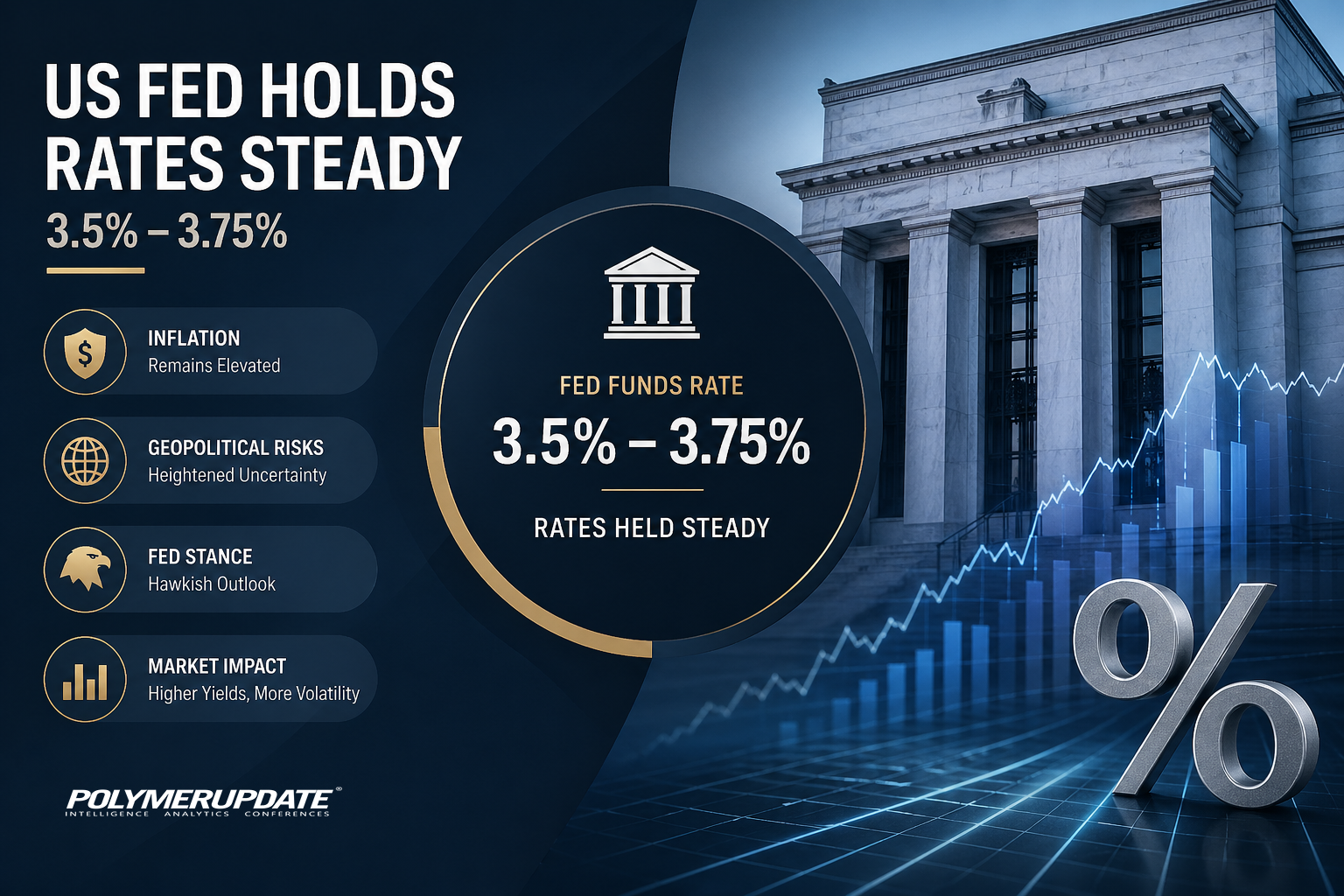
The United States Federal Reserve (US Fed), at its April 2026 meeting, left the benchmark interest rate unchanged at 3.5–3.75 percent, citing renewed inflation risks from rising oil prices and geopolitical tensions. This marked the Fed’s third consecutive meeting without a rate change, as it maintained policy settings to contain inflation amid a divided committee and heightened economic uncertainty. The decision was taken by an 8–4 majority in favour of keeping rates steady.
The four dissenters included Stephen Miran, who again voted for a 25 basis point (bps) rate cut, along with Beth Hammack, Neel Kashkari and Lorie Logan. While the latter three did not vote for a rate hike, they “did not support inclusion of an easing bias in the statement at this time.” The confusing aspect is that there is no explicit reference to an easing bias in the statement, which instead notes, “The Committee is attentive to the risks to both sides of its dual mandate.”
This is an unusual way of characterising the vote, and it may have been intended as a signal to Kevin Warsh, who is set to lead the Fed at the next FOMC meeting. Policymakers appear keen to underscore that they will not be easily swayed toward a view that rates can be lowered in the near term.
The Fed also stated that it will assess “a wide range of information, including readings on labour market conditions, inflation pressures and inflation expectations, and financial and international developments.” The minutes may reveal that officials wanted to signal a willingness to hike rates if inflation expectations rise meaningfully, risking a more prolonged and broader inflation threat. Markets interpreted the decision as a hawkish shift, with Fed funds futures now pricing stable rates through year-end, compared with expectations of around 10 bps of cuts in 2026 as of last Friday.
 More disagreement means more market volatility
Today’s Senate Banking Committee vote of 13–11 in favour of advancing Kevin Warsh’s nomination to a full Senate ballot makes it virtually certain that he will be confirmed as the new Chair just ahead of the 15 May expiration of Jerome Powell’s term. Warsh’s messaging suggests he favours a move away from the consensus-driven approach seen under previous Chairs, which critics argue led to groupthink and slower responses to emerging events.
Instead, Warsh is advocating an environment where debate and disagreement are encouraged, a shift that looks set to take shape from June. This implies the potential for more surprises and, therefore, greater market volatility. Powell has also said he will continue to serve as a Governor for a “period of time”—his term in that role runs until January 2028—which is likely to keep tensions between the President and a more hawkishly positioned Fed elevated.
Inflation still seen as transitoryBoth headline and core inflation have been above the 2 percent target for five years and look set to rise above 4 percent next month, driven by gasoline and airfares. It is therefore understandable why markets and Fed officials are nervous. Officials want to ensure that higher energy prices do not feed through into the cost of other goods and services, and we expect them to adopt a tough stance on this front. This hawkish rhetoric is likely to intensify over the next few weeks and persist until a deal is reached in the Middle East, which would hopefully provide relief.
Nonetheless, companies have had limited success in passing on the significant cost of tariffs to consumers, with CPI goods prices excluding food and energy rising by barely 1 percent year-on-year. Importantly, the current supply shock, focused on fuel prices, is not as broad-based as the pandemic-related supply chain stresses of 2020–21, and there is no comparable demand impulse that would risk a more persistent and widespread inflationary trend.
Real household disposable incomes are already flatlining amid a stagnating jobs market, so higher fuel prices are likely to be demand-destructive through reduced spending power. This is expected to weigh on core inflation. It is also important to consider the role of shelter costs within the US inflation basket (35.5 percent weighting for headline and 44 percent for core), which we expect to moderate further. Moreover, if Middle East tensions ease and oil prices decline, there is a strong probability that year-on-year inflation could fall below 2 percent in 2027.
“Right now, the outlook is highly uncertain and could change very quickly due to developments in the Middle East. We expect the Fed to hold rates steady throughout the summer. Our view for some time has been for a September rate cut and a December rate cut, but we recognise the risk that these could be delayed given the current lack of signs of a potential deal. Nonetheless, we still see the prospect of eventual rate cuts as more likely than rate hikes,” said James Knightley, Chief International Economist (United States), ING Economics.
Curve flattens on front end scare factorEarlier, the US 10-year yield had gapped higher and hit 4.4 percent. In fact, the entire curve moved higher. The standoff in the Strait of Hormuz was the catalyst. Some duration selling makes sense here, given that we are in “no man’s land” regarding a resolution to the conflict. Extrapolating from this, yields could climb back toward the 4.5 percent level seen a few weeks ago.
Some of this was echoed in the decision of three Fed members to step away from the underlying easing bias that had dominated policy shifts since the broader rate-cutting cycle began. For these three members, that phase now appears to be over. The main follow-through from the FOMC outcome is likely to be consolidation around 4.4 percent for the 10-year yield, alongside a further rise in the 2-year yield to above 3.9 percent—resulting in a flatter curve at the front end. More movement is likely, at least for as long as the standoff in the Strait continues, with the outlook there remaining uncomfortably uncertain.
Treasury bill buying cutBetween March and April, the implementation notes accompanying the FOMC statement remained operationally unchanged, but the tone shifted from active reserve support to maintenance—suggesting that market plumbing has stabilised enough for the New York Fed Desk to step back, even as policy remains on hold. Last week, the New York Fed reduced T-bill purchases from US$ 40 billion to US$ 25 billion per month, pointing in the same direction and indicating a degree of comfort with system liquidity conditions.
The missing ingredient here is the continued elevation in the effective federal funds rate. It remains at 3.64 percent, just 1 basis point below the rate on reserves at 3.65 percent (unchanged). Previously, it stood about 7 bps below (in September 2025). Ideally, the Fed would prefer to see it return to that spread. However, there is no major stress evident at present. In all likelihood, the effective funds rate will gradually ease lower as bank reserves rebuild in line with ongoing T-bill purchases, even at a slower pace.
DILIP KUMAR JHA
Editor
dilip.jha@polymerupdate.com