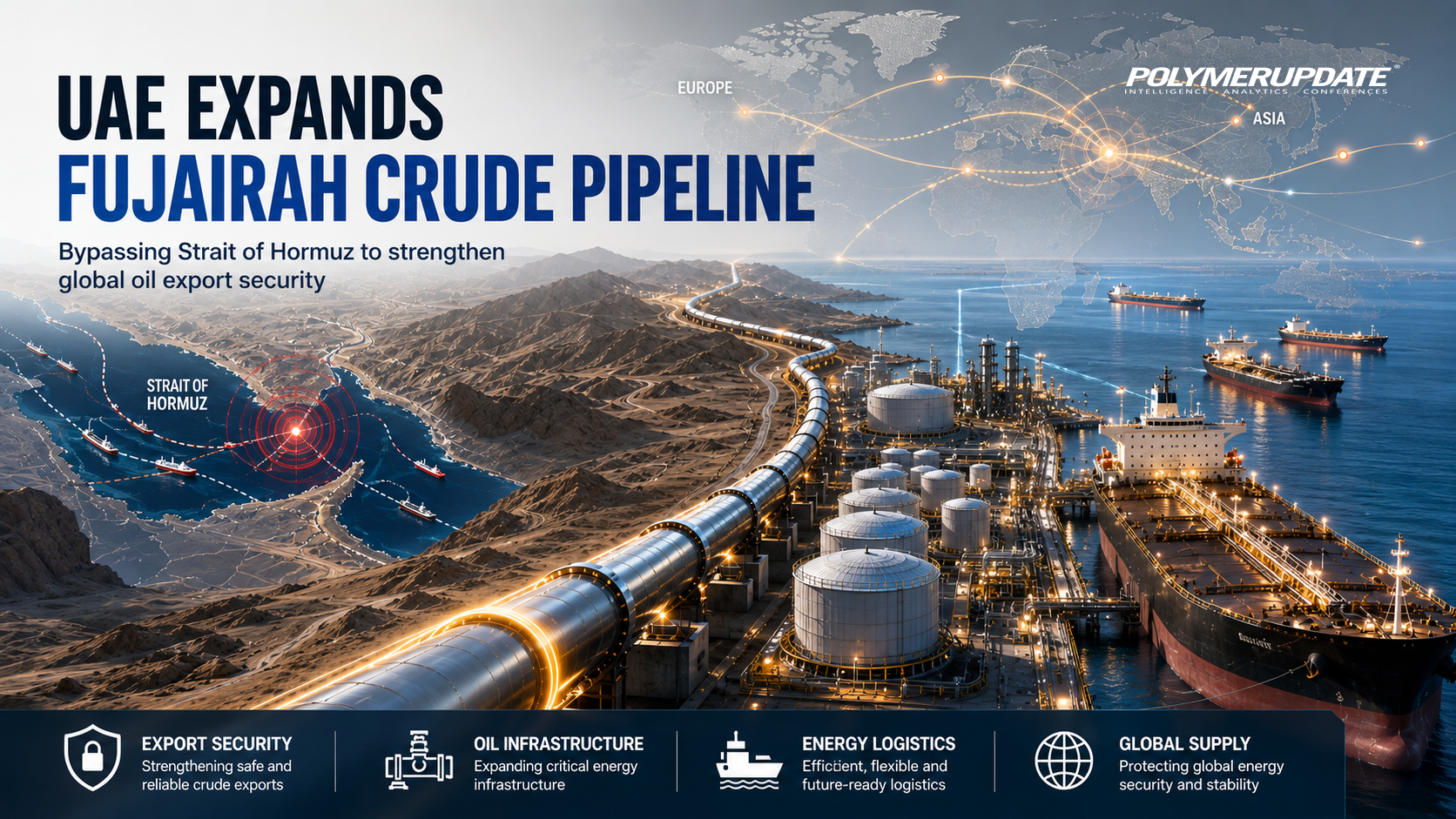
The United Arab Emirates (UAE) is reportedly accelerating work on a strategic crude oil pipeline project designed to bypass the Strait of Hormuz, one of the world’s most critical and vulnerable energy chokepoints. The project, expected to be completed by 2027, will significantly enhance the UAE’s ability to route crude exports directly to the Emirate of Fujairah on the Gulf of Oman, reducing dependence on the narrow marine passage that has increasingly come under geopolitical and security scrutiny. Once operational, the expanded infrastructure is expected to double the country’s export capacity through Fujairah, enabling smoother and uninterrupted crude shipments even during periods of regional tension.
The accelerated push comes amid heightened concerns over potential disruptions to shipping traffic in the Strait of Hormuz, through which a substantial share of global oil trade passes daily. By strengthening alternative export routes, the UAE aims to reinforce its position as a reliable energy supplier while improving logistical flexibility for international buyers. Although the original completion timeline for the project remains unclear, the renewed urgency underscores growing efforts among Gulf producers to safeguard energy exports against geopolitical risks and maritime bottlenecks in the region.
Reports said that the Abu Dhabi Crown Prince Sheikh Khaled bin Mohamed bin Zayed, during an executive committee meeting, directed the government’s crude oil producer – Abu Dhabi National Oil Company (ADNOC) to speed up work on the West East Pipeline project. “The pipeline is under construction and expected to start commercial operations in 2027,” according to a statement released by the Abu Dhabi Media Office (ADMO).
 Current capacity
The existing Abu Dhabi Crude Oil Pipeline (ADCOP), also known as the Habshan-Fujairah pipeline, currently has the capacity to transport nearly 1.8 million barrels per day (bpd) of crude oil from the UAE’s inland oilfields to the Fujairah export terminal on the Gulf of Oman coast. The pipeline has emerged as one of the UAE’s most strategic energy infrastructure assets, allowing the country to move substantial crude volumes without relying entirely on the Strait of Hormuz. Its role has become increasingly significant amid rising geopolitical tensions and concerns over the security of maritime trade routes in the Gulf region.
Since becoming operational, ADCOP has provided the UAE with greater operational flexibility and export security by enabling direct crude shipments from Fujairah to international markets. The Fujairah terminal, located outside the Strait of Hormuz, has steadily evolved into a major global energy and bunkering hub, strengthening the UAE’s position in global oil trade. By routing exports through the Gulf of Oman coastline, the country can ensure continuity in supplies even during periods of heightened regional instability or disruptions to shipping lanes.
The pipeline project has proved crucial as the UAE seeks to maximise direct exports from the Gulf of Oman coast and diversify its energy logistics network. With plans now underway to further expand export infrastructure linked to Fujairah, the UAE is positioning itself to significantly enhance crude handling and storage capabilities over the coming years. The broader strategy reflects the country’s long-term vision of safeguarding energy exports, improving supply chain resilience, and reinforcing its standing as a reliable supplier to Asian and global energy markets.
Strategic importanceThe pipeline has emerged as one of the UAE’s most strategic energy infrastructure assets, enabling the country to bypass the Strait of Hormuz and maintain direct crude exports to international markets. As geopolitical tensions continue to intensify across the Gulf region, the importance of the pipeline has grown substantially in ensuring uninterrupted energy flows and export flexibility.
The UAE and Saudi Arabia remain the only Gulf producers with operational pipeline infrastructure capable of exporting crude oil outside the Strait of Hormuz, while Oman benefits from its extensive coastline along the Gulf of Oman. The strategic importance of such alternative routes has become even more pronounced after Iran effectively shuttered the Strait of Hormuz in response to coordinated U.S.-Israeli air and naval strikes that followed the killing of the then Iranian Supreme Leader Ayatollah Ali Khamenei on February 28. The closure of the narrow waterway triggered widespread concerns across global energy markets, given the Strait’s role as one of the world’s most critical oil transit chokepoints.
The significance of the Strait of Hormuz can be gauged from the fact that nearly one-fifth of global oil supplies transit through the narrow passage toward Asia and other major consuming regions. Several Gulf producers, including Kuwait, Iraq, Qatar, and Bahrain, remain heavily dependent on the Strait for the shipment of crude oil and liquefied natural gas exports. Against this backdrop, the UAE’s continued investment in Fujairah-linked export infrastructure and pipeline expansion is being viewed as a strategic effort to strengthen supply security, minimise geopolitical risks, and reinforce its standing as a reliable energy supplier amid growing uncertainty in the Middle East.
The move is aimed at reducing the UAE’s vulnerability to any potential Iranian closure or disruption of the Strait of Hormuz, a strategic maritime chokepoint through which nearly one-fifth of global oil supplies transit daily. By expanding pipeline infrastructure and boosting export capacity through Fujairah on the Gulf of Oman coast, the UAE is seeking to secure uninterrupted crude shipments to Asian and global markets even during periods of heightened geopolitical tensions. The strategy reflects broader concerns among Gulf producers over the risks posed by regional conflicts, maritime security threats, and the growing possibility of supply disruptions in one of the world’s most critical energy corridors.
Safeguarding energy exportsUAE is intensifying efforts to safeguard its energy export infrastructure as maritime security threats in the Gulf continue to escalate. Concerns have deepened following a May 2026 incident in which a vessel anchored near Fujairah was reportedly seized by unauthorized personnel and directed toward Iranian waters, highlighting the growing vulnerability of commercial shipping routes in the region. The episode has reinforced the urgency for Gulf producers to strengthen alternative export corridors that can operate independently of the Strait of Hormuz.
Against this backdrop, the UAE is accelerating investments in pipeline and export infrastructure linked to Fujairah, which lies outside the Strait of Hormuz on the Gulf of Oman coast. The strategy is aimed at ensuring uninterrupted crude oil shipments to Asian and global markets even during periods of heightened geopolitical tensions or disruptions to maritime traffic. The existing ADCOP has become central to the country’s long-term energy security and export resilience plans.
This strategic pivot allows the UAE to maintain direct oil flows into the Gulf of Oman while circumventing the narrow waterway controlled by Iran. The move is increasingly being viewed as a critical safeguard as the Strait of Hormuz continues to face mounting security risks stemming from regional conflicts, naval confrontations, and threats to commercial shipping. With nearly one-fifth of global oil supplies transiting through the chokepoint, the UAE’s efforts to diversify export routes underline the broader shift among Gulf producers toward strengthening supply chain security and reducing dependence on vulnerable maritime passages.
DILIP KUMAR JHA
Editor
dilip.jha@polymerupdate.com