China’s inflation data for May signalled that the world’s second-largest economy is gradually moving out of its prolonged disinflationary phase, although weak domestic demand and continued stress in the property sector are likely to keep price pressures subdued in the near term. The inflationary trend comes amid rising crude oil prices in the international market following prolonged supply disruptions caused by escalating geopolitical conflicts in the Middle East, including the closure of the Strait of Hormuz for nearly three months during the Israel-US war with Iran.
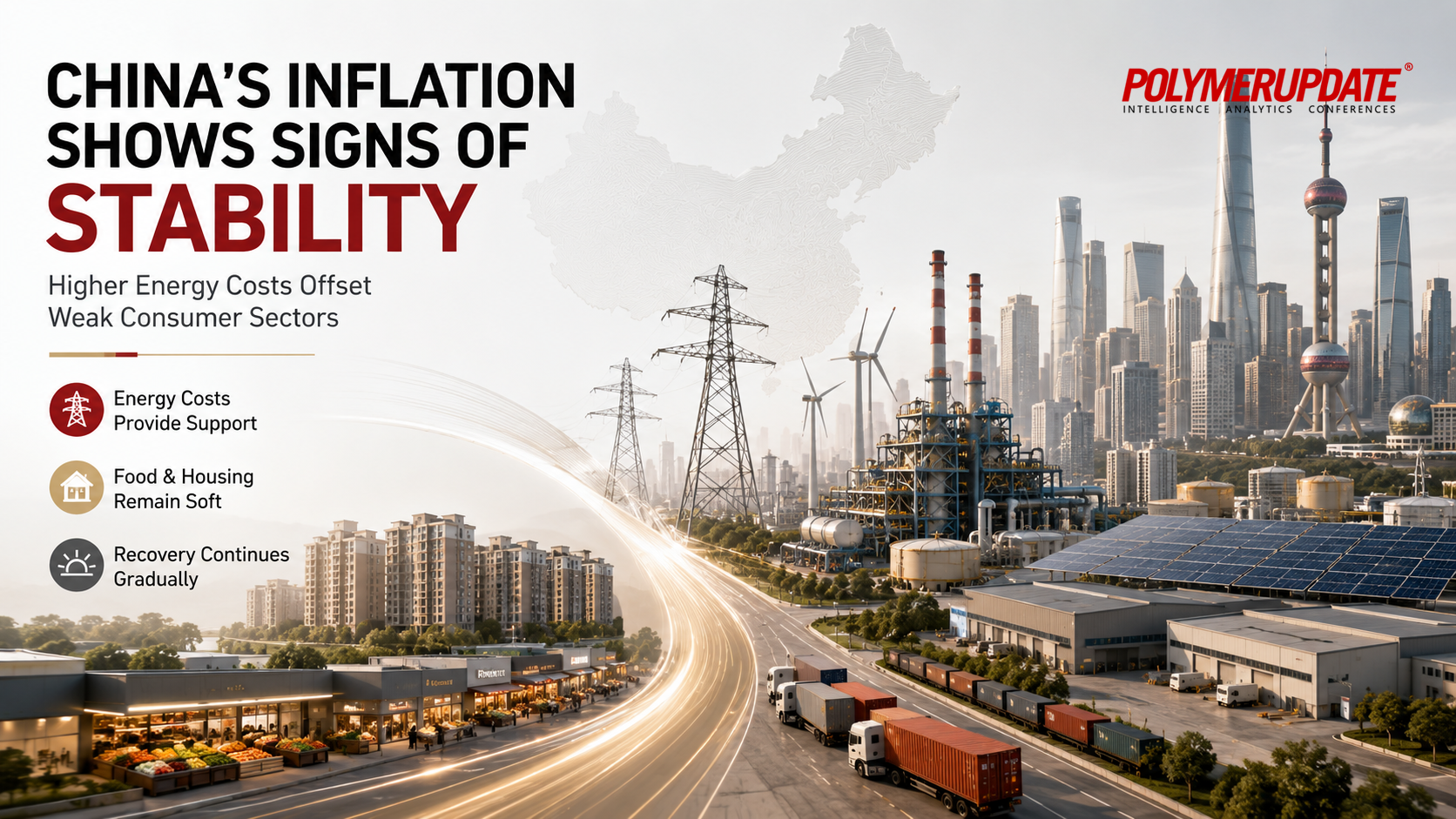
Official data released on Tuesday showed that China’s consumer price index (CPI) inflation remained unchanged at 1.2 percent year-on-year in May, slightly below economists’ expectations of a rise to 1.3 percent. Nevertheless, inflation has now stayed at or above the 1 percent mark for four consecutive months and remained in positive territory for eight straight months, indicating that the country’s reflation trend is becoming more firmly established. The latest inflation reading reflects a mixed economic environment in which higher energy costs are lifting prices across several sectors, while falling food and housing costs continue to offset broader inflationary pressures.
The steady inflation reading comes a day after the world’s second biggest economy registered a strong trade surplus of US$ 104 billion in May, the highest in four months, due to a substantial increase in export demand for artificial intelligence (AI)-driven technology, even as intensified geopolitical conflicts in the Middle East continued to pose challenges to global economic growth. China’s shipments not only outperformed the rest of the world, but both exports and imports also exceeded broader market expectations, with the trade surplus touching a four-month high. Exports to the United States registered phenomenal growth.
Data compiled by the Chinese Customs Department showed that the country’s overall exports jumped by a staggering 19.4 percent year-on-year (yoy) in May in US dollar terms, accelerating from a 14.1 percent gain in April. Economists had projected growth at 15 percent. Overall exports of integrated circuits soared 110 percent in value terms from a year earlier, partly driven by a surge in unit prices. Exports of high-tech goods surged 50 percent in May from a year ago, while imports jumped 47 percent in value terms.
 Major drivers
A major contributor to May’s CPI inflation was the sharp rise in transportation fuel prices, which surged 21.1 percent year-on-year. The increase largely mirrored the rally in global crude oil prices amid heightened geopolitical tensions in the Middle East, particularly following the Iran conflict. Although domestic gasoline prices in China did not rise as sharply as international benchmark Brent crude, pump prices still climbed roughly 24 percent above levels seen before the outbreak of the Iran war.
Analysts said that if global oil prices remain elevated for an extended period, China’s retail fuel prices could continue to rise in the coming months, thereby exerting additional upward pressure on consumer inflation. Apart from energy-related categories, most segments of the CPI basket remained broadly stable during May. Clothing inflation stood at 1.4 percent, healthcare inflation came in at 2.1 percent, while education, culture and entertainment prices rose 1.3 percent. Each of these categories remained within 0.1 percentage point of April’s readings, suggesting underlying consumer inflation remains relatively contained.
Food sectorFood prices remained firmly in deflationary territory, with food inflation declining further to negative 1.7 percent year-on-year in May. Pork prices fell sharply by 16.1 percent, while fresh fruit prices declined 2.2 percent. Dairy products and edible oils also recorded price contractions of 1.2 percent each.
Economists noted that China’s pork cycle — traditionally a key driver of food inflation — has taken longer than expected to recover. Improved production efficiency in the livestock sector and ample feed supplies have contributed to the prolonged weakness in pork prices. In addition, China’s soybean import agreements are believed to have helped maintain lower feed costs, further easing price pressures across the agricultural supply chain.
Housing dragsHousing-related inflation also continued to drag on overall consumer prices. Rental prices declined 0.6 percent year-on-year in May, marking the sixth consecutive month of negative housing inflation. The weakness reflects the ongoing struggles in China’s property market, which has yet to establish a durable recovery despite recent policy support measures.
Recent property price data have shown some tentative signs of stabilisation, particularly in tier-one cities, where the pace of decline has moderated. Nonetheless, analysts expect the housing sector to remain a significant deflationary force over the near term as excess inventory and subdued buyer confidence continue to weigh on the market.
Taken together, falling food and housing prices are effectively balancing out higher inflation in energy and selected services sectors, keeping overall consumer inflation positive but relatively subdued. Meanwhile, factory-gate inflation accelerated more sharply in May, driven largely by rising commodity and energy prices.
Producer prices upChina’s producer price index (PPI) inflation rose to 3.9 percent year-on-year in May from 2.8 percent in April, matching market expectations. However, on a month-on-month basis, producer price growth moderated to 0.5 percent from 1.7 percent previously, indicating that while inflationary momentum remains elevated, the pace of acceleration may be slowing.
The strongest gains were recorded in resource-related industries. Ex-factory prices in non-ferrous metals mining surged 36.5 percent year-on-year, while oil and gas extraction prices rose 35.7 percent. Prices in petroleum and coal processing industries also climbed sharply by 18.4 percent. Analysts noted that the rise in non-ferrous metal prices had already been underway before the escalation in Middle East tensions, driven by improving industrial demand and tighter global supply conditions. However, the sharp increases in oil and gas extraction as well as fuel processing prices clearly reflected the impact of higher global energy costs.
Raw material prices accelerated further to 9.2 percent year-on-year and are widely expected to move into double-digit territory in the coming months. Economists warned that sustained increases in upstream input costs could gradually feed into broader consumer prices, especially as many manufacturers operating on thin profit margins may eventually be forced to pass higher costs on to consumers.
OutlookAttention is now increasingly turning to whether China could begin experiencing so-called “second-round” inflation effects, where higher prices eventually lead to stronger wage demands and broader inflationary momentum. Such a development could potentially help reverse years of weak wage growth that followed the pandemic period, during which intense competition, deflationary expectations and cost-cutting pressures weighed heavily on household incomes.
However, analysts believe the risk of a sustained wage-price spiral remains limited for now. Elevated youth unemployment, slowing job creation and growing concerns surrounding artificial intelligence-driven workplace disruptions are likely to keep labour market bargaining power relatively weak compared to pre-pandemic years. As a result, most economists continue to expect China’s inflation environment to remain characterised by low but positive price growth through the remainder of the year.
This outlook also leaves room for further monetary policy easing if broader economic indicators weaken. Policymakers are expected to closely monitor whether the recent reflation trend gains traction or remains largely concentrated in energy and commodity-related sectors.
DILIP KUMAR JHA
Editor
dilip.jha@polymerupdate.com