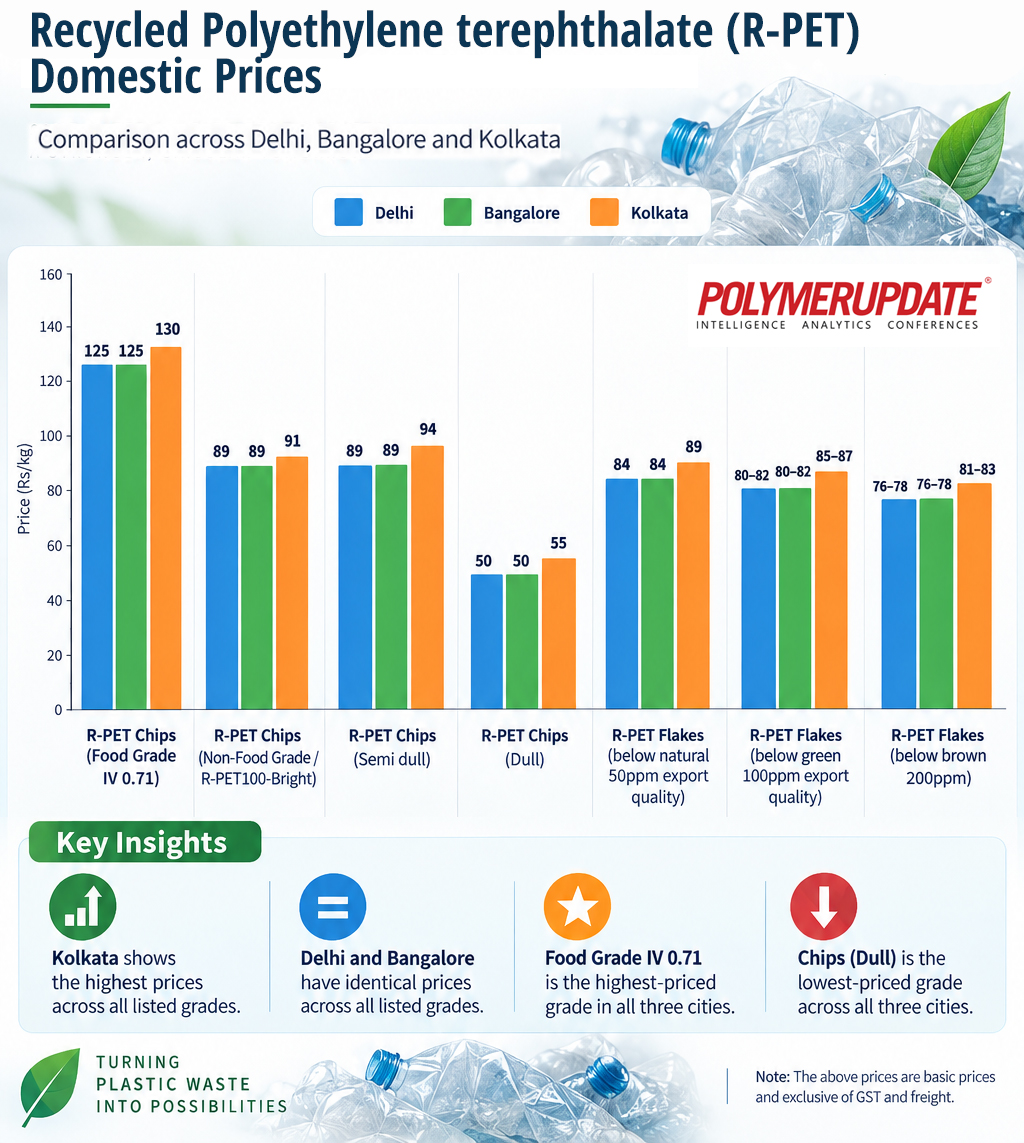
As of September 10, 2026, the Indian recycled PET market maintained a firm undertone across key consuming centres, supported by improved buying interest, elevated replacement costs and limited availability of consistent-quality material. Buyers largely remained focused on meeting immediate production requirements, while regional differences in supply availability, logistics and downstream demand continued to influence market dynamics.
DelhiThe recycled PET market in Delhi remained firm, underpinned by tighter availability of good-quality material and logistical constraints. Seller offers remained supported, particularly for food-grade recycled PET chips and cleaner, export-quality flakes, which continued to attract comparatively stronger buying interest. However, converters remained cautious about inventory accumulation and largely preferred to procure against immediate or near-term requirements.
BangaloreThe Bangalore recycled PET market maintained a positive tone, supported by steady downstream enquiries and firm replacement costs. Restricted availability of consistent-quality recycled feedstock provided support to seller price indications. Despite the firm market environment, buyers continued to adopt a need-based procurement approach, primarily purchasing material required for regular production schedules.
KolkataThe recycled PET market in Kolkata remained comparatively firmer, supported by improving demand, restricted availability of quality material and higher replacement costs. Firmness in virgin PET values also provided additional underlying support to the recycled market. Buyers continued to show a clear preference for higher-quality recycled PET chips and cleaner flakes, while availability constraints for such material helped sustain seller confidence.
 Key factors driving near-term market fundamentals
The following factors are expected to remain critical in determining the direction of the Indian recycled PET market in the near term:
Availability of quality feedstock: Supply of consistent-quality PET scrap and feedstock will remain a key determinant of recycled PET production costs and market availability.
Virgin PET price movements: Changes in virgin PET values are likely to influence replacement costs and provide an important benchmark for recycled PET pricing.
Processing and conversion costs: Energy, labour, collection, sorting and processing costs will continue to affect producer margins and seller price expectations.
Regional supply dynamics: Differences in scrap availability, production capacity and material quality across regions are expected to contribute to variations in city-level pricing and market sentiment.
Downstream demand: Buying activity from converters and end-use sectors, particularly for packaging and fibre applications, will remain important in determining demand momentum.
Logistics and freight costs: Transportation constraints and fluctuations in freight costs could influence delivered prices and regional arbitrage opportunities.
Buyer inventory strategy: Continued preference for short-term, requirement-based procurement could limit aggressive inventory building despite firm market fundamentals.
Availability of food-grade and premium-quality material: Demand for higher-quality chips and cleaner flakes is expected to remain relatively resilient, potentially keeping premiums for such grades elevated.