The geopolitical shockwave from the prolonged US-Iran conflict is no longer being felt only in crude oil prices—it is now reshaping the global freight market, where transport costs for the world's largest oil tankers have surged to unprecedented levels and emerged as the latest battleground of the Gulf crisis. For example, Very Large Crude Carriers (VLCCs), the workhorses of long-haul crude transportation capable of carrying around two million barrels of oil, are commanding daily earnings of more than US$ 1.2 million on the benchmark Middle East-to-China route, almost four-fold increase from US$ 0.3 million reported in July 2026.
The extraordinary rally has been driven by a shortage of available vessels as dozens of tankers remain stranded or delayed around the Persian Gulf, while Saudi Arabia's higher crude exports have intensified demand for ships. The result is a freight market that has entered largely uncharted territory, dramatically increasing the delivered cost of crude to Asian buyers and forcing refiners to rethink traditional procurement strategies. Houthis’ intensified strikes on Saudi Arabia coupled with Iran’s uninterrupted missile attacks on crude oil tankers in the Strait of Hormuz lifted the spot VLCC rate exponentially in the past two months.
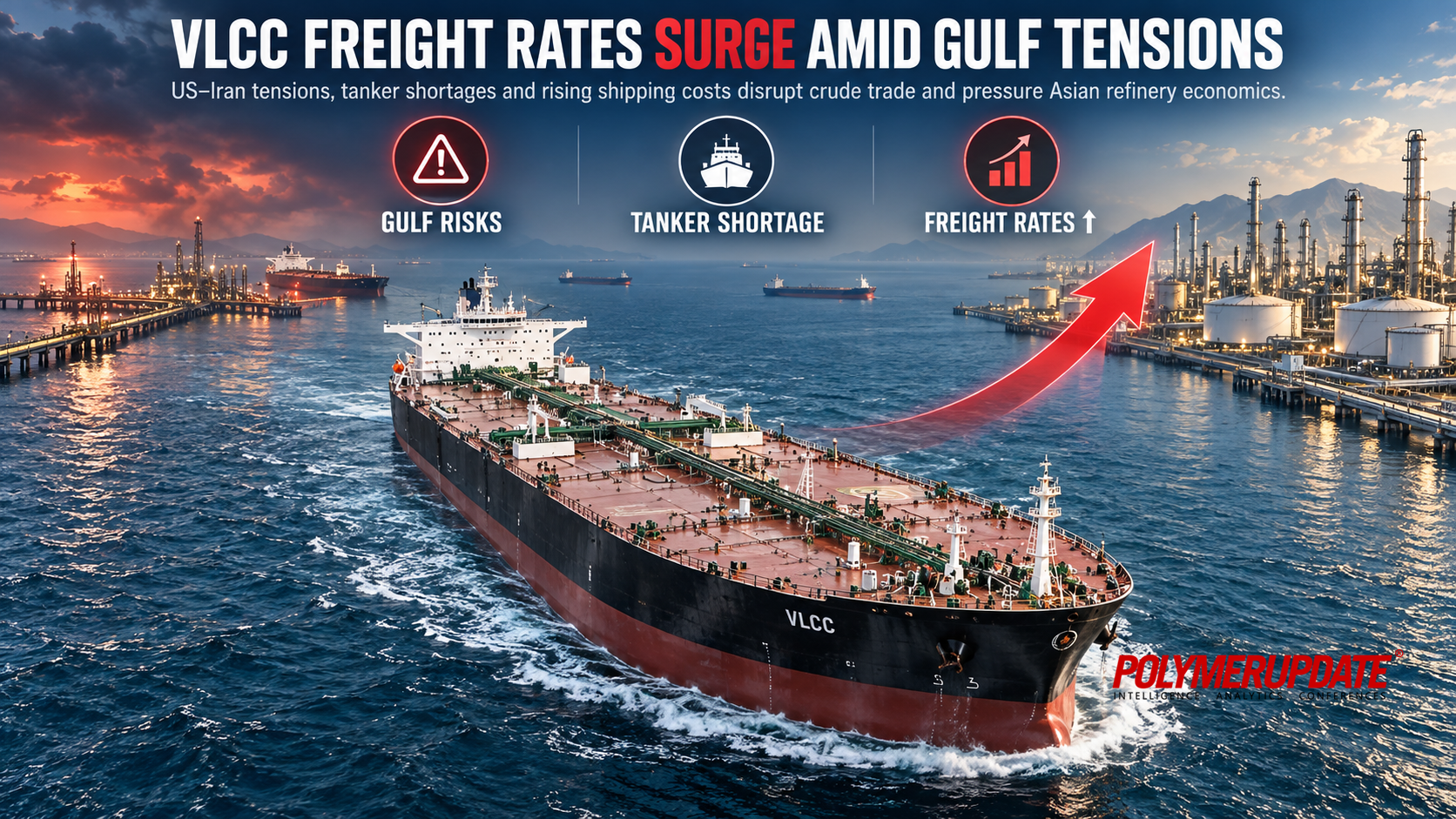 Freight becomes a major component of crude costs
For oil producers and shipowners willing to undertake voyages into the Gulf, the rewards have rarely been greater. The benchmark Middle East Gulf-to-China (TD3C) route is currently earning about US$ 1.26 million a day, while the Oman-to-China route is fetching approximately US$ 862,000 a day. Even the West Africa-to-China corridor has climbed to around US$ 524,000 a day, reflecting the worldwide tightening in tanker availability.
By comparison, a 12-month VLCC time charter is valued at around US$ 158,750 a day, illustrating the enormous premium being paid for immediate spot availability. Freight, which accounted for just 5–6 percent of the delivered cost of crude cargoes in 2025, has now risen to at least 25 percent of the total cost for shipments into Asia. The sharp escalation is significantly eroding refining margins and reducing the profitability of long-distance crude trades. Market participants say the freight spike has become almost as important as crude prices themselves in determining refinery economics.
Multi-million-dollar fixtures redefine the marketThe scale of the rally has been highlighted by several headline-grabbing charter deals. French energy major TotalEnergies fixed the VLCC Kuwait Prosperity last week for an extraordinary US$ 75 million voyage, equivalent to roughly US$ 38 a barrel of transported crude. Industry brokers say similar fixtures this week have approached US$ 100 million, levels that would have been considered implausible before the Hormuz crisis.
Such charter rates reflect both heightened geopolitical risk and the scarcity of vessels willing—or available—to enter the Persian Gulf, where shipping continues to face uncertainty despite improving transit volumes through the Strait of Hormuz. Insurance costs, longer waiting times and elevated operational risks have collectively tightened effective vessel supply, even without a complete closure of Gulf shipping lanes.
Asian refiners alter crude buying strategyThe unprecedented freight environment is beginning to reshape physical crude trading patterns across Asia. Instead of booking conventional two-million-barrel VLCC cargoes, several Chinese refiners importing Brazilian crude have shifted towards Suezmaxtankers carrying approximately one million barrels each. Although Suezmax vessels transport smaller volumes, they offer greater flexibility and are currently more economical on certain long-haul routes where VLCC freight has become prohibitively expensive.
The trend illustrates how freight economics are increasingly influencing crude selection, cargo sizing and trade flows rather than merely determining transportation costs. Analysts say refiners are also evaluating shorter-haul suppliers and alternative crude grades to minimise exposure to soaring shipping expenses.
Spot market remains historically elevatedDespite signs that the explosive rally may be stabilising, tanker rates remain close to record highs. Forward Freight Agreements (FFAs), which allow traders to hedge future shipping costs, suggest some participants believe the market may have reached a near-term ceiling. The fourth-quarter 2026 FFA contract for the Middle East Gulf-to-China VLCC route stood at approximately Worldscale 950 on Tuesday, down 14 percent from Friday and about 19 percent below prevailing spot rates.
Meanwhile, the MEG-China VLCC Time Charter Equivalent (TCE) index eased by about 1 percent from its all-time high to US$ 1.26 million a day, marking its first decline since August 13. Similar modest pullbacks were recorded on the Oman-to-China and West Africa-to-China routes, though both remained within touching distance of record levels. The relatively small correction indicates that freight fundamentals remain exceptionally tight despite growing expectations that the most extreme pricing may moderate.
Saudi exports intensify vessel shortageA key driver behind the freight rally has been Saudi Arabia's effort to restore and expand crude exports following disruptions to regional energy infrastructure. Higher export volumes require substantially more tanker capacity, and with many vessels tied up in lengthy Gulf voyages or waiting for loading windows, charterers have been competing aggressively for available ships.
Unlike previous freight rallies driven primarily by seasonal demand, the current surge combines geopolitical risk, constrained vessel supply and stronger Middle Eastern exports simultaneously, creating one of the tightest VLCC markets in modern shipping history. The shortage has also spilled into other crude tanker segments, lifting rates for Suezmax and Aframax vessels as charterers seek alternatives to increasingly expensive VLCCs.
Implications for the global oil marketThe freight shock carries significant implications beyond the shipping industry. For Asian refiners, elevated transportation costs increase the effective price of imported crude even if benchmark Brent prices remain relatively stable. This could reduce demand for long-haul Atlantic Basin crude while improving the competitiveness of regional Middle Eastern grades where voyage distances are shorter. For oil producers, however, strong freight markets present mixed outcomes. While exporters benefit from robust crude demand, excessively high transportation costs can discourage discretionary purchases and compress downstream refining margins.
The divergence between physical freight and forward freight markets also suggests growing uncertainty over how long the extraordinary rally can be sustained. Although improving Hormuz transit and stabilising Gulf logistics may eventually ease pressure on tanker availability, shipping markets remain highly sensitive to any renewed disruption involving the Strait of Hormuz, Houthi attacks on maritime infrastructure or fresh escalation in US-Iran tensions. For now, the world's largest crude carriers have become the clearest barometer of geopolitical risk. As long as Gulf uncertainty persists, freight—not just oil—will remain a decisive factor shaping global energy trade.
DILIP KUMAR JHA
Editor
dilip.jha@polymerupdate.com