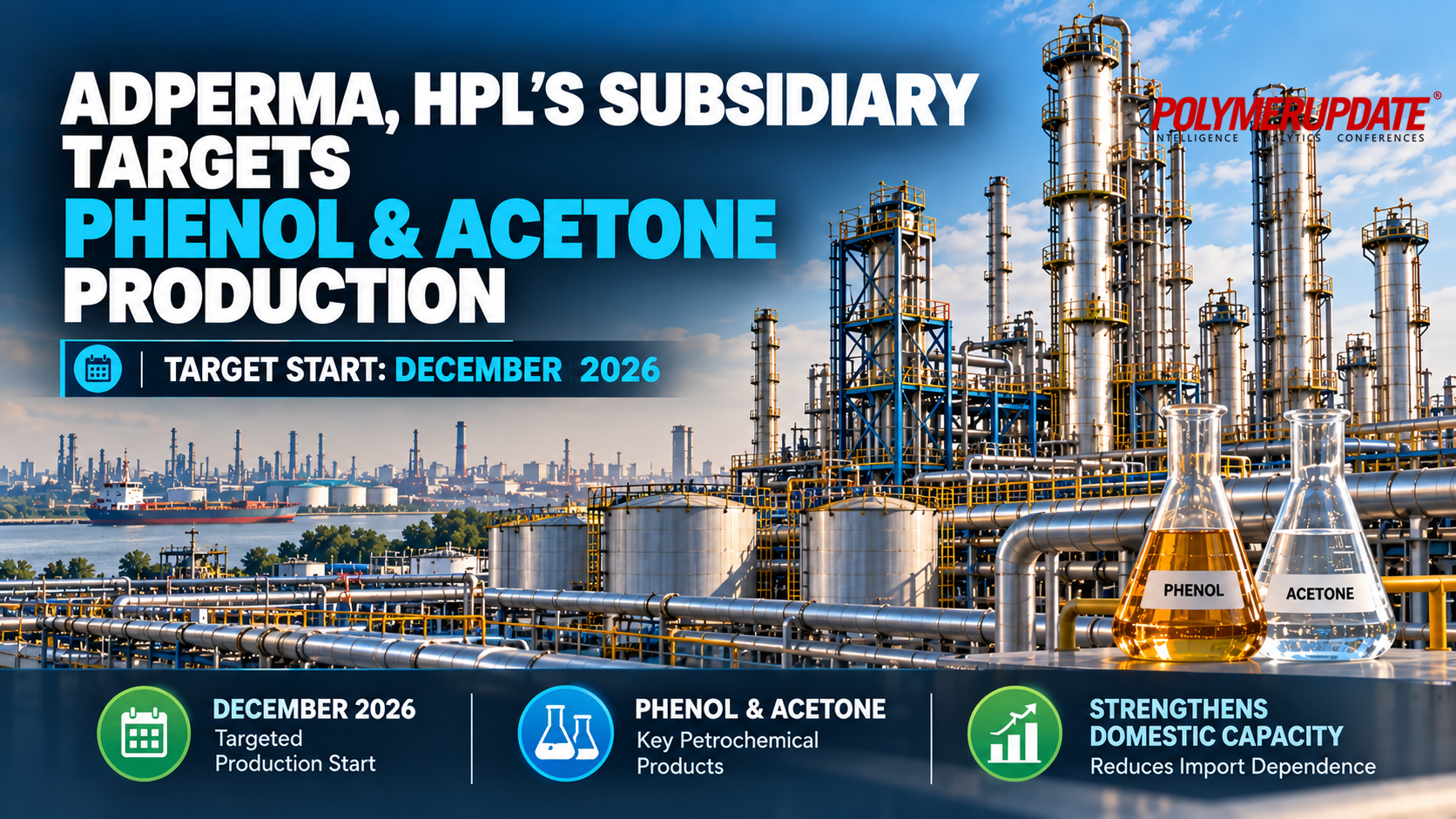
Adperma Private Ltd, a wholly owned subsidiary of Haldia Petrochemicals Ltd (HPL), is set to commence commercial production of phenol and acetone at its Rs 6,000-crore manufacturing complex in Haldia, West Bengal, by the end of December 2026. The facility is expected to strengthen domestic supplies of the two chemical intermediates, support downstream industries and reduce India's dependence on imports. The plant has an annual production capacity of 345,000 tonnes of phenol and 215,000 tonnes of acetone, according to a company statement issued on Wednesday.
The commissioning of the facility will add substantial domestic manufacturing capacity for the two chemicals, which are widely used across several industrial sectors, including laminates, plywood, adhesives, resins, paints, pharmaceuticals and specialty chemicals. The project marks a significant expansion of HPL's presence in the specialty chemicals segment and is expected to strengthen India's chemical manufacturing ecosystem by improving the availability of key raw materials for downstream processors. According to the company, the facility is India's only integrated phenol and acetone production complex on the East Coast.
The plant is integrated with HPL's existing petrochemical complex at Haldia and will use propylene and benzene as feedstocks. The technology for the project has been licensed by Lummus Technology. The integration with HPL's existing petrochemical operations is expected to support feedstock availability and improve operational synergies. Its location on the East Coast could also provide logistical advantages for supplying customers across eastern and other parts of the country, although the extent of these benefits will depend on the plant's operating performance and distribution arrangements.
 Import substitution
The commencement of production is expected to provide domestic manufacturers with an additional source of phenol and acetone, two important chemical intermediates used in a broad range of industrial applications. Phenol is a key raw material for phenolic resins, which are used in plywood, laminates, adhesives and moulded products. It also serves as an intermediate in the manufacture of bisphenol A and other chemicals used in plastics, coatings and specialty applications.
Acetone is widely used as a solvent in paints, coatings, adhesives and pharmaceutical formulations. It is also an important feedstock for the manufacture of other chemical products, including methyl methacrylate and bisphenol A. The availability of these chemicals is important for manufacturers seeking reliable supplies of industrial raw materials. Domestic production can help downstream users diversify their sourcing options and reduce their exposure to fluctuations in international prices, freight costs and import availability. India's dependence on imported chemical intermediates has remained a concern for several downstream industries, particularly when global supply chains face disruptions or international prices rise sharply.
The addition of the Haldia facility's capacity could help narrow the gap between domestic demand and local production, depending on market requirements and the plant's utilisation levels. The project is also expected to create opportunities for downstream manufacturers by improving access to phenol and acetone within the domestic market. However, the extent of import substitution will depend on the competitiveness of locally produced material, customer demand, operating rates and prevailing international market conditions.
Strengthening HPL's specialty chemicals portfolioThe new complex represents an important step in HPL's efforts to expand beyond its established petrochemical operations into higher-value chemical intermediates. By adding phenol and acetone to its manufacturing portfolio, the company will broaden its presence in products that serve multiple downstream industries. The project also creates potential opportunities to develop closer commercial relationships with manufacturers of resins, engineered materials, adhesives and other specialty chemical products.
The ₹6,000-crore investment underscores the scale of capital required to establish integrated chemical manufacturing facilities and expand India's domestic production capabilities. The use of licensed technology and integration with an existing petrochemical complex are central features of the project. The plant was inaugurated on October 14 by West Bengal Chief Minister Suvendu Adhikari. The event was attended by HPL chairman Purnendu Chatterjee, HPL managing director and chief executive officer Navanit Narayan, and Adperma chief executive officer Sanjiv Vasudeva.
With commercial production targeted for the end of December, the next milestone will be the facility's transition from commissioning to stable operations and the gradual ramp-up of production. The plant's performance will be closely linked to the availability and cost of feedstocks, operational efficiency and demand from downstream consumers. Its ability to operate competitively against imported material will be an important factor in determining the project's contribution to the domestic chemicals industry.
The addition of 345,000 tonnes per year of phenol capacity and 215,000 tonnes per year of acetone capacity will expand India's manufacturing base for the two products. As production begins, the Haldia complex is expected to play a role in improving domestic supply resilience and supporting the growth of industries that depend on these chemical intermediates.
DILIP KUMAR JHA
Editor
dilip.jha@polymerupdate.com