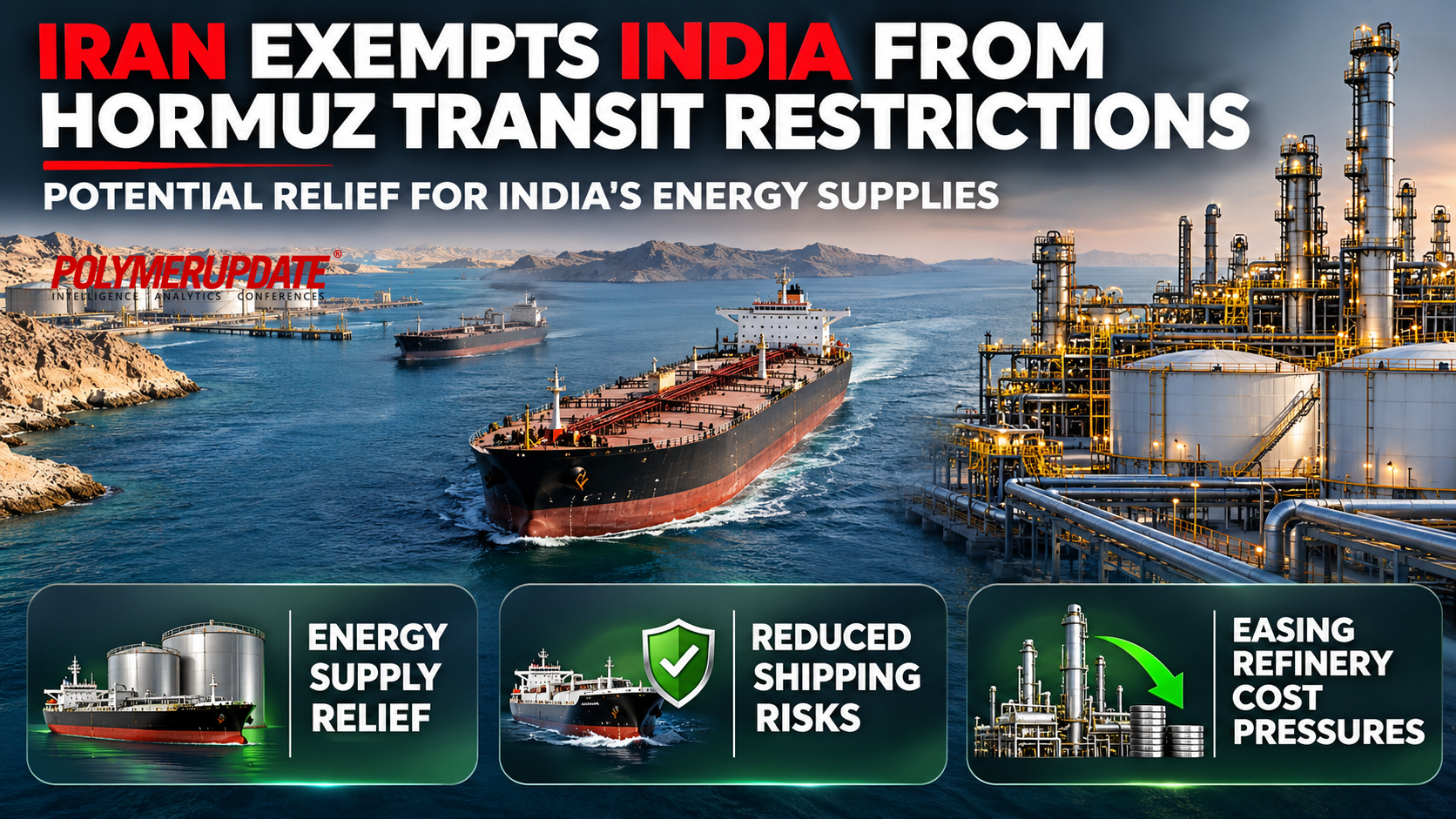
In a major relief to the tightness in India’s crude oil and natural gas supply, Iran has exempted four countries – India, China, Iraq and Qatar, from the restrictions on transit of energy vessels through the strategic Strait of Hormuz amid continuing disruptions to maritime energy flows in the Middle East. The exemption is particularly significant for India, which depends on imported crude oil to the tune of approximately 85 percent, and also heavily on liquefied natural gas (LNG) to meet its domestic energy requirements.
The decision reflects Tehran's strategic and economic considerations, including its relationships with the four countries and India's role in supplying essential medicines to Iran. However, the relaxation of transit restrictions does not necessarily signal a complete restoration of normal shipping activity through the strategically important waterway, as broader geopolitical and security risks continue to affect commercial navigation.
"We have currently exempted India, China, Iraq and Qatar from transit restrictions in the Strait of Hormuz. Ships from these countries pass freely, and the Americans do not intercept them either. The exemptions were consistent with the shared interests of Iran and the four countries.," Amir Hayat Moqaddam, deputy chairman of the Iranian parliament's national security and foreign policy committee, told the Iranian Students' News Agency (ISNA) on Tuesday.
 Self interest
India and Iran held intensive negotiations between March and June to facilitate the movement of India-bound vessels carrying energy supplies through the Strait of Hormuz. India was among a limited number of countries that managed to secure the passage of vessels through the waterway, reflecting its diplomatic goodwill and longstanding engagement with Tehran. Freedom of navigation through Hormuz also featured prominently during the Iranian President's visit to India and in several bilateral discussions, during which New Delhi emphasised the importance of keeping international shipping lanes open.
Moqaddam specifically pointed to India's importance as a supplier of medicines, saying that allowing Indian vessels to pass would facilitate the import of essential pharmaceutical products. The exemption for Chinese vessels, meanwhile, was intended to secure Beijing's political support. He also disclosed that Iran had collected transit fees from Indian and Chinese vessels, while allowing Qatari ships to pass without charges. However, he did not clarify whether Iraqi vessels were subject to similar payments.
Indian government has categorically denied having paid any fee for passing through the Strait of Hormuz despite such claims were made by the Iranian government officials. A source in the know of the matter, said, “The Indian government had not paid any transit fees for vessels whose clearance was negotiated by the Ministry of External Affairs. This distinction is important because the arrangement appears to have been secured through diplomatic engagement rather than a formal commercial agreement to pay for passage.”
Hormuz restrictions threaten global energy suppliesThe Strait of Hormuz is one of the world's most important energy chokepoints, connecting major oil and gas-producing countries in the Persian Gulf with international markets. Under normal conditions, approximately 20 million barrels per day (bpd) of crude oil, condensate and petroleum products, equivalent to around one-fifth of global petroleum liquids consumption, transit through the waterway. A substantial share of internationally traded LNG, particularly exports from Qatar, also moves through the strait. Restrictions on navigation have therefore had consequences extending well beyond the Middle East. Disruptions to tanker movements have constrained the availability of seaborne crude, delayed cargo deliveries, increased freight and insurance costs and forced refiners and traders to seek alternative sources of supply.
The resulting uncertainty has also strengthened geopolitical risk premiums in international oil markets. For India, the exposure is particularly high because a significant proportion of its crude oil imports and a substantial volume of LNG supplies traditionally move through Hormuz. Any prolonged interruption can increase procurement costs, disrupt refinery feedstock availability and put pressure on the country's import bill and energy security.
Alternative routes offer limited reliefOil-producing countries in the region have attempted to reduce their dependence on Hormuz through alternative pipeline infrastructure. Saudi Arabia's East-West pipeline, which transports crude from the country's eastern oil-producing region to the Red Sea port of Yanbu, offers an important alternative export route. Its nameplate capacity is approximately 7 million bpd, although the volume available for additional exports depends on domestic refinery requirements and operating conditions. The United Arab Emirates also operates the Abu Dhabi Crude Oil Pipeline, connecting onshore oilfields to the export terminal at Fujairah on the Gulf of Oman.
With a capacity of approximately 1.5 million bpd, the pipeline enables some Emirati crude exports to bypass Hormuz. However, these alternatives cannot fully compensate for a prolonged disruption of the strait. Their available spare capacity is limited, and they cannot accommodate all the crude and LNG volumes normally transported through the waterway. Qatar's LNG exports, in particular, remain highly dependent on maritime access through Hormuz, as there is no comparable pipeline route capable of replacing its seaborne shipments to international customers.
Refinery margins under pressureBeyond the physical supply disruption, the restrictions have significantly increased the cost of transporting crude oil and petroleum products. Tanker availability has tightened as vessels face longer waiting times, security concerns, rerouting requirements and higher war-risk insurance premiums. Shipping companies have also become increasingly cautious about deploying large crude carriers in the Gulf region. Indian refiners have consequently been compelled to diversify crude procurement towards suppliers in Russia, the United States, West Africa and Latin America.
However, these alternatives involve longer sailing distances, higher freight charges and, in some cases, additional costs associated with sourcing crude grades that are compatible with existing refinery configurations. The financial impact has been substantial. Recent market estimates indicate that very large crude carrier (VLCC) freight rates for shipments from Oman and Fujairah to India's west coast have increased to around US$ 6–7 a barrel from approximately US$ 2.60 a barrel before the conflict. For Gulf-origin cargoes requiring passage through Hormuz, freight costs have reportedly climbed to around US$ 16 a barrel from US$ 2.50 a barrel previously.
Cost escalationHigher transportation and insurance expenses are directly affecting refinery economics. While elevated diesel, jet fuel and gasoline prices can improve gross refining margins, the benefit is increasingly being offset by expensive crude procurement and logistics. Refiners unable to pass the entire increase in input costs to consumers face pressure on their marketing and refining margins. According to industry estimates reported in October, freight expenses alone could reduce Indian refinery margins by US$ 10–15 a barrel, even before accounting for additional war-risk insurance premiums.
The impact is particularly significant for Asian refiners because of their dependence on Middle Eastern crude and the longer distances involved in replacing Gulf supplies with Atlantic Basin barrels. The disruption has also created substantial differences in refining profitability across regions. Refineries with access to domestic or geographically closer crude supplies have generally been better positioned than Asian plants dependent on imported Middle Eastern feedstock. Meanwhile, refiners processing alternative crude grades may face additional operational challenges, including changes in product yields, blending requirements and processing efficiency.
Diplomatic exemption to ease India's exposureAgainst this backdrop, Iran's decision to exempt Indian vessels from transit restrictions could provide an important logistical advantage to Indian oil companies. A more predictable passage for India-bound tankers would help reduce uncertainty surrounding cargo deliveries, improve shipping schedules and potentially lower the need to seek more expensive alternative supplies. The exemption could also benefit India's LNG procurement, being Qatar India's major LNG suppliers, and uninterrupted shipping through Hormuz remains essential for maintaining regular deliveries.
Nevertheless, the actual benefit will depend on the number of vessels permitted to transit, the volume of cargoes involved, the applicable security arrangements and whether the exemption remains operational during any further escalation in the region. It is also important to distinguish between permission granted to vessels from selected countries and the restoration of unrestricted international commercial navigation. For India, maintaining diplomatic engagement with Tehran while protecting freedom of navigation will remain essential.
The latest development offers a potential window of relief for Indian energy importers, but it does not eliminate the underlying vulnerabilities of the country's dependence on maritime energy routes. Ultimately, a sustained restoration of normal shipping through the Strait of Hormuz would be necessary to bring down tanker freight rates, insurance premiums and crude procurement costs. Until then, Indian refiners are likely to remain exposed to elevated logistics expenses, uncertain feedstock availability and pressure on refining profitability, even if diplomatic exemptions provide some relief to individual cargo movements.
DILIP KUMAR JHA
Editor
dilip.jha@polymerupdate.com