Click the icon to add a specified price to your Dashboard list. This makes it easy to keep track on the prices that matter most to you.

DCM Shriram Ltd., a diversified and integrated business entity with a strong presence in both B2B and B2C segments, has announced the commissioning of the remaining 17,000 tonnes per annum (TPA) capacity of Epichlorohydrin (ECH) at Jhagadia, Bharuch, Gujarat. This marks the full commissioning of the plant’s installed capacity for the raw material used in manufacturing a range of industrial chemicals.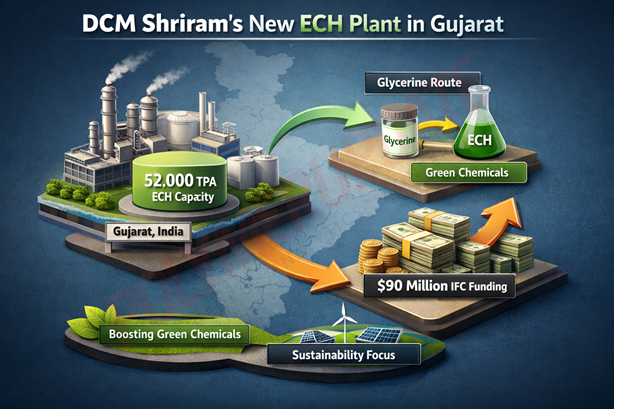 The second phase of DCM Shriram’s ECH plant went live just five-and-a-half months after the first phase, which had a capacity of 35,000 TPA and was commissioned on October 14, 2025. At the time of commissioning the first phase, the company had committed to commencing commercial production of the remaining capacity shortly thereafter. The commissioning of the second phase underscores the company’s commitment to the project, and the quick turnaround reflects strong execution capabilities. With this, the plant is now operating at its full capacity of 52,000 TPA.
Significance of ECH
Epichlorohydrin serves as a critical link between the existing chlor-alkali business vertical and the ‘advanced materials’ vertical. On one hand, ECH is a chlorine downstream product, while on the other, it is a key raw material for producing liquid epoxy resins. Unlike most plants worldwide that use propylene (a non-green input) as a raw material, this state-of-the-art plant benefits from cutting-edge European technology and adopts a greener approach by using glycerine, a by-product of the biodiesel production process, as its feedstock.
ECH is a crucial industrial chemical primarily used in the production of epoxy resins (used in coatings, adhesives, and electronics), synthetic glycerol, and elastomers. It also serves as a key intermediate in the manufacture of water treatment chemicals, paper-strengthening agents, pharmaceuticals, and specialized agricultural products. Additionally, it is the main raw material for producing bisphenol diglycidyl ether, which is used to manufacture durable, high-performance epoxy resins for applications in adhesives, paints, plastics, and laminates.
Other uses
It is used as a precursor in the manufacture of high-quality synthetic glycerin for the pharmaceutical, food, and personal care industries. It is also used as a monomer for cationic polymers, which act as flocculants in water purification. Additionally, it is used to produce polyamide-epichlorohydrin resins that improve the wet strength of paper products (such as coffee filters and food packaging).
Another application of ECH is in the manufacture of specialized epichlorohydrin rubbers that are heat- and fuel-resistant, often used in automotive parts. ECH also functions as a solvent for cellulose esters, resins, and paints, and serves as a stabilizer in chlorine-containing substances, such as pesticides. It is further used as a cross-linking agent in the production of Sephadex, which is used in chromatographic size-exclusion gels. Epichlorohydrin is considered hazardous; it is flammable, toxic if inhaled or swallowed, and can cause severe skin burns and dermatitis. It is also classified as a potential human carcinogen.
The company’s businesses include the agri value chain (sugar and ethanol, Shriram Farm Solutions, and seeds), chemicals (chlor-alkali, vinyl, specialty chemicals, and advanced materials), and building materials (Fenesta Building Systems). With access to captive power at key manufacturing units, DCM Shriram drives operational efficiency and competitive strength across its businesses. The company operates multiple manufacturing facilities across India and remains focused on sustainable growth, innovation, and long-term value creation.
DCM Shriram raises US$ 90-mn
DCM Shriram recently announced an investment commitment of US$ 90 million from the International Finance Corporation (IFC), the private sector arm of the World Bank Group, by way of subscription to sustainability-linked non-convertible debentures (NCDs) to be issued by the company. The transaction is structured in alignment with the globally accepted International Capital Market Association’s Sustainability-Linked Bond Principles (SLBP) and the Loan Market Association’s Sustainability-Linked Loan Principles (SLLP).
The investment is also anchored in the company’s newly developed Sustainability-Linked Loan (SLL) framework, which has been independently reviewed and assured by a second-party opinion (SPO) provider, CareEdge ESG. This independent validation enhances transparency for stakeholders and demonstrates the robustness of the company’s sustainability roadmap.
This landmark transaction underscores DCM Shriram’s commitment to integrating sustainability into its financing strategy. The proceeds from the issuance will be utilized to strengthen the company’s strategic initiatives and support long-term growth plans. IFC’s investment will enhance industrial capabilities through the expansion of DCM’s downstream chemicals business and foster local value creation. It will also support rural job creation by financing capital expenditures for the growth of DCM Shriram’s agri businesses, which have widespread engagement with farmers at the grassroots level.
Amit Agarwal, Group CFO & Executive Director, DCM Shriram Limited, said: “This transaction represents a significant milestone in our journey towards delivering responsible growth and sustainable value creation. IFC has been our strategic partner for over two decades, and this transaction marks a defining moment that will help accelerate our growth, strengthen operational efficiency, improve our environmental footprint, and drive long-term resilience across our businesses.”
Imad N. Fakhoury, IFC Regional Division Director for South Asia, commented: “IFC is pleased to support DCM Shriram in its growth journey while creating jobs and strengthening India’s manufacturing base—priorities that are aligned with the Country Partnership Framework for India recently announced by the World Bank Group. Building on the company’s engagement with industrial labour and its extensive farmer network, this investment will deepen value-added production and support rural supply chains, furthering the country’s Make in India and Atmanirbhar Bharat ambitions. By linking transparent, independently reviewed targets to financing terms, the investment aligns operational improvements with sustainability objectives.”
DILIP KUMAR JHA
Editor
dilip.jha@polymerupdate.com