The prolonged disruption to oil flows through the Strait of Hormuz is placing increasing pressure on global crude supplies, refined petroleum products and inventories, heightening the urgency of restoring normal traffic through the critical waterway. The International Energy Agency (IEA), in its latest Oil Market Report, said renewed conflict in the Middle East and continued restrictions on maritime movements have sharply reduced oil exports from the Gulf and Caspian Sea, while drawing down global inventories at an accelerated pace.
However, the agency warned that although the market could return to surplus towards the end of 2026 if regular flows through Hormuz are restored, the outlook remains highly uncertain as available inventory buffers continue to diminish. The disruption has also prompted a sharp deterioration in the global oil supply outlook. The IEA now expects global oil supply to decline by 4.3 million barrels per day (bpd) on average in 2026, compared with its earlier forecast of a smaller decline. Global supply rose by 2.4 million bpd to 101.5 million bpd in July, but remained 6.3 million bpd below year-earlier levels, with around 8.3 million bpd of Gulf production still shut in.
Renewed hostilities and maritime disruptions in July and early August undermined the recovery in regional output, prompting the IEA to cut its estimate for third-quarter supply by 1.7 million bpd from its previous report. The agency expects supply to rebound by 8.3 million bpd in 2027 to 110.3 million bpd, assuming a gradual normalisation of disrupted production and trade.
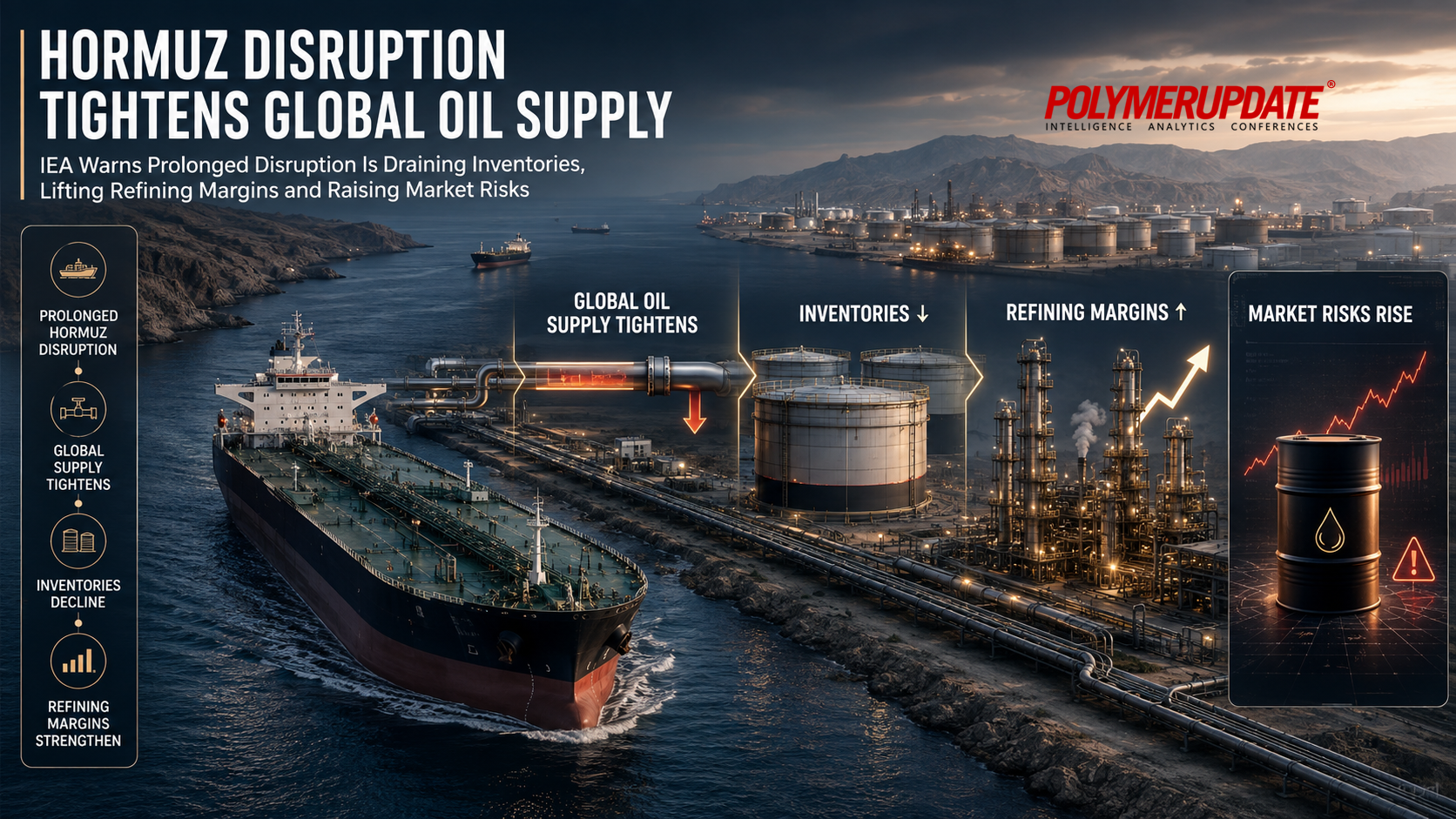 Hormuz disruption reverses supply recovery
The Strait of Hormuz remains at the centre of the global oil market disruption. After Gulf production increased by 3.7 million bpd in June, output rose by a further 2.5 million bpd in July to 23.9 million bpd. However, this remained 8.3 million bpd below pre-war levels. Regional exports, including shipments through alternative routes that bypass Hormuz, fell by 2.1 million bpd to 15 million bpd after the waterway was effectively closed again in early July and oil infrastructure and tankers came under attack.
Oil loadings, which had reached around 20 million bpd at the beginning of July, subsequently fell to approximately 12 million bpd. The inability to secure an agreement that would allow the unrestricted reopening of Hormuz, together with continued uncertainty surrounding transit through the Bab el-Mandeb Strait, has forced the IEA to reduce its supply estimates for the remainder of the year. Production growth of 1.4 million bpd from the Americas is expected to offset only part of the losses from the Middle East and Russia.
The consequences extend well beyond crude oil. Refinery crude throughputs increased by 1.8 million bpd in July, but remained nearly 5 million bpd below year-earlier levels at 80.9 million bpd. The IEA further reduced its third-quarter refinery run estimate by 370,000 bpd because of continuing Middle East product export disruptions and attacks on Russian refineries. Global refinery throughputs are now expected to decline by an average of 2.5 million bpd in 2026 before recovering by 3.5 million bpd in 2027.
Refining margins surgeThe disruption is increasingly evident in refined product markets, where shortages of diesel, jet fuel and gasoline have pushed refining margins to record levels. Tighter supplies, depleted inventories and seasonally strong demand drove Atlantic Basin refining margins to all-time highs in July. The impact has continued into August, with product cracks and refining margins rising further in Europe. Despite the increase in global refinery activity in July, the system has been unable to compensate for supply bottlenecks in key producing regions. Seaborne petroleum product trade declined by 3.8 million bpd year-on-year, although US exports increased by around 700,000 bpd. Diesel exports from Russia, the Middle East and Asia fell by 1.3 million bpd from a year earlier, equivalent to around one-fifth of global seaborne diesel trade. Jet fuel exports from the same regions declined by approximately 670,000 bpd, representing around 34% of global seaborne trade.
These developments are creating a potentially more serious challenge for consumers than crude prices alone suggest. While crude availability can be supported temporarily through inventory releases and alternative supply sources, shortages of specific refined products can emerge rapidly when refinery capacity, logistics and export infrastructure are simultaneously disrupted. This is particularly significant for diesel and jet fuel, where supply chains are less flexible and replacement barrels may take longer to reach consuming markets.
Inventories come under pressureThe most visible indication of the tightening market is the sharp decline in global oil inventories. Observed inventories fell by 69 million barrels in July, with the decline driven overwhelmingly by a reduction in oil held at sea as exports from the Gulf and Caspian regions were disrupted. Onshore stocks declined by a comparatively modest 6 million barrels as the pace of emergency stock releases slowed, despite continued withdrawals from Chinese crude inventories.
Total observed oil inventories stood at just below 7.9 billion barrels at the end of July, their lowest level since April 2025. Since the beginning of the war, global observed stocks have declined by approximately 410 million barrels, equivalent to an average draw of around 2.7 million bpd. The rapid depletion of inventories is reducing the market's ability to absorb further supply shocks.
The global oil balance is consequently expected to move into a deficit of around 1.8 million bpd in the third quarter of 2026, more than twice the IEA's previous estimate of approximately 800,000 bpd. Although the market could return to surplus towards the end of the year if shipping through Hormuz resumes, the declining inventory cushion means that any further disruption could have a disproportionately large impact on prices and physical availability.
Demand destruction adds another dimensionThe supply shock is simultaneously generating a demand response. The IEA has sharply reduced its forecast for global oil consumption, reflecting higher fuel prices, disrupted supply chains and reduced product availability. Global oil demand is now expected to decline by 1.6 million bpd in 2026, a substantial reversal from the pre-war forecast of growth of 850,000 bpd. Demand contractions are expected to moderate as the year progresses. Consumption is forecast to decline by 4.9 million bpd in the second quarter and by 2.8 million bpd in the third quarter, before returning to growth of around 580,000 bpd in the fourth quarter.
For 2027, the IEA expects global oil demand to expand by 2.4 million bpd. The demand destruction provides some relief to the supply deficit, but it comes at an economic cost. Elevated fuel prices and shortages are feeding into transportation and industrial costs, while disruptions to international supply chains threaten to increase inflationary pressures across major consuming economies.
Oil prices remain highly volatileCrude prices have reflected the conflicting forces of supply shortages, weakening demand and shifting geopolitical expectations. Benchmark crude prices traded in an unusually wide range of almost US$ 40 per barrel in July as markets reacted sharply to developments surrounding the conflict. North Sea Dated crude rose by US$ 25.67 a barrel during July to end the month at US$ 96.80, before easing to around US$ 92 a barrel. The price rally was particularly pronounced after the breakdown of the mid-June ceasefire agreement between Iran and the US. Expectations of diplomatic progress had previously triggered steep price declines in June and early July, but renewed hostilities pushed crude prices as high as US$ 105 a barrel on July 23.
At the same time, prompt WTI and Brent futures returned to backwardation, a market structure that typically indicates tighter near-term physical supply. The combination of elevated crude prices and record refining margins highlights the extent to which geopolitical disruptions are affecting both upstream and downstream markets. For now, global inventories remain the principal buffer against a deeper supply shock. However, the rapid pace of stock depletion means that this protection cannot be relied upon indefinitely.
A bitter realityThe IEA's assessment underscores a critical reality that the longer the Strait of Hormuz remains disrupted, the greater the risk that a temporary geopolitical supply shock evolves into a broader and more persistent energy-market crisis. A restoration of unrestricted maritime traffic could quickly ease the supply deficit and rebuild inventories, but until that happens, global oil markets will remain highly vulnerable to further disruptions.
DILIP KUMAR JHA
Editor
dilip.jha@polymerupdate.com