A sweeping United States-backed oil agreement in Venezuela is poised to reshape one of Latin America's most strategically important energy relationships, placing billions of dollars in Chinese loans and decades of Beijing's petroleum diplomacy under fresh uncertainty. While the agreement is being presented as a landmark investment capable of reviving Venezuela's struggling oil industry, analysts say its broader geopolitical consequence may be the erosion of China's long-standing leverage in the South American nation's energy sector.
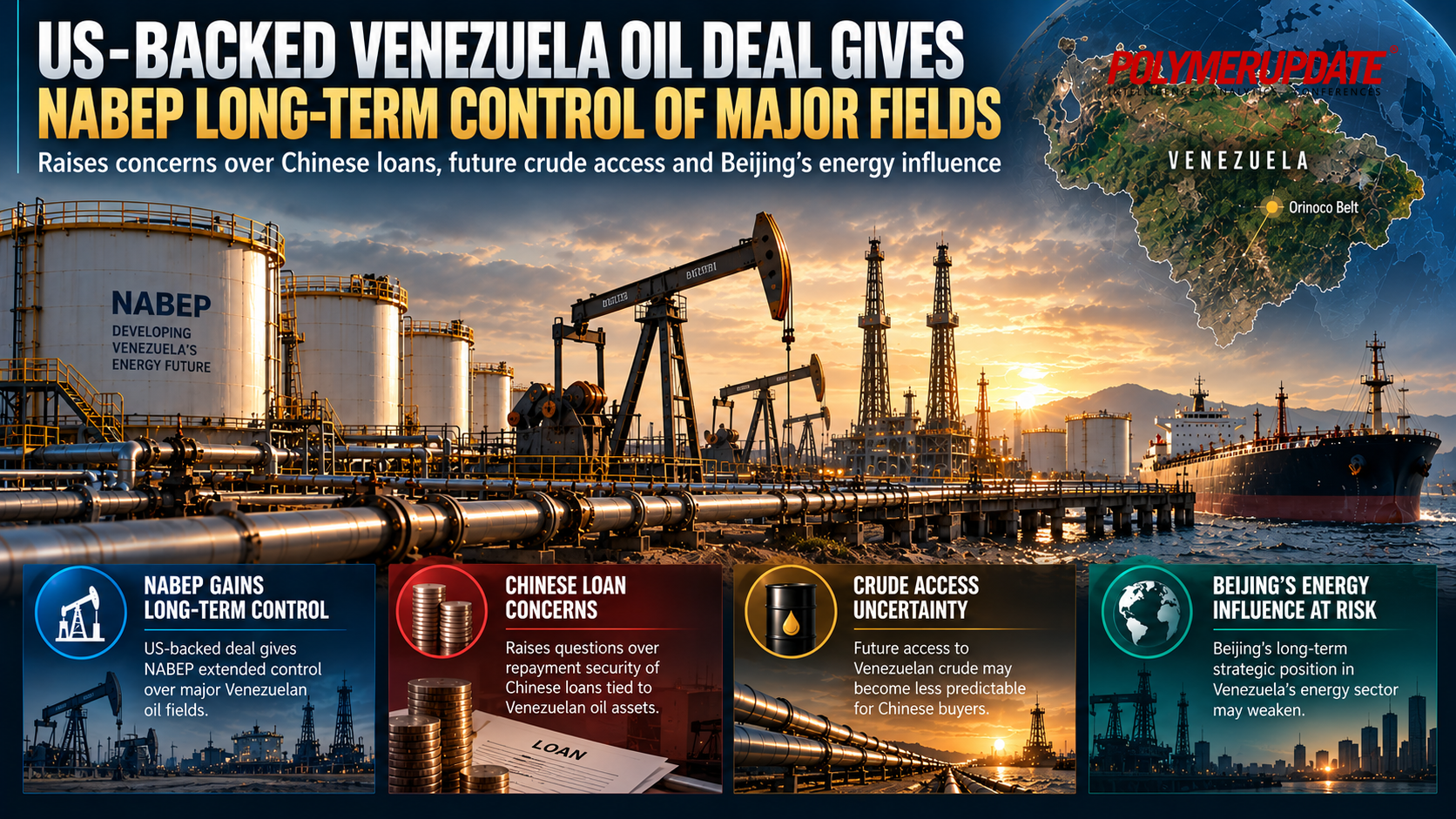
Signed on September 2, 2026, in Caracas, the deal grants North American Blue Energy Partners (NABEP) century-long rights over 17 major Venezuelan oil fields containing an estimated 65 billion barrels of proven reserves. For more than two decades, China financed Venezuela through oil-backed loans, infrastructure investments and upstream petroleum projects in exchange for long-term access to crude supplies. However, the new arrangement effectively shifts control of a significant portion of Venezuela's future oil production toward U.S.-aligned interests, potentially complicating the repayment of Chinese debt and reducing Beijing's preferential access to discounted crude.
 Decades of oil-backed partnership
China's relationship with Venezuela has been one of the largest examples of resource-backed financing in the developing world. Beginning in the mid-2000s, Chinese policy banks—including the China Development Bank and Export-Import Bank of China—extended tens of billions of dollars in loans to Caracas, with repayment structured largely through shipments of crude oil. By 2015, Chinese institutions had provided approximately US$ 60 billion through 17 oil-backed loan agreements.
Broader estimates, including infrastructure and investment commitments, place China's total financial exposure in Venezuela at more than US$ 100 billion. Although much of the debt has been restructured over the years, analysts estimate Venezuela still owes Chinese lenders at least US$ 10 billion. The debt remains a sovereign obligation of the Venezuelan state, but the availability of oil cargoes for repayment could become increasingly constrained under the new production framework.
A transformational US-backed agreementThe multibillion-dollar agreement signed with NABEP aims to dramatically increase Venezuelan oil production and modernize aging infrastructure across the Lake Maracaibo region and the Orinoco Belt—home to some of the world's largest heavy crude reserves. NABEP, formerly associated with American energy entrepreneur Harry Sargeant and now controlled by Venezuelan businessman Alejandro Betancourt, has announced plans to invest as much as US$ 100 billion in oil production, transportation and export infrastructure over the coming decades.
The company has secured 100-year operating rights over 17 oil fields representing roughly one-fifth of Venezuela's total proven reserves. Collectively, these assets hold an estimated 65 billion barrels of recoverable crude. Under the agreement, the U.S. government will obtain a 35 percent stake in NABEP's corporate parent, alongside the right to purchase 20 percent of the company's oil production at cost. Washington also retains the right of first refusal over the remaining output, giving it substantial influence over the marketing and destination of Venezuelan crude. NABEP estimates the development could generate more than US$ 200 billion in taxes and royalties for Venezuela during its first 25 years of operation.
Chinese investments lose strategic groundSeveral of the oil blocks included in the NABEP portfolio were previously operated by—or earmarked for development by—major Chinese companies, including China National Petroleum Corporation (CNPC), Sinopec and China Concord Resources. Their displacement represents more than the loss of commercial contracts. It weakens China's influence over upstream investment decisions, production volumes, pricing mechanisms and export destinations that it spent years cultivating through financial support and diplomatic engagement.
For Beijing, ownership was never the primary objective. The larger strategy relied on ensuring long-term access to oil through financing arrangements that aligned Venezuela's economic recovery with Chinese energy security. That premise is now being tested. With NABEP controlling production from the transferred fields and the U.S. government holding preferential purchase rights, Chinese refiners and lenders may no longer enjoy guaranteed access to barrels that historically underpinned debt repayments and profitable refining operations.
Debt repayment becomes more uncertainThe outstanding Chinese loans do not disappear because operating rights have changed hands. Venezuela remains legally responsible for honoring its obligations regardless of which company produces the oil. However, the practical mechanism for repayment could become significantly more complicated. Since 2020, between 50,000 and 100,000 barrels per day of Venezuelan crude have reportedly been allocated toward servicing Chinese debt. If a substantial share of future production is marketed through NABEP under U.S. preferential purchasing arrangements, Caracas may have fewer unrestricted cargoes available for Chinese creditors.
The result is likely to be longer repayment timelines, greater legal complexity and increased uncertainty over how sovereign debt backed by oil exports will ultimately be settled. Chinese officials have already signalled their opposition to any erosion of their commercial rights. Reports said Foreign Ministry spokesman Guo Jiakun quoting that China's economic cooperation with Venezuela is protected under international law and insisted that Beijing's legitimate interests must be respected. Even so, reversing the transfer through legal or diplomatic channels is expected to prove difficult.
Discounted crude at riskChina has become the largest buyer of Venezuelan oil, importing an estimated 50 percent to 89 percent of the country's exports in recent years. Much of that crude has flowed to independent "teapot" refineries, which rely on discounted heavy oil to maintain profitability amid weak domestic fuel demand and chronic refining overcapacity. The trade has often operated through complex logistical networks involving shadow-fleet tankers, ship-to-ship transfers and documentation identifying Venezuelan crude as originating from Malaysia or Brazil. Many transactions have also been settled in renminbi, reducing dependence on the U.S. dollar.
Venezuelan crude currently accounts for roughly 4 percent to 4.5 percent of China's seaborne oil imports. While that volume can theoretically be replaced by heavy grades from Iran, Iraq or Canada, substitutes generally come at higher prices. For Chinese refiners, the real loss is not simply supply—it is margin. Discounted Venezuelan barrels have provided an important competitive advantage for smaller refiners operating on exceptionally thin profit spreads.
Washington gains geopolitical leverageThe agreement marks a notable reversal in the geopolitical balance surrounding Venezuela's petroleum industry. For years, China appeared positioned to dominate the country's energy future through a combination of sovereign lending, infrastructure construction and upstream investment. The new arrangement instead gives Washington meaningful influence over production from some of Venezuela's richest oil fields without directly nationalizing assets. Energy analysts argue that Beijing now faces losses on three fronts. Financially, Chinese banks confront a more uncertain path toward recovering billions of dollars in outstanding loans.
Commercially, refiners risk losing access to deeply discounted heavy crude that supported refinery economics. Geopolitically, Chinese state-owned oil companies may find themselves excluded from strategic assets they helped develop over nearly two decades. For Venezuela, the deal offers the prospect of massive capital inflows and higher production after years of economic crisis and declining oil output. Whether those promised investments materialize at the projected scale remains to be seen, but the agreement undoubtedly alters the country's external partnerships.
For China, however, the greatest setback may be symbolic. The Venezuelan strategy was built on the belief that long-term financing, infrastructure investment and diplomatic support would secure enduring access to natural resources and lasting political influence. The NABEP agreement suggests that even the world's largest oil-backed lending program may not guarantee control over future barrels when geopolitical priorities shift.
DILIP KUMAR JHA
Editor
dilip.jha@polymerupdate.com