Indian exporters have emphasised the need to convert political goodwill into stronger trade, investment and technology partnerships among BRICS countries to support regional economic growth and shared prosperity. With most members of the Asia-centric bloc looking towards the West for trade and investment, advanced economies are increasingly focusing on Asia as the next frontier for business partnerships, driven by its vast population and growing consumer demand.
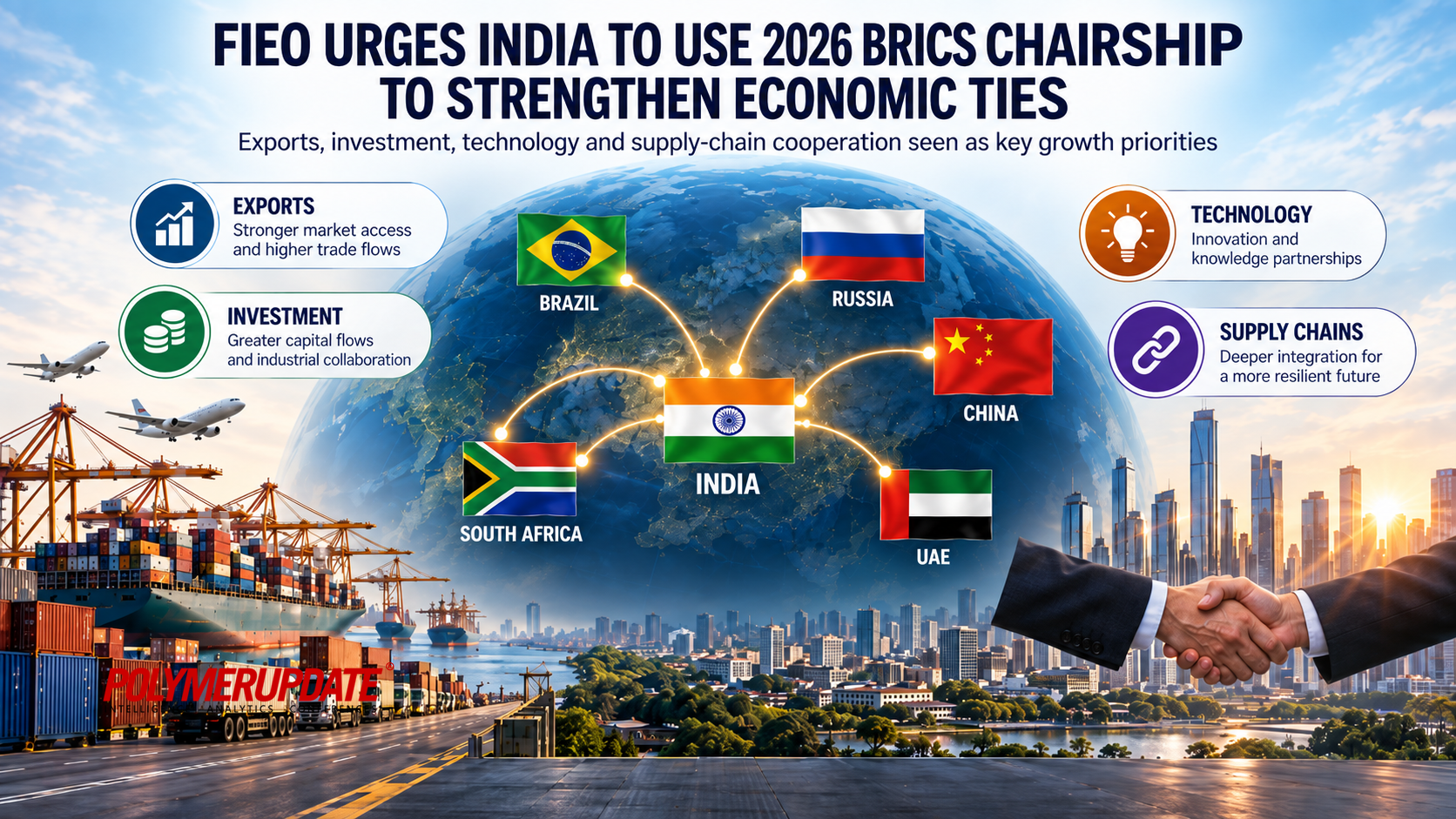
Speaking ahead of the 18th BRICS Summit, scheduled to be held in New Delhi on September 12–13, 2026, S. C. Ralhan, President of the Federation of Indian Export Organisations (FIEO), said the summit presents India with a significant opportunity to translate its expanding strategic engagement with the Global South into tangible gains in exports, investment, technology and resilient supply chains.
“The BRICS Summit offers India an important opportunity to convert its growing strategic engagement with the Global South into tangible gains in exports, investment, technology and resilient supply chains. BRICS should now move beyond strategic dialogue to measurable commercial outcomes. For Indian businesses, its real value will lie in easier market access, stronger supply-chain partnerships, greater investment flows, technology collaboration and efficient payment mechanisms,” Ralhan said.
 Formation of the group
The BRICS grouping was initially formed in 2006 as BRIC, comprising Brazil, Russia, India and China, with its first high-level meeting held in New York the same year. The first formal BRIC Summit took place in Yekaterinburg, Russia, on June 16, 2009. South Africa joined the bloc in late 2010, leading to the adoption of the acronym BRICS, and participated as a full member at the 2011 summit. The grouping now comprises 11 full members, with Egypt, Ethiopia, Iran, Saudi Arabia and the United Arab Emirates joining in 2024, followed by Indonesia in 2025.
The primary objective behind the formation of BRICS was to provide major emerging economies with a collective platform to strengthen economic cooperation, enhance geopolitical influence and advocate reforms of Western-dominated global institutions. To achieve these goals, member nations promote trade, investment and technological collaboration; support a multipolar world order and a stronger voice for developing countries in institutions such as the United Nations, International Monetary Fund (IMF) and World Bank; develop alternative financial mechanisms, including the New Development Bank (NDB); encourage greater use of local currencies in trade to reduce dependence on the US dollar; foster shared development among emerging economies; and cooperate on regional security, counter-terrorism and sustainable development initiatives.
Trade imbalanceIndia's merchandise exports to the expanded BRICS bloc reached US$95.7 billion in FY 2025–26, making the 11-member grouping one of the country's most important export destinations. The bloc accounted for nearly 22 percent of India's total merchandise exports, with shipments spanning engineering goods, petroleum products, chemicals, pharmaceuticals, textiles and agricultural commodities. In addition, India exported more than US$ 31 billion worth of services to BRICS countries during the preceding calendar period, highlighting the growing importance of information technology, professional services and digital trade in strengthening economic ties.
Despite the strong export performance, India's trade relationship with BRICS remains heavily import-driven. Merchandise imports from the bloc surged to US$ 321.8 billion in FY26, resulting in a substantial trade deficit of US$ 226.1 billion. The imbalance is largely attributed to discounted crude oil imports from Russia and large-scale imports of electronics, machinery and intermediate goods from China, underscoring the need for greater export diversification and deeper value-chain integration within the BRICS framework.
Consideration opportunitiesWith the expanded BRICS grouping spanning major economies across Asia, Africa, the Gulf, Latin America and Eurasia, the bloc offers Indian exporters a significantly wider economic footprint. BRICS economies collectively account for around 26% of global trade, providing India with an important platform to diversify its exports beyond traditional markets.
Therefore, India has considerable opportunities in engineering goods, pharmaceuticals, chemicals, textiles and apparel, automobiles and auto components, electronics, food and agricultural products, renewable energy, healthcare and digital services. At the same time, closer BRICS cooperation could improve India's access to critical minerals, energy, technology, capital and new manufacturing partnerships. “The opportunity is not simply to sell more to BRICS countries. India should become an integral part of the production, sourcing and value chains being developed across these economies,” Ralhan said.
Need for deliverable discussionsFIEO urged the Summit to focus on a few practical deliverables for businesses, including faster customs procedures, the reduction of non-tariff barriers, greater regulatory transparency, mutual recognition of standards and conformity assessments, improved logistics connectivity, digital trade documentation and easier cross-border payments. Ralhan also highlighted the importance of developing commercially viable mechanisms for greater settlement of intra-BRICS trade in local currencies. “Payment uncertainty can itself become a trade barrier. Efficient, transparent and compliant payment arrangements can reduce transaction costs and give businesses, particularly MSMEs, greater confidence to enter new markets,” he said.
Exporters also called for a much stronger business-to-business architecture within BRICS, including sector-specific buyer-seller meetings, investment matchmaking, technology partnerships, joint ventures and regular business delegations. The real test of BRICS will be whether its benefits reach manufacturers, exporters, start-ups and MSMEs. Political goodwill must translate from summit tables to shop floors.
Need to leverageIndia should also leverage its BRICS chairship to position itself as a preferred manufacturing, sourcing and investment hub for the grouping. Partnerships that combine India’s manufacturing capabilities, skilled workforce, entrepreneurial ecosystem and digital infrastructure with the capital, natural resources, technologies and markets of other BRICS economies can create new and resilient global value chains.
Trade and investment must move together. Members should focus on co-production, joint ventures and technology transfers rather than viewing BRICS markets solely through the prism of exports and imports. The BRICS Summit comes at a time when global businesses are actively diversifying their supply chains amid geopolitical and trade uncertainties. This provides India with an opportunity to position itself as a reliable alternative sourcing and manufacturing base while simultaneously expanding its presence across emerging markets.
India’s BRICS leadership should ultimately be judged by outcomes—higher exports, greater investment, stronger technology partnerships and deeper participation of Indian MSMEs in global value chains. If New Delhi can move BRICS in this direction, the Summit could become an important economic milestone for India and the wider Global South.
DILIP KUMAR JHA
Editor
dilip.jha@polymerupdate.com