When President Donald Trump began his second four-year term on January 20, 2025, he renewed the central promise of his election campaign — Make America Great Again (MAGA) — with a strong focus on reviving US manufacturing. During the first 18 months of his presidency, the administration introduced a series of measures aimed at encouraging import-dependent industries to establish production facilities in the United States, generate jobs for American workers, and reduce the country's reliance on imported goods and the associated outflow of dollars.
Despite these efforts, the results remained limited as the US trade deficit continued to stay at historically elevated levels. The overall goods and services deficit stood at US$ 903.5 billion in 2024, including a goods deficit of about US$ 1.201 trillion. In 2025, the deficit eased marginally by 0.2 percent to US$ 901.5 billion, with a wider goods deficit of US$ 1.241 trillion partly offset by a US$ 339.5 billion surplus in services. For 2026, the monthly trade gap also remained volatile amid ongoing tariff adjustments, narrowing to US$ 55.9 billion in April before widening again to US$ 73.3 billion in June.
 Major concerns
The debate over rebuilding American manufacturing has continued for decades, often framed around political choices, economic efficiency and the changing nature of work. However, rising geopolitical tensions, increasingly volatile supply chains and intensifying global competition for critical technologies and materials are giving the debate a new dimension. For the United States, manufacturing is increasingly being viewed not only as an economic issue but also as a matter of national security and supply-chain resilience.
The stakes are substantial. The United States imports about US$ 3 trillion worth of manufactured goods each year, while its goods trade deficit of roughly US$ 1.2 trillion frequently dominates public discussion. Yet the scale of imports and the trade deficit do not fully capture the underlying vulnerabilities. A significant share of US trade is linked to products exposed to at least one of three risks: strategic importance to national security, concentration among a limited number of suppliers, or dependence on geographically distant trading partners.
Import dependenceAccording to recent research by the McKinsey Global Institute, around one-quarter of imported products are exposed to at least two of these dependencies. About 5 percent, largely electronic products and critical materials such as rare-earth magnets, face all three vulnerabilities. For policymakers and business leaders, therefore, the issue is increasingly shifting from whether such vulnerabilities exist to how companies and the government can prepare for potential disruptions.
One approach examined by the research is the possibility of increasing domestic manufacturing capacity. The study introduces a “ramp-up factor” to assess how much additional US production would be required to replace products currently sourced from overseas. A ramp-up factor of around one or below indicates that existing domestic production capacity could, in principle, support sufficient additional output to replace imports, although the commercial viability of selling that additional production remains an important consideration.
Several established manufacturing industries, including aircraft and automobiles, fall into this category. Higher utilisation of existing factories could potentially generate an additional US$ 660 billion in manufacturing output, according to the research. However, the ability to produce more does not necessarily mean that all additional output would find a market. Demand, pricing, competitiveness and the economics of domestic production would ultimately determine whether increased capacity is commercially sustainable.
Challenges for global economyThe challenge becomes considerably greater for products expected to shape the future of the global economy, particularly semiconductors and data-centre servers. US production in several of these categories remains relatively small compared with the volume of imports. Consequently, ramp-up factors for many such products are significantly above one, indicating that merely increasing utilisation of existing facilities would not be sufficient to replace imports.
For roughly half of these products, including laptops, domestic production capacity would need to increase fivefold or more to meet current import requirements, according to the research. This highlights the difference between expanding output from an existing industrial base and creating entirely new manufacturing ecosystems capable of supporting strategically important technologies.
Need of massive investmentEliminating the most critical trade exposures could require approximately US$ 2 trillion in investment, the research estimates. While the figure is substantial, the United States has previously undertaken large-scale industrial transformations. The development of the shale industry and the more recent surge in capital investment associated with artificial intelligence demonstrate the country's capacity to mobilise significant financial and industrial resources when a compelling economic opportunity exists.
The central question, therefore, is not simply how much the United States can manufacture domestically, but whether there is a sufficiently strong business case for doing so. Any expansion would need to align commercial incentives with national priorities while taking account of financing, availability of skilled workers, energy requirements, logistics and supporting infrastructure.
The transition also does not necessarily require immediate construction of large numbers of new factories. Companies can begin by examining their existing exposure to international trade risks and identifying opportunities to diversify sourcing. Building relationships with additional trading partners could reduce dependence on individual suppliers or markets. Companies can also redesign supply chains to improve resilience and prepare their workforce for increasingly automated manufacturing processes.
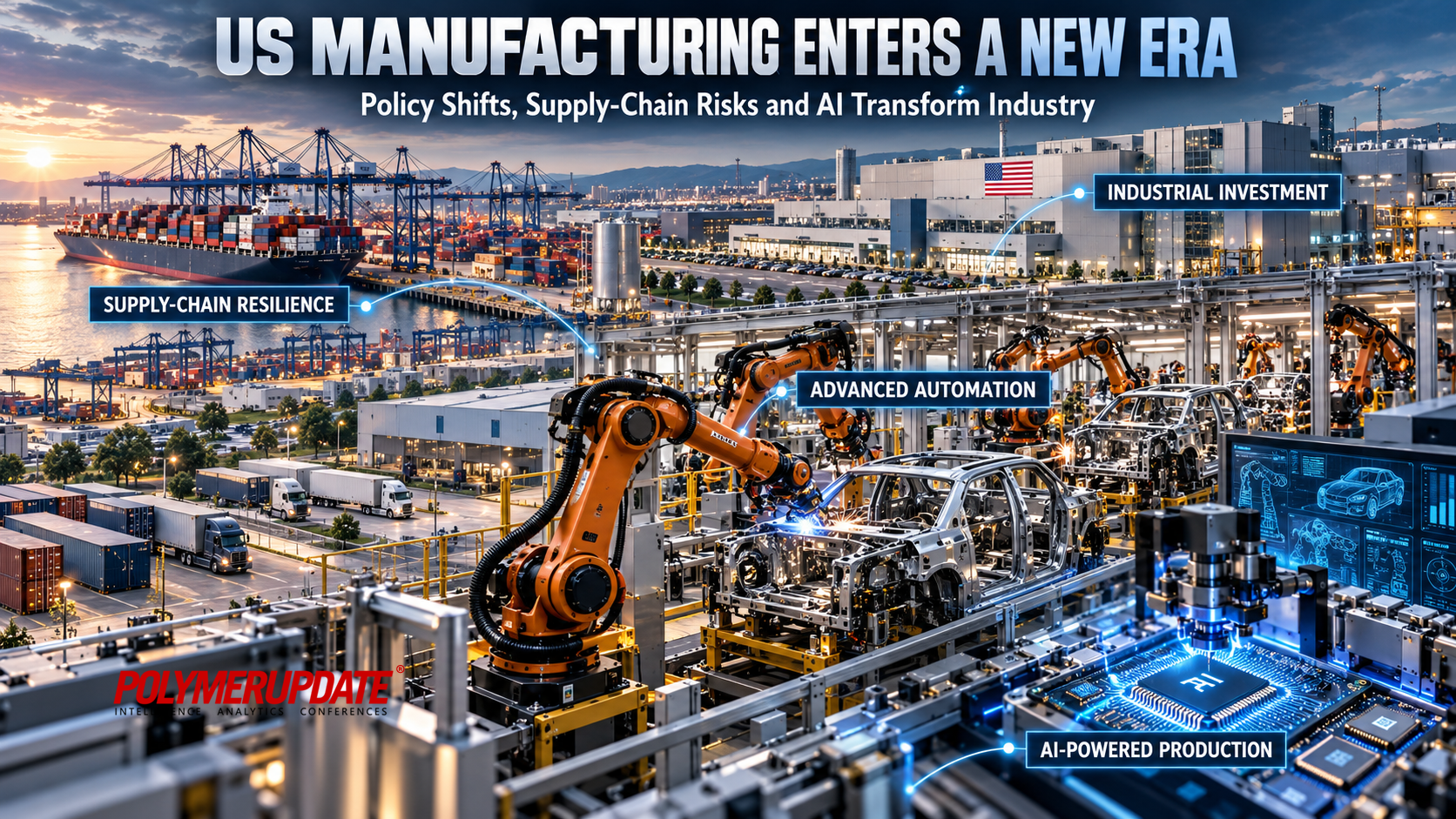
Technological transformationTechnology will be central to this transformation. Artificial intelligence, robotics and advanced automation are likely to change the structure of American factories significantly. Future manufacturing facilities could employ fewer workers in certain roles while creating greater demand for highly skilled workers capable of operating, maintaining and managing advanced production systems.
This means that rebuilding manufacturing capacity cannot be separated from workforce development. Training and reskilling will become increasingly important as production moves towards digitally integrated and automated systems. The objective would be not simply to recreate the factories and jobs of previous decades, but to develop an industrial base capable of combining advanced technology with a highly skilled workforce.
For business leaders, the challenge extends across the broader economic system. Manufacturing decisions influence corporate balance sheets, energy demand, employment, productivity and infrastructure requirements. Companies will need to reassess their supply-chain exposure, identify critical dependencies before disruptions occur and determine where additional domestic capacity could provide strategic and commercial value.
Skilled manpower requirementInvestment in skills that complement automation will be equally important. Companies may also need to maintain a closer connection with physical production even as their operations become increasingly digital. Building resilience against supply shocks could ultimately become a competitive advantage rather than simply an additional cost of doing business.
There is understandable nostalgia for an era when manufacturing provided stable employment to a much larger share of the American workforce. However, the economic and demographic conditions that supported that model have changed. The United States has become increasingly services-oriented, while globalisation and technological advances have transformed the economics of manufacturing.
As a result, rebuilding the US industrial base is unlikely to mean recreating the past or protecting individual industries irrespective of their economic viability. Nor would it necessarily mean reversing the broader structural shift towards services. Instead, the emerging approach is centred on developing a more productive, technologically advanced and resilient manufacturing ecosystem.
Road aheadThe transition will require sustained investment in technology, infrastructure, energy and skills, alongside a careful assessment of where domestic production can provide both economic and strategic benefits. For manufacturers, the objective is not simply to produce more at home, but to build supply chains that can withstand disruption while remaining competitive in global markets.
For the United States, the emerging manufacturing model could therefore look very different from the industrial economy of the past. Advanced automation, artificial intelligence, robotics and highly skilled workers are likely to define the next generation of factories. If supported by commercially viable investments and appropriate infrastructure, this transformation could strengthen both the country's economic competitiveness and its ability to withstand future supply-chain and geopolitical shocks.
DILIP KUMAR JHA
Editor
dilip.jha@polymerupdate.com