The economic fallout from the US-Iran conflict has extended well beyond the battlefield, creating a broad-based shock across the Middle East through disruptions to energy supplies, maritime trade, aviation, tourism and industrial activity. The prolonged disruption of shipping through the Strait of Hormuz has exposed the vulnerability of economies heavily dependent on energy exports and international transport links, while damage to critical infrastructure is expected to weigh on regional growth and investment for years.
The International Monetary Fund (IMF) has sharply downgraded its 2026 growth forecast for the Middle East and Central Asia region to 0.7 percent, from 3.7 percent in 2025. The downgrade reflects the prolonged disruption caused by the conflict and the closure of the Strait of Hormuz. The IMF expects growth to rebound to 6.5 percent in 2027, but that projection assumes a gradual reopening of the waterway and a return towards normal conditions.
The immediate economic impact has been most severe in countries directly exposed to energy production and transportation. Iraq, Kuwait and Qatar are projected to record sharp economic contractions in 2026 before potentially experiencing strong rebounds as energy exports recover. Saudi Arabia, with more diversified export routes and the East-West pipeline connecting its oil-producing regions with Red Sea ports, has been relatively more resilient, although the IMF still expects its growth to slow to 1.7 percent this year.
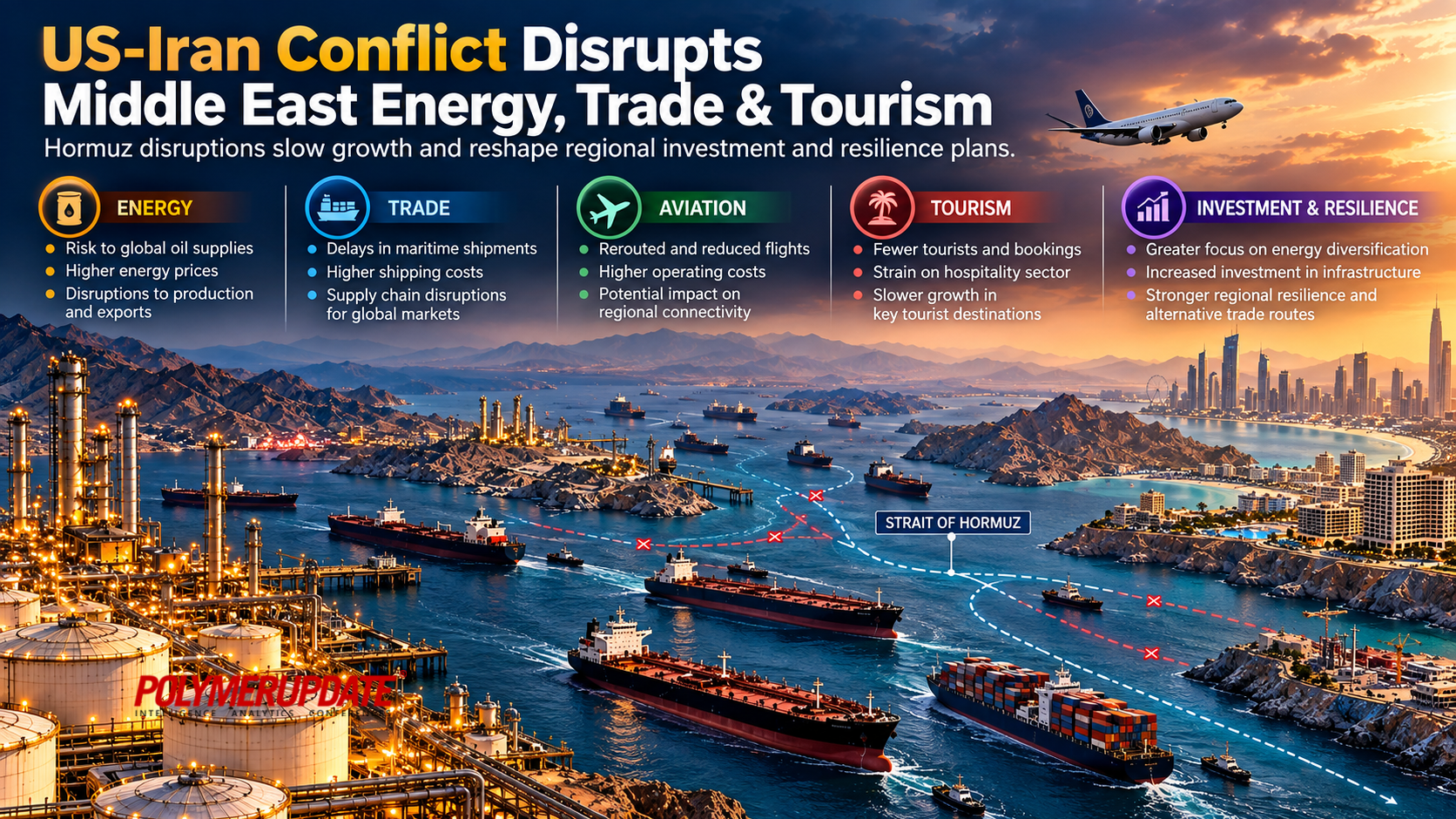 Hormuz disruption paralyses regional trade
At the centre of the economic shock is the Strait of Hormuz, through which a substantial share of the world's seaborne oil and LNG trade normally passes. The conflict has reduced shipping through the strategic waterway to a fraction of normal levels. S&P Global reported in August that ship crossings through Hormuz had fallen by more than 80 percent since the outbreak of the war, while tanker freight rates reached record levels.
The disruption has forced Gulf producers to rely more heavily on alternative transportation routes, including pipelines and longer maritime routes. Saudi Arabia has been able to use its East-West pipeline to redirect some crude exports towards Red Sea terminals, limiting the impact on oil deliveries. However, alternative routes cannot fully replicate the capacity and flexibility provided by Hormuz.
The disruption has also increased insurance premiums, freight costs and vessel requirements. The IMF had earlier reported that tanker crossings had fallen from around 70 vessels a day to almost zero after hostilities began. Air traffic also dropped sharply at major Gulf hubs, with departures falling by roughly two-thirds in Dubai and three-quarters in Doha during the initial phase of the conflict.
Energy infrastructure suffers extensive damageThe energy sector has emerged as one of the principal casualties of the conflict. Strikes and precautionary shutdowns have affected oil and gas production and export capacity across several Gulf producers, while Qatar's LNG infrastructure at Ras Laffan has suffered particularly significant damage.
QatarEnergy said recently that attacks had disabled around 17 percent of Qatar's LNG production capacity, with repairs to damaged LNG trains expected to take years in some cases. The disruption has also raised the possibility of delays to planned LNG expansion projects because of difficulties in moving equipment through the region.
The scale of the infrastructure damage has therefore introduced a second economic shock. Even if shipping through Hormuz normalises relatively quickly, damaged production facilities, pipelines, LNG trains and industrial plants cannot necessarily return to full operation immediately.
The broader repair bill is expected to be substantial. A US proposal reported this week seeks to establish a multibillion-dollar fund with Gulf partners to rebuild damaged energy infrastructure and develop alternative routes that reduce dependence on Hormuz. The proposal underlines the growing recognition that restoring existing infrastructure alone may not be sufficient; the region may also need to invest in greater physical resilience.
Aviation, tourism and logistics under pressureThe economic shock has also spread rapidly into services. Aviation, tourism, hospitality and port logistics have been affected by flight cancellations, travel restrictions, higher insurance costs and weaker international demand. Dubai, Qatar and other major Gulf hubs depend heavily on international passengers, business travel, tourism and re-export activity. The initial disruption caused hotel occupancy in Dubai to fall dramatically.
Emaar reported that Dubai hotel occupancy had dropped to around 20–25 percent during the conflict before recovering to approximately 60 percent. The company expects occupancy to return towards pre-war levels within a year if regional conditions stabilise. The consequences extend beyond hotels. Reduced air connectivity affects retail, restaurants, conferences, real estate and other service industries that have supported Gulf diversification strategies. Ports and logistics companies have also faced higher costs as vessels have been diverted, schedules disrupted and war-risk insurance premiums increased.
The OECD has noted that global freight costs have risen significantly since the conflict, with higher insurance premiums and fuel costs contributing to substantially higher ocean and air freight rates. It also warned that damage to energy production facilities could delay the recovery even after shipping routes reopen.
Investment priorities likely to changeThe conflict is also forcing Gulf economies to reconsider investment priorities. For years, sovereign wealth funds and governments across the region have pursued large-scale projects in tourism, real estate, logistics, entertainment, technology and infrastructure as part of economic diversification programmes. The immediate requirement to repair energy, transport and industrial infrastructure could redirect capital towards reconstruction and resilience.
Some discretionary mega-project spending may therefore face greater scrutiny, particularly where projects depend heavily on international visitors, imported equipment or uninterrupted maritime trade. This does not necessarily mean that Gulf diversification programmes will be abandoned. Rather, the crisis could alter their composition. Greater emphasis may be placed on domestic supply chains, strategic reserves, alternative export corridors, local manufacturing and infrastructure capable of operating during geopolitical disruptions.
Gulf's risk perception changesPerhaps the most lasting economic consequence could be a change in how international investors assess the Gulf.
For decades, the region's political and security risks were often viewed alongside its strong fiscal buffers, energy resources, infrastructure and investment opportunities. The conflict has demonstrated that even highly developed Gulf economies remain exposed to disruptions affecting a single strategic maritime chokepoint.
That perception is already influencing infrastructure planning. The proposed US-Gulf initiative to develop alternative energy routes is aimed partly at reducing the economic leverage associated with Hormuz. Saudi Arabia's existing pipeline network provides an example of how alternative routes can cushion the impact of maritime disruption.
Energy transition gains new urgencyThe crisis could also accelerate the region's energy transition. Gulf states have already invested heavily in solar power, hydrogen and other renewable-energy projects. Reducing domestic consumption of oil and gas through renewable generation can free up more hydrocarbons for export while reducing exposure to disruptions in fossil-fuel transportation.
The IMF has similarly highlighted the importance of accelerating the energy transition and improving resilience following the war-related shock. For Gulf economies, therefore, renewables are increasingly linked not only to climate objectives but also to energy security and economic resilience.
Recovery hinges on stabilityThe outlook for the regional economy ultimately depends on two closely connected factors: the restoration of safe maritime trade and a durable reduction in geopolitical tensions. The IMF's forecasts assume that Hormuz gradually reopens and that conditions move towards normality by early 2027. However, the Fund has warned that renewed escalation could trigger another rise in commodity prices, supply shortages, exchange-rate pressures and inflation.
The economic damage from the conflict will therefore not end when the guns fall silent. Restoring investor confidence, repairing energy infrastructure, rebuilding tourism and aviation flows and normalising shipping will require time.
The Middle East enters this next phase with substantial financial resources, particularly among Gulf sovereign wealth funds, but also with a clearer understanding of the economic cost of geopolitical vulnerability. The conflict is likely to leave behind not merely damaged infrastructure, but a fundamentally stronger focus on diversified trade routes, resilient energy systems and reduced dependence on strategic chokepoints.
DILIP KUMAR JHA
Editor
dilip.jha@polymerupdate.com