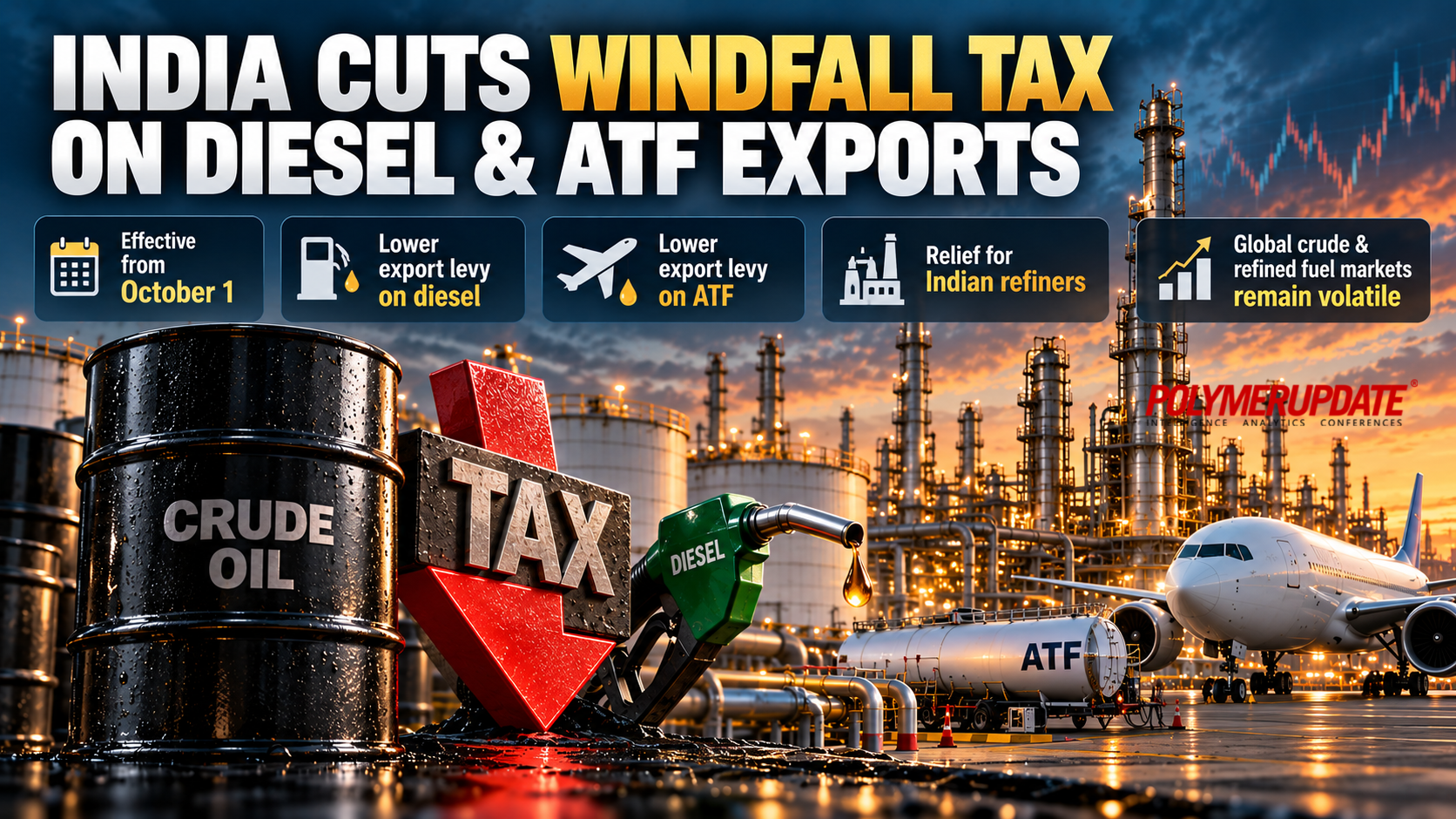
India has reduced the windfall tax on exports of diesel and aviation turbine fuel (ATF), easing the levy on refiners exporting the two petroleum products amid continuing volatility in global crude oil and refined fuel markets. According to a government notification issued late on Wednesday, the export duty on diesel has been reduced to Rs 16 per litre from Rs 20 per litre, while the levy on ATF exports has been cut to Rs 10.5 per litre from Rs 15 per litre, effective October 1. The duty on petrol exports, meanwhile, has been retained at Rs 0.5 per litre for the fortnight beginning October 1.
The latest reduction follows an earlier cut in export levies announced on September 16, when the diesel duty was lowered to Rs 20 per litre from Rs 25 per litre and the ATF levy was reduced to Rs 15 per litre from Rs 19 per litre. The government reviews the export duties every fortnight and adjusts them in response to movements in international crude oil and petroleum product prices.
The decision comes against the backdrop of substantial volatility in international energy markets following the escalation of the West Asia conflict. Crude oil prices have risen sharply at various points during the conflict, while disruptions to crude supplies, shipping routes and refined-product markets have increased uncertainty for refiners and fuel exporters.
 Tax policy linked to global prices
India's windfall tax regime for petroleum products has been used as a mechanism to capture exceptional gains generated by domestic refiners when international fuel prices rise substantially above domestic market conditions. The government first introduced windfall taxes on fuel exports in July 2022, when international crude and refined-product prices surged following the Russia-Ukraine conflict. The levies were subsequently withdrawn in 2024 as global energy markets stabilised.
The government reintroduced export taxes in March 2026 after crude oil prices jumped following the escalation of the US-Israeli war on Iran. The latest regime has been adjusted periodically in response to changing international market conditions. The current structure means that the tax burden on exporters can rise or fall relatively quickly as global crude and product prices change. The fortnightly review mechanism gives the government flexibility to adjust the levy without maintaining a fixed rate through substantially different market conditions.
Refiners gain some reliefThe reduction in the diesel and ATF export levies is expected to provide some relief to Indian refiners that sell petroleum products in overseas markets. India has a large refining industry with substantial capacity oriented towards producing fuels for both domestic consumption and export. Indian refiners, particularly those operating large and complex facilities, have historically exported significant volumes of diesel and aviation fuel to markets in Asia, Africa, Europe and other regions.
A lower export levy improves the economics of overseas sales by reducing the amount of tax deducted from the realised export value. The extent of the benefit, however, will depend on international product prices, crude procurement costs, freight rates, refining margins and the availability of export markets. The reduction in the ATF levy is particularly relevant at a time when international jet fuel markets have been affected by disruptions to refinery operations and supply chains. For Indian refiners, the lower tax could improve export competitiveness if international aviation fuel prices remain elevated.
Domestic fuel duties unchangedImportantly, the latest notification concerns petroleum products exported from India and does not change the existing excise duty rates on petrol and diesel cleared for domestic consumption. The government has therefore maintained a distinction between the taxation of exported petroleum products and fuels sold in the domestic market. The latest changes are primarily relevant to refiners and exporters rather than directly altering the tax component of petrol and diesel sold to consumers in India.
The distinction is significant because domestic fuel prices are influenced by a combination of international crude oil prices, refining and marketing costs, central and state-level taxes, exchange-rate movements and the pricing policies of oil marketing companies (OMCs). Therefore, a reduction in export duties on diesel and aviation turbine fuel does not directly translate into lower prices for consumers in the domestic market. Domestic retail prices continue to depend on the broader cost structure and pricing decisions of OMCs, along with prevailing global oil market conditions.
Balancing domestic availability and exportsThe windfall tax was originally introduced to address concerns that refiners could benefit disproportionately from high international prices by exporting petroleum products rather than supplying the domestic market. During periods of global supply disruption, the government has sought to ensure adequate availability of fuels in the domestic market while preventing unusually high international prices from creating excessive incentives for exports.
The export levy therefore serves two objectives: capturing a portion of exceptional gains during periods of high international prices and discouraging excessive diversion of petroleum products away from the domestic market. However, the tax also affects the commercial economics of Indian refiners. Excessively high export duties can reduce the attractiveness of overseas markets and potentially affect refinery utilisation, particularly when domestic demand is insufficient to absorb available production. The fortnightly revision mechanism allows the government to adjust the balance between these competing considerations as market conditions evolve.
Global refined-product markets remain tightThe latest reduction also comes at a time when global refined-product markets remain sensitive to geopolitical developments. Disruptions in crude supply and shipping can quickly translate into higher prices for diesel, jet fuel and other refined products, even when crude availability improves in some regions. India's strategic position as a major refining centre gives its refiners an important role in responding to these changes. The country has both a large domestic fuel market and substantial export-oriented refining capacity, allowing refiners to redirect cargoes depending on regional price differentials and market demand.
However, the economics of such arbitrage are increasingly influenced by freight costs and geopolitical risk. Shipping disruptions in the Middle East and other major energy corridors can alter the delivered cost of petroleum products and reduce the attractiveness of particular export destinations. For Indian refiners, therefore, the reduction in export taxes provides some additional flexibility at a time when international fuel markets remain highly volatile.
Policy likely to remain market-sensitiveThe latest cut does not necessarily signal a permanent change in India's windfall-tax policy. Since export duties are reviewed every two weeks, future rates will continue to depend on developments in international crude oil and refined-product prices. If global oil prices remain elevated because of supply disruptions or geopolitical tensions, the government could continue to calibrate the levies to balance domestic availability, refinery economics and fiscal considerations.
Conversely, a sustained decline in international crude and product prices could reduce the rationale for maintaining high export duties. For Indian refiners, the immediate impact of the October 1 revision is a lower tax burden on diesel and ATF exports. The reduction also demonstrates the government's continued reliance on a flexible, market-linked approach to petroleum export taxation as global energy markets navigate geopolitical uncertainty and changing supply conditions.
DILIP KUMAR JHA
Editor
dilip.jha@polymerupdate.com