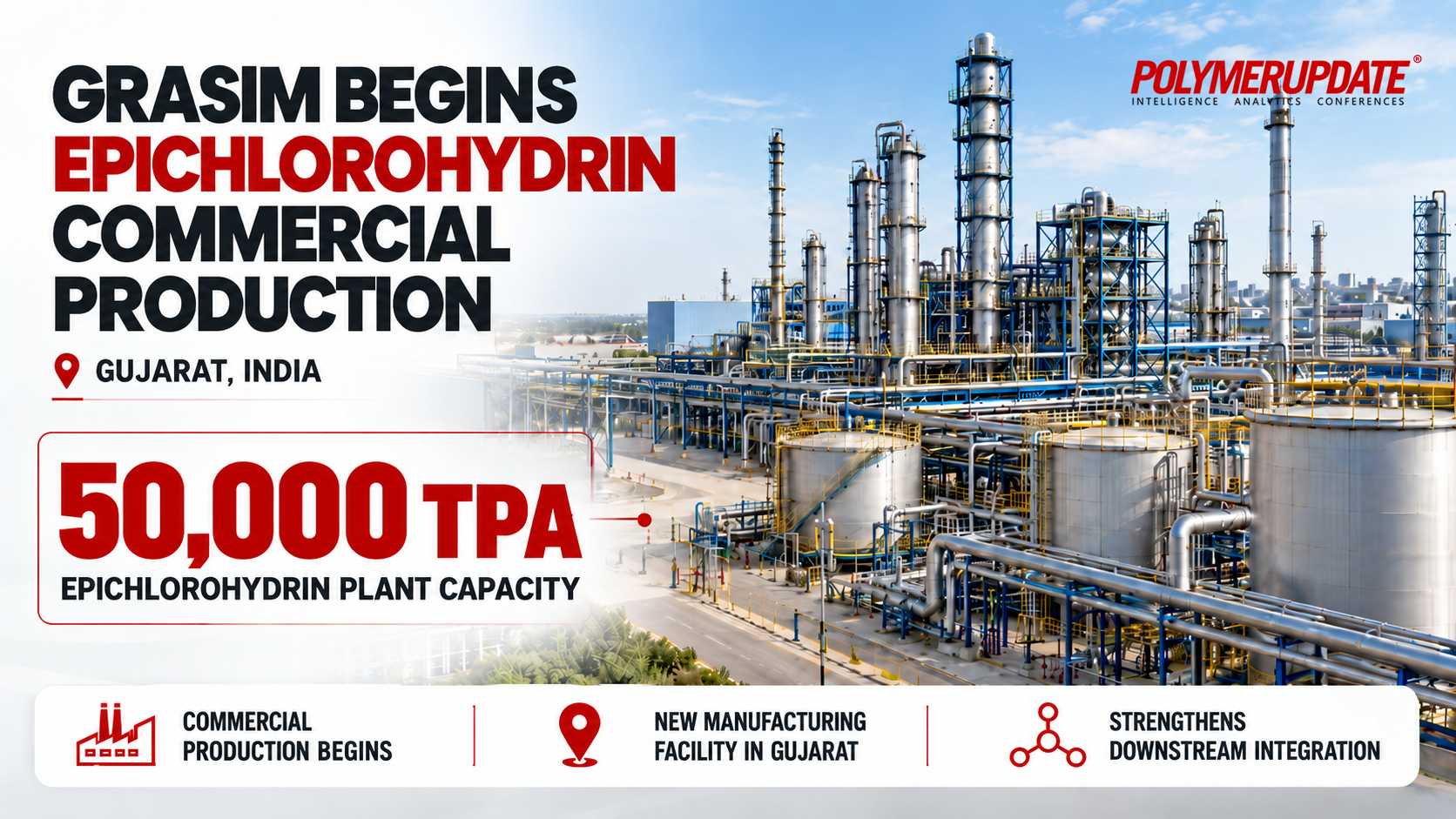
Grasim Industries Ltd, the flagship company of the Aditya Birla Group, has commenced commercial production at its new epichlorohydrin (ECH) manufacturing plant at Vilayat in Gujarat, effective October 21, 2026. The facility has an installed production capacity of 50,000 tonnes per annum (TPA), marking a significant milestone in the company's specialty chemicals expansion strategy. The commissioning of the plant strengthens Grasim Industries' downstream chlor-alkali derivatives portfolio and expands its presence in specialty chemicals.
The facility is also expected to support greater integration across the company's chemical operations by adding capacity for a key raw material used in the manufacture of epoxy resins. The new plant represents a further step in Grasim's efforts to strengthen its position in value-added chemicals and expand its portfolio beyond conventional chlor-alkali products. By entering commercial production, the company has added a new manufacturing asset that can serve the requirements of downstream industries dependent on epichlorohydrin and its derivatives.
Epichlorohydrin is an important chemical intermediate used primarily in the production of epoxy resins, which find applications across construction, infrastructure, electrical and electronics, automotive, wind energy, coatings, adhesives and industrial composites. Its addition to Grasim's manufacturing portfolio broadens the company's participation in chemical value chains supplying several industrial sectors.
 Strengthening downstream integration
The commencement of production at Vilayat is strategically important for Grasim's chlor-alkali business, as epichlorohydrin is a chlorine-based chemical intermediate. The facility strengthens the company's downstream integration by extending its chemical portfolio into a specialised intermediate used in the production of higher-value materials. Chlor-alkali manufacturing produces chlorine and caustic soda, two fundamental industrial chemicals that serve a broad range of applications.
Chlorine is used in the manufacture of numerous derivatives, including chemicals that form the building blocks of products used in infrastructure, water treatment, pharmaceuticals, plastics and other industrial applications. Developing downstream derivatives enables chemical producers to expand the range of products manufactured from their existing chemical value chains. It can also provide opportunities to move into more specialised markets, where product quality, consistency, technical capabilities and customer relationships are important competitive factors.
For Grasim, the addition of a 50,000 TPA epichlorohydrin facility is consistent with a strategy of expanding its downstream chemicals portfolio and increasing its exposure to value-added products. The plant provides a dedicated manufacturing base for a chemical intermediate with applications across multiple end-use industries. The extent to which the new facility will improve operating efficiencies and profitability will depend on factors such as capacity utilisation, feedstock costs, energy prices, market demand and prevailing prices for epichlorohydrin and competing supplies.
Epichlorohydrin's role in the chemical value chainEpichlorohydrin is widely used in the production of epoxy resins, which are valued for their adhesion, mechanical strength, chemical resistance and electrical insulation properties. These characteristics make epoxy-based materials suitable for a variety of industrial and commercial applications. In the construction and infrastructure sectors, epoxy resins are used in protective coatings, flooring systems, adhesives and repair materials. Their resistance to chemicals and environmental degradation also makes them useful in industrial maintenance and corrosion-protection applications.
The electrical and electronics industries use epoxy-based materials for insulation, encapsulation and protection of components. In the automotive sector, such materials are employed in coatings, structural adhesives and composite applications. Epoxy resins also play a role in wind energy, where they are used in composite materials for wind turbine blades. Demand for these applications is influenced by industrial production, infrastructure investment, construction activity and the development of renewable energy capacity.
As a result, epichlorohydrin is linked to several downstream markets rather than depending on a single end-use sector. The establishment of domestic manufacturing capacity can contribute to the development of the broader chemical value chain by increasing the availability of key intermediates for resin producers and other industrial consumers. However, the commercial benefits will depend on the competitiveness of domestic production against imports and the ability of manufacturers to meet customers' technical and quality requirements.
Specialty chemicals expansionGrasim's latest investment adds to the company's presence in the Indian chemicals sector at a time when manufacturers are seeking to expand domestic production capabilities and strengthen their positions in higher-value segments. Specialty chemicals have gained strategic importance for producers looking to diversify their product portfolios, develop closer relationships with industrial customers and participate in specialised applications. Unlike basic chemicals, many specialty products require application-specific performance characteristics, technical support and consistent product quality.
For chemical manufacturers, expanding into downstream intermediates can offer opportunities to serve a wider customer base and develop linkages with industries further along the value chain. At the same time, the success of such investments depends on market conditions, the availability and cost of raw materials, efficient plant operations and the pace at which downstream demand develops.
Grasim's new epichlorohydrin facility provides additional capacity in this segment and reinforces the company's focus on expanding its specialty chemicals footprint. The 50,000 TPA capacity represents a substantial addition to its manufacturing capabilities in the product category. The plant's location at Vilayat, Gujarat, also places the facility within one of India's established industrial and chemical manufacturing regions.
Gujarat has a significant concentration of chemical and petrochemical businesses, supported by industrial infrastructure, logistics networks and access to domestic and export markets. The commercial operation of the plant marks the transition from project development to production, with the next phase centred on operational performance, market development and the utilisation of the installed capacity.
OutlookThe commencement of commercial production at Grasim Industries' epichlorohydrin plant is an important development in the company's strategy to broaden its chemical portfolio and strengthen downstream integration. With an installed capacity of 50,000 tonnes per annum, the Vilayat facility adds a specialised intermediate used in epoxy resin manufacturing and connects Grasim's chlor-alkali operations with a range of downstream industrial applications.
The plant's long-term contribution will depend on its ability to achieve efficient operations, establish reliable customer relationships and compete effectively in the domestic and international markets. Demand from construction, infrastructure, electrical and electronics, automotive, coatings and renewable energy applications will remain relevant to the prospects of the broader epoxy resin value chain.
By adding epichlorohydrin to its manufacturing portfolio, Grasim has taken another step towards expanding its downstream chemicals business and increasing its participation in value-added chemical intermediates. The commencement of commercial production on October 21, 2026, establishes the operational foundation for the company to pursue these objectives.
DILIP KUMAR JHA
Editor
dilip.jha@polymerupdate.com