The United States Federal Reserve (US Fed) kept interest rates unchanged at 3.75–4 percent to maintain ample reserves in the banking system amid elevated uncertainty stemming from geopolitical developments and resilient domestic spending. The decision to hold interest rates steady was taken by a 10-2 majority despite an uptick in retail inflation, as most members favoured a wait-and-watch approach amid US efforts to strike a peace deal with Iran, which could eventually help increase crude oil supplies and, in turn, lower fuel prices.
The decision, as expected, was taken at a two-day meeting held from October 27-28, with two members supporting a 25-basis-point (bps) increase, while the majority, comprising 10 members, favoured maintaining the status quo amid ongoing global economic uncertainty arising from conflicts in the Middle East and a sharp rise in energy prices. Consequently, the decision triggered a limited market reaction, although investors continued to assess the implications of the Fed’s cautious stance for interest rates, Treasury yields and the US dollar.
Announcing the decision, US Fed Chair Kevin Warsh stated, “The committee decided to maintain the target range for the federal funds rate at 3.75-4 percent, in support of the Federal Reserve's dual mandate. The committee is continuing its policy of maintaining ample reserves in the banking system. Economic activity is expanding at a strong pace. While uncertainty remains elevated owing, in part, to geopolitical developments, domestic spending has been resilient. Productivity growth is strong, and capital investment is robust. Job gains have kept pace with the workforce, and the unemployment rate has changed little.”
Warsh acknowledged that progress was being made in bringing inflation under control but emphasised that price pressures remained too high. He reiterated the central bank’s commitment to restoring price stability, indicating that policymakers would continue to rely on incoming economic data rather than pre-committing to a particular course of action. He added, “Inflation remains elevated. The accumulation of more information will help the Committee determine the policy stance appropriate to ensure a timely return of inflation to the Committee's 2 percent goal. The committee will deliver price stability.”
The accompanying policy statement described the US economy as “expanding at a strong pace” while noting that inflation remained elevated. The Fed provided no explicit guidance on its next policy move, stating that incoming data would help the committee determine the appropriate monetary policy stance to ensure a timely return of inflation to its 2 percent target.
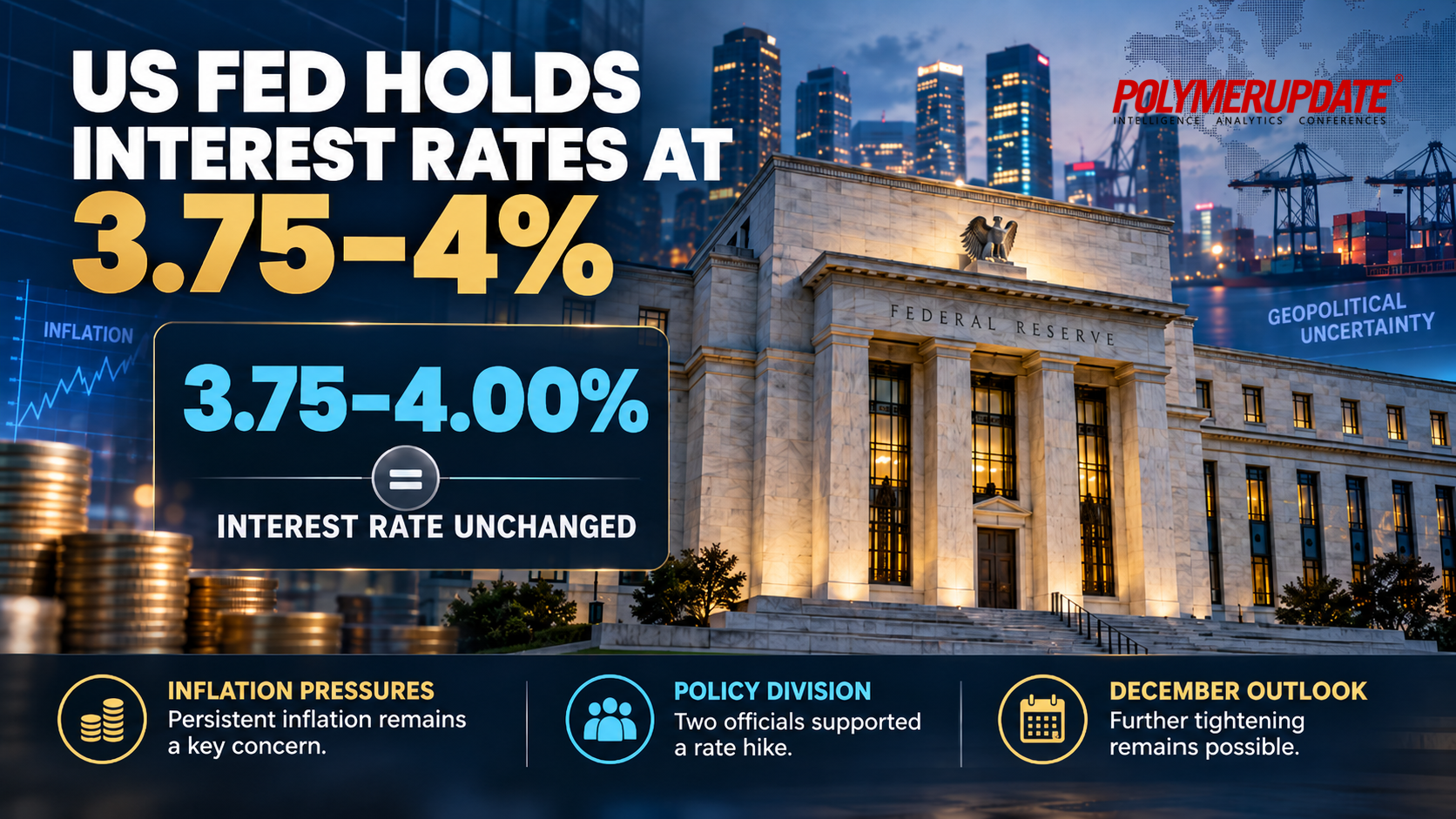 Two officials favour a rate hike
The 10-2 vote highlighted differences within the FOMC over the appropriate response to persistent inflation. Beth Hammack and Lisa Cook dissented in favour of a 25-basis-point rate increase, arguing that prevailing economic conditions warranted additional monetary tightening. Cook’s dissent was particularly notable given expectations that she would adopt a more centrist position. The two dissenting votes reinforced the view that some policymakers remain concerned about the risk of inflation becoming entrenched despite the progress achieved through previous policy adjustments.
Several senior officials, including Vice Chairs Philip Jefferson and Michelle Bowman and Governor Christopher Waller, had indicated before the meeting that they favoured a cautious approach. They saw little need for consecutive rate increases following the September policy adjustment. At the subsequent press conference, Warsh offered limited guidance on the timing of the next rate move. He said inflation was moving in the right direction and that the progress achieved so far was encouraging. He also indicated that the previous policy adjustment had removed some monetary accommodation, suggesting that policymakers wanted time to assess its effects before deciding whether further tightening was necessary.
Warsh also outlined changes to the FOMC’s meeting schedule. From September next year, one meeting will focus exclusively on monetary policy strategy without an interest-rate vote. From 2028, two meetings annually will follow this format, leaving six meetings each year at which rate decisions will be made.
December rate hike remains a possibilityThe December policy meeting is emerging as a crucial point for the Fed, with a rate increase remaining a possibility if inflationary pressures persist. Before that decision, policymakers are expected to receive two employment reports and one inflation reading, providing additional information on labour-market conditions and price trends. The timing of the November consumer price index (CPI) release could also influence the decision.
With the inflation report scheduled for the day after the December FOMC meeting, officials are expected to have access to the data before finalising their policy assessment. This could make the decision particularly sensitive to incoming inflation figures. A 25-basis-point increase in December would lift the federal funds target range to 4–4.25 percent. However, the Fed has stopped short of signalling that such a move is inevitable, leaving the outcome dependent on the trajectory of inflation, employment and broader financial conditions.
Energy prices and inflation outlookDevelopments in global energy markets will be an important determinant of the inflation trajectory over the coming months. A potential improvement in energy flows from the Persian Gulf following diplomatic progress could reduce supply disruptions, shipping costs and insurance premiums, helping lower fuel prices for US consumers. Lower transportation and energy costs would ease inflationary pressures across several sectors. Wage growth and housing costs could also influence the outlook.
Annual wage growth of around 3 percent would help contain labour-cost pressures, while further disinflation in housing, which accounts for a substantial share of the consumer inflation basket, could contribute to a broader moderation in prices. If energy-market conditions improve and underlying inflation continues to ease, US inflation could move towards the Fed’s 2 percent target in the second half of 2027. Under this scenario, a rate increase in December 2026 could eventually be reversed in December 2027, followed by an extended period of stable interest rates. However, renewed geopolitical tensions and a further rise in energy prices could complicate this outlook.
Treasury yields remain under pressureThe Fed’s decision also had implications for the US Treasury market, where the 10-year yield had been hovering near the psychologically significant 5 percent threshold ahead of the announcement. Treasury yields initially moved higher following the policy decision, reflecting concerns about persistent inflation and the possibility of another rate increase. However, they subsequently eased towards, and briefly below, 5 percent after Warsh’s press conference, as investors assessed his comments on inflation expectations and the absence of explicit forward guidance.
Nevertheless, the combination of above-target inflation and a central bank that remains prepared to tighten policy has kept longer-term yields under pressure. If inflation proves persistent, the 10-year Treasury yield could move towards 5.25 percent, increasing borrowing costs for households, businesses and the government. The Fed left its policy implementation arrangements broadly unchanged and continued to reinvest principal payments from mortgage-backed securities into Treasury bills. A detailed plan to reduce the central bank’s balance sheet further is not yet imminent, although balance-sheet reduction remains a longer-term policy objective.
DILIP KUMAR JHA
Editor
dilip.jha@polymerupdate.com