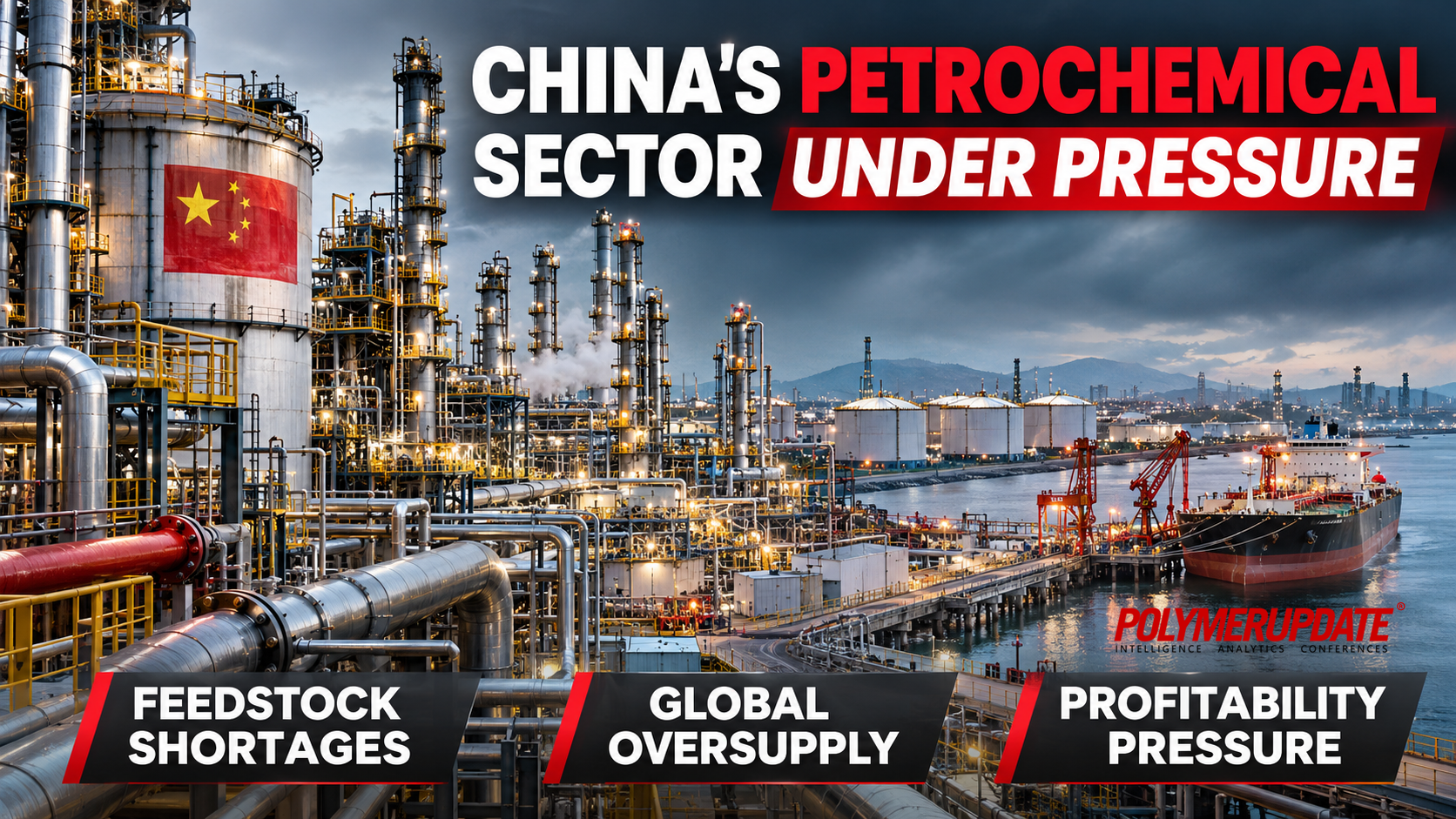
China's petrochemical industry is facing mounting raw materials supply pressures as the US-Iran war disrupts oil and feedstock flows, rapidly depleting inventories accumulated during years of excessive production and raising the prospect of higher prices across several chemical value chains. The tightening availability of raw materials is pushing up wholesale prices and increasing production costs for downstream manufacturers, highlighting the vulnerability of global petrochemical supply chains to geopolitical disruptions.
According to JPMorgan Chase & Co, the squeeze is particularly pronounced in the aromatics value chain and its downstream derivatives. These include synthetic rubber used in automobile tyres and electrical insulation, resins, plastics used in packaging and bottles, as well as paints and coatings. Reduced feedstock availability is threatening to constrain production across several interconnected manufacturing industries. The situation marks a significant change from the prolonged oversupply that has characterised China's petrochemical market.
Years of aggressive capacity additions, particularly in China, had created substantial inventories and depressed prices across global markets. However, the disruption of oil shipments and feedstock supplies following the outbreak of the US-Iran conflict in February this year has rapidly eroded these stockpiles, exposing the industry's vulnerability to supply shocks. Nevertheless, the emerging supply squeeze should not be mistaken for a resolution of the global petrochemical industry's underlying problems. The sector continues to grapple with substantial structural overcapacity, sluggish demand growth, weak operating margins and mounting pressure to invest in decarbonisation and sustainable production technologies.
A recent assessment by Wood Mackenzie, titled Petrochemicals in Peril: Oversupply Crisis and Energy Transition Threaten Industry Survival, highlights how prolonged capacity expansion and inadequate demand growth have fundamentally altered the industry's competitive landscape. The consultancy expects further capacity rationalisation as producers struggle to maintain profitability in an increasingly challenging operating environment.
 Progress of the industry
China is the undisputed global leader in petrochemical and basic commodity chemical production, holding roughly 38 percent of global capacity (projected to reach 48 percent by 2030). Over the past five years (2021–2026), its capacity has expanded at a historic pace, though this has triggered severe domestic overcapacity, margin compression, and a strategic pivot by Beijing. China's projected refining and petrochemical infrastructure reached around 21 million barrels per day (with active refining capacity sitting near 18.5 million barrels per day). Petrochemicals accounted for about 95 percent of total oil demand growth in China from 2019 to 2024.
Rapid build-outs—driven by private enterprise integration (POEs) and the 14th Five-Year Plan pushing self-sufficiency—outpaced domestic and export demand (depressed by a slowdown in real estate, weak textile exports, and rising electric vehicle (EV) adoption cutting fuel/gasoline demand). Margins for bulk chemicals were driven below zero, forcing major players (such as Hengli Petrochemical) to idle capacity or cut operating rates to multi-year lows (around 68 percent). Facing extreme oversupply, China's central government has tightened construction approvals, retired smaller or outdated refineries (targeting up to 40 percent of older refining setups), reduced export tax rebates for overcapacity goods, and pushed producers to pivot capital toward fine chemicals, specialty polyurethanes, and high-end engineering plastics.
Structural imbalanceChina's aggressive investment in petrochemical manufacturing capacity, driven partly by its ambition to reduce dependence on imported energy and chemical products, has been a major contributor to global oversupply. The country has progressively strengthened its domestic production capabilities and, in several product categories, has moved from being a major importer towards becoming an exporter. According to Wood Mackenzie, global ethylene capacity increased by more than 40 million tonnes between 2020 and 2025, with approximately 70 percent of the additional capacity coming from China.
During the same period, global ethylene demand increased by only around 27 million tonnes, leaving a substantial supply-demand imbalance. The problem, however, predates the latest expansion cycle. Between 2015 and 2020, capacity additions also exceeded consumption growth by approximately 11 million tonnes. The cumulative impact of successive investment cycles has pushed average global ethylene plant utilisation rates down to around 80 percent.
The imbalance has weighed heavily on producer profitability, particularly in commodity polymers. Integrated polyethylene cash margins have remained largely negative since mid-2022. Although positive ethylene margins initially helped integrated producers offset losses in polyethylene, this support weakened during the second half of 2024 as ethylene margins for higher-cost manufacturers also moved into negative territory. Consequently, several producers have been forced to temporarily idle or permanently shut down uncompetitive facilities.
Capacity rationalisation gathers paceThe pressure is particularly severe for older, non-integrated and high-cost facilities that lack access to competitively priced feedstocks or the advantages of large-scale operations. In Asia, significant steam cracker shutdowns have included Lotte Titan in Malaysia and JG Summit in the Philippines. Vietnam's Long Son Petrochemicals also experienced operational difficulties, although the facility resumed operations in August 2025.
South Korea is preparing for a major restructuring of its petrochemical industry, with government-supported rationalisation expected to reduce domestic petrochemical capacity by approximately 25 percent. The proposed restructuring reflects the country's growing difficulty in competing with large-scale Chinese producers in commodity chemicals and polymers.
China itself is not immune to the profitability crisis. Major state-owned producers, including Sinopec and PetroChina, have taken steps to close older production facilities while shifting investments towards newer, larger and more integrated refinery-petrochemical complexes. This transition is intended to improve production efficiency, lower costs and strengthen competitiveness rather than simply expand capacity.
More hurdles in EuropeEurope faces an even more difficult operating environment. Major industry participants, including Dow, ExxonMobil, LyondellBasell, SABIC, TotalEnergies and Versalis, have been reducing or considering reductions in their regional manufacturing footprints. INEOS has also announced measures affecting certain European refining and chemical assets and raised concerns about the long-term sustainability of the region's petrochemical industry.
Structurally high energy costs, stringent environmental regulations and rising carbon-reduction expenditure have weakened the competitiveness of European manufacturers. Naphtha-based crackers in Europe and parts of Asia face a significant variable-cost disadvantage compared with gas-based producers in the United States and the Middle East, where access to relatively inexpensive feedstocks provides a substantial competitive advantage.
Geopolitical tensions have further increased feedstock price volatility, while changes in US trade policies and tariffs have added uncertainty to international trade flows. These developments could accelerate the closure of high-cost facilities, particularly those unable to secure reliable and competitively priced raw materials.
Recovery to remain prolongedThe petrochemical industry has historically experienced cyclical downturns following periods of excessive investment. However, the current downturn has become more prolonged because of lower barriers to entry, easier access to technology and capital, larger production facilities and the increasing integration of refining and petrochemical operations. The continued commissioning of large-scale complexes has added substantial volumes to global supply even as demand growth has remained relatively subdued. This has made it increasingly difficult for smaller and less efficient manufacturers to compete.
Wood Mackenzie expects the pace of capacity additions to moderate after 2026, potentially creating the conditions for a gradual, demand-led recovery. However, the improvement is unlikely to be immediate, with satisfactory profitability levels potentially remaining elusive until the early 2030s. Further capacity rationalisation is expected over the next 12–18 months as producers reassess their investment priorities and discontinue operations that cannot generate sustainable returns.
Asia will remain central to the industry's long-term growth prospects, accounting for more than half of global petrochemical demand. Rising incomes, favourable demographics, urbanisation and increasing consumption of packaged goods, automobiles, electronics and construction materials are expected to support demand. However, the region also faces challenges from rising household debt, political instability and the possibility of additional US tariffs affecting exports of finished manufactured goods. Any deterioration in global economic conditions could further delay the recovery in petrochemical consumption.
Investment pressuresBeyond conventional supply-demand dynamics, the industry's future will increasingly depend on its ability to adapt to changing environmental requirements and consumer preferences. Although investment momentum in decarbonisation has slowed recently, sustainability-related policies are expected to influence feedstock selection, production technologies and consumption patterns over the longer term. Governments, including those across Asia, are implementing net-zero targets and carbon-pricing mechanisms that are increasing pressure on chemical manufacturers to reduce emissions.
At the same time, producers are being encouraged to explore bio-based feedstocks, green hydrogen and recycled raw materials as alternatives to conventional fossil-based inputs. Growing consumer and investor expectations regarding environmental performance and supply-chain transparency are also encouraging manufacturers to develop more sustainable products. These changes, however, require substantial capital expenditure at a time when many petrochemical companies are already struggling with weak margins and excess production capacity. This creates a difficult investment dilemma, particularly for smaller producers and manufacturers operating older facilities.
Cost competitivenessWood Mackenzie believes petrochemical producers will increasingly need to reassess their portfolios and redirect capital towards businesses offering stronger long-term returns. Older, carbon-intensive and non-integrated facilities are likely to face the greatest risk of closure, while modern, large-scale and integrated complexes are better positioned to withstand market volatility. Producers will need to improve integration across refining, energy and chemical operations, optimise operating costs and consider acquisitions that strengthen their competitive positions or expand their presence in higher-value product segments.
Speciality chemicals, differentiated polymers and sustainable materials could offer opportunities to improve profitability and reduce dependence on volatile commodity markets. However, moving away from commodity products will require technological capabilities, customer relationships and sustained investment. The immediate feedstock crisis in China may temporarily tighten global petrochemical availability and support prices across several product chains. However, any recovery in prices resulting from supply disruptions will have to be assessed against the industry's underlying surplus capacity and subdued demand.
Ultimately, the US-Iran war has exposed the vulnerability of petrochemical supply chains to geopolitical shocks, but it has not eliminated the structural oversupply that continues to constrain the sector. The industry's recovery will depend less on temporary supply disruptions and more on disciplined capacity additions, permanent rationalisation of inefficient assets, stronger demand growth and the ability of producers to establish sustainable cost and technological advantages.
DILIP KUMAR JHA
Editor
dilip.jha@polymerupdate.com