INEOS Inovyn has completed the acquisition of the UK's only ethylene dichloride (EDC) production asset at Runcorn, safeguarding a strategically important part of the country's chlor-alkali and chlorvinyls industry from potential closure. The transaction, completed on October 30, includes the remaining 50 percent shareholding in Runcorn MCP Ltd, along with the assets and employees associated with EDC production, acquired from Vynova Runcorn Ltd following the latter's entry into administration in 2025.
The acquisition marks a significant step towards securing the long-term future of the Runcorn manufacturing site and its skilled workforce. It also brings the chlor-alkali and EDC value chains fully under INEOS Inovyn's ownership, strengthening operational integration and improving security of supply for customers dependent on these essential chemical products.
Stephen Dossett, Chief Executive Officer of INEOS Inovyn, stated, “Securing the Runcorn asset from closure was an important step towards strengthening the UK's national resilience, emphasizing that government support would be necessary to ensure the long-term competitiveness of the country's chemicals manufacturing industry. British chemicals manufacturers need a level playing field: cheaper energy, lower carbon and compliance costs, and urgent trade protection. Otherwise, we risk becoming dependent on imports for essential chemicals, from the salt and chlorine that help keep our drinking water safe to the materials used to build our homes and support critical manufacturing.’
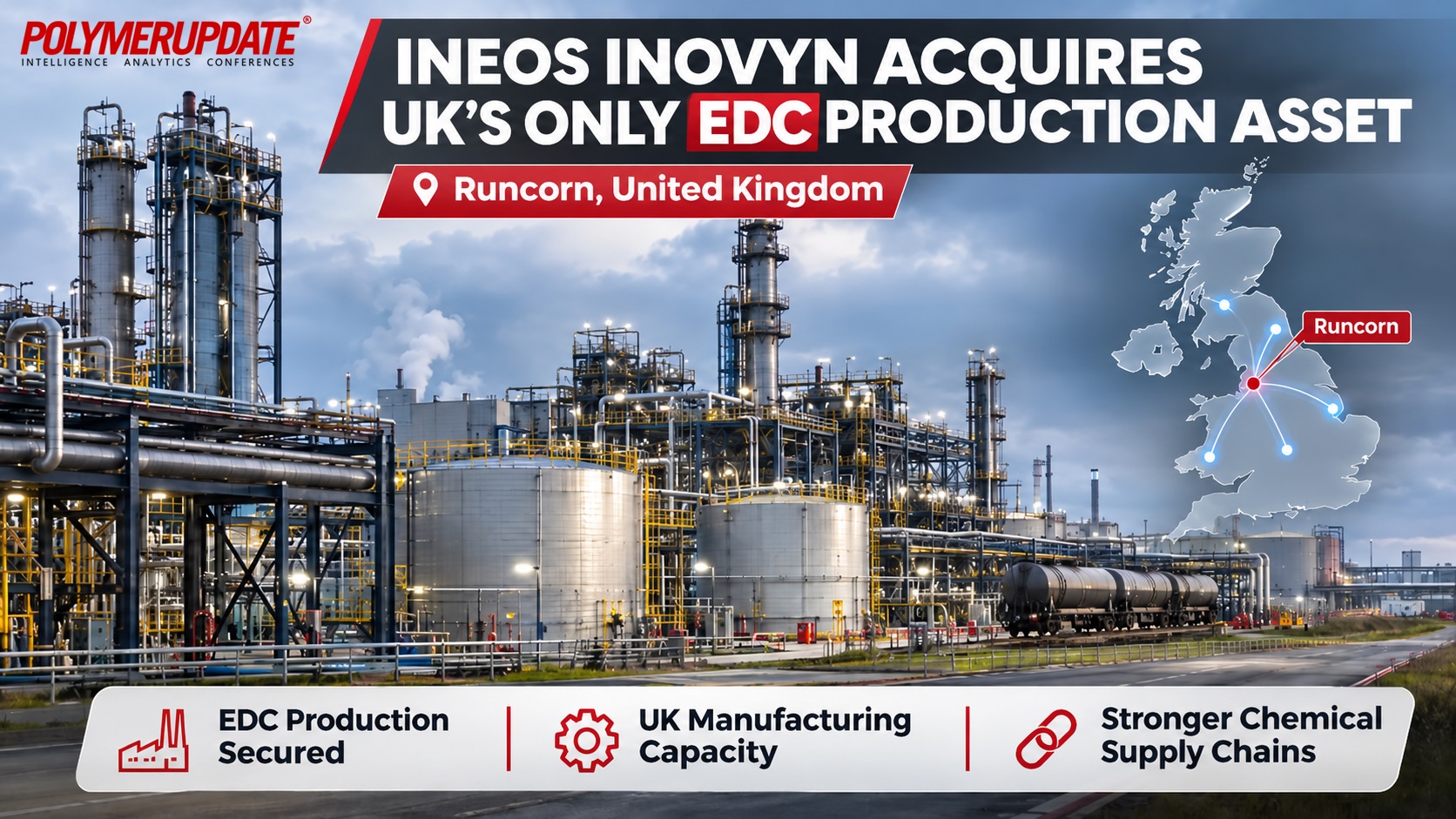 Rationale behind the acquisition
The Runcorn facility occupies a particularly important position in the UK's chemical manufacturing and public infrastructure landscape. According to INEOS Inovyn, the site supplies approximately 98% of the chlorine used in the country's drinking water treatment operations, making it a critical supplier to the water industry. Any prolonged disruption to its operations could therefore have significant implications for essential public services and the wider domestic chemicals supply chain.
Chlorine and its derivatives are indispensable to several industrial applications, including water purification, food manufacturing, pharmaceuticals, healthcare and construction. The chemicals also serve as essential intermediates in the production of a broad range of industrial materials, including polyvinyl chloride (PVC), which is widely used in pipes, fittings, window profiles, cables, flooring and other construction applications.
Ethylene dichloride is a key intermediate in the manufacture of vinyl chloride monomer (VCM), which is subsequently polymerised to produce PVC. The availability of domestic EDC production is therefore important for maintaining continuity across the downstream chlorvinyls value chain. Securing the UK's only EDC asset is expected to reduce the risk of supply disruptions and strengthen the resilience of domestic manufacturers that depend on these materials.
Challenges for UK’s chemical playersDossett’s comments highlight the mounting competitive pressures facing the UK and European chemicals industries, particularly from high energy prices, rising regulatory and carbon compliance costs, and competition from imported products. These factors have increasingly challenged the economics of domestic chemical production, prompting manufacturers to review capacity, restructure operations and, in some cases, withdraw from certain markets.
The acquisition also follows a difficult period for the European chlor-alkali and PVC industries, which have faced pressure from weak demand, high operating costs and intense international competition. The administration of Vynova Runcorn Limited in 2025 had raised concerns about the future of the EDC operations and the potential consequences for the UK's integrated chemicals supply chain. By acquiring the remaining stake in Runcorn MCP Limited and integrating the associated production assets and employees, INEOS Inovyn has removed an important element of uncertainty surrounding the facility.
The consolidation is expected to facilitate closer coordination between chlorine, chlor-alkali and EDC operations, potentially improving production efficiency, operational flexibility and supply reliability. For downstream PVC manufacturers, the transaction is particularly significant because EDC is a fundamental feedstock in the conventional ethylene-based PVC production route. A reliable domestic supply of this intermediate can help reduce exposure to international market volatility, shipping disruptions and fluctuations in imported chemical prices.
Benefit for manufacturing ecosystemThe continued availability of chlorine is equally important for the wider manufacturing ecosystem. Apart from its role in PVC production, chlorine is used in the manufacture of numerous organic and inorganic chemicals, pharmaceutical intermediates and water-treatment products. Its derivatives are also important to food processing, healthcare and other industries where chemical purity and reliable supply are essential. Consequently, maintaining domestic chlor-alkali capacity has implications beyond the immediate interests of chemical producers.
It supports the functioning of critical infrastructure, protects industrial supply chains and helps preserve specialised manufacturing capabilities and technical expertise within the country. INEOS Inovyn's investment also reflects the strategic importance of maintaining integrated production facilities at a time when several European chemical manufacturers are reassessing their regional manufacturing footprints. Greater integration of upstream and downstream operations can provide producers with improved control over feedstock availability, production planning and customer deliveries, particularly during periods of market disruption.
High energy costs – a continuous battleHowever, the company has cautioned that securing the Runcorn facility alone will not resolve the structural challenges facing British chemical manufacturers. Dossett's call for more competitive energy costs, reduced carbon and regulatory burdens, and stronger trade protection underscores the need for a broader industrial policy to support domestic manufacturing. The UK chemicals sector faces a difficult balancing act between meeting environmental and decarbonisation commitments and retaining sufficient industrial capacity to meet domestic demand.
While manufacturers are under increasing pressure to reduce greenhouse gas emissions and invest in cleaner technologies, high energy and compliance costs can weaken their competitiveness against producers operating in regions with lower production costs. A sustained decline in domestic chemical manufacturing could increase the UK's reliance on imports for essential industrial intermediates and finished products. Such dependence could leave downstream industries more vulnerable to international supply disruptions, geopolitical tensions, freight-cost fluctuations and sudden changes in global trade flows.
INEOS – a global leaderINEOS Inovyn is Europe's largest producer of chlorvinyls and a global leader in speciality PVC. The company has annual sales of approximately €3 billion and employs around 4,000 people, with manufacturing, sales and marketing operations across eight European countries. Its portfolio includes general-purpose and speciality vinyls, organic chlorine derivatives, chlor-alkali products, hydrogen and performance chemicals. The company's annual commercial production volume is approximately 9 million tonnes.
The company has also identified sustainability and the transition towards a lower-carbon economy as important priorities, with initiatives focused on offering products with lower greenhouse gas footprints and developing technologies for PVC recycling. Its parent company, INEOS Group, is a global manufacturer of petrochemicals, speciality chemicals and oil products. The group comprises 28 businesses and operates 148 facilities across 26 countries, employing approximately 23,000 people.
The completion of the Runcorn acquisition represents an important development for the UK's chemical industry, particularly given the facility's central role in supplying chlorine for drinking water treatment and its position as the country's last remaining EDC production asset. While the transaction secures the immediate continuity of these strategically important operations, the long-term competitiveness of the facility will depend on operating economics, investment conditions and the ability of the UK government to address the structural cost disadvantages confronting domestic chemical producers.
DILIP KUMAR JHA
Editor
dilip.jha@polymerupdate.com