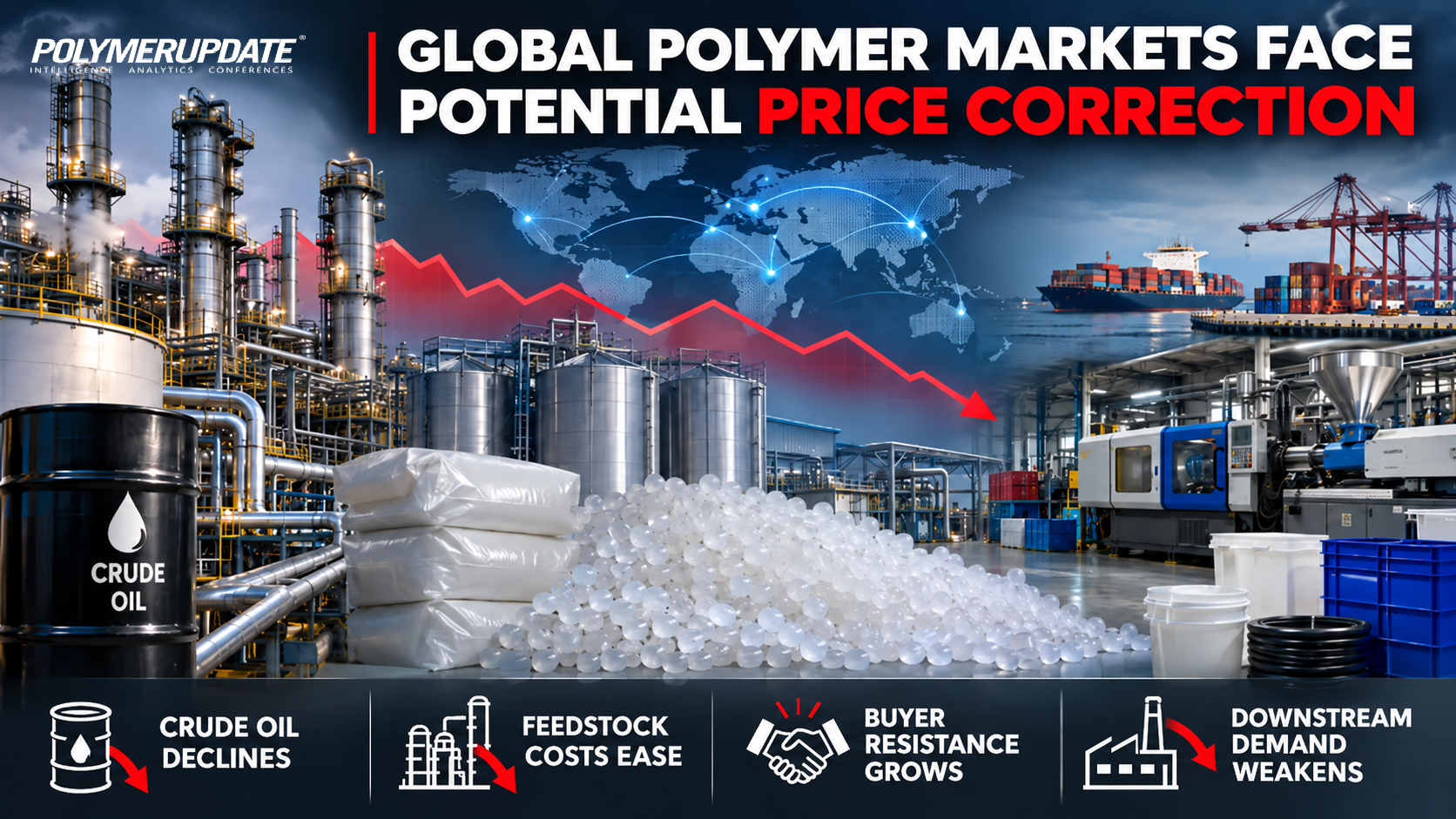
Global polymer markets are showing early signs of easing after several months of sustained price increases due to a combination of weakening factors including declining crude oil prices, softer upstream feedstock costs, cautious procurement by converters and weakening downstream demand. The pullback was anticipated across polyethylene (PE), polypropylene (PP), polyvinyl chloride (PVC), and allied services with softer spot sentiment emerging in China and growing resistance from buyers in India and Southeast Asia (SEA).
International PP and PE import offers have started to soften, indicating that producers may find it increasingly difficult to sustain the higher price levels achieved in recent months. Market participants are increasingly adopting a wait-and-watch approach, preferring requirement-based purchases over inventory accumulation at elevated prices. Uncertainty about the growth in the world economy also added to the pressure on the downturn in global polymer prices.
 Looming correction
The latest developments suggest that the global polymer market could be entering a corrective phase after a substantial rally, although the extent and duration of any price decline will depend on movements in crude oil, feedstock availability, production economics and the strength of downstream consumption. The recent price rally has been particularly pronounced in India. Analysts estimate major domestic polymer grades recorded increases ranging from 31-59 percent between February and October 2026. Polymerupdate Research reported PP raffia prices increased by approximately 59 percent, from Rs 95 per kg to Rs 149 a kg, while low-density polyethylene (LDPE) prices rose 50 percent, from Rs 110 a kg to Rs 165 a kg.
Linear low-density polyethylene (LLDPE) prices increased by around 46%, from Rs 96 a kg to Rs 140 a kg, while high-density polyethylene (HDPE) blow-moulding prices advanced 44 percent, from Rs 91 a kg to Rs 131 a kg. PVC prices recorded a comparatively moderate increase of approximately 31 percent, rising from Rs 74 a kg to Rs 97 a kg during the same period. Percentage changes represent indicative domestic market movements between February and October, rather than uniform increases across all grades and suppliers.
Impact of high pricesThese substantial increases have raised working-capital requirements for plastic processors, particularly small and medium-sized converters that operate with relatively limited financial flexibility. Higher resin procurement costs have also made it difficult for manufacturers to pass on the entire increase to downstream customers, particularly in price-sensitive applications. However, the momentum behind the rally has started weakening. China, one of the world's largest polymer production and consumption markets, is already witnessing softer spot sentiment.
In India and Southeast Asia, buyers are increasingly resisting fresh price increases as international import offers begin to decline. The changing market environment is also reflected in recent domestic price revisions. Although Indian producers announced further increases in selected PE, PP and PVC grades at the beginning of November, the extent of these revisions varied considerably across products and applications. Market leader Reliance Industries has announced a discount scheme for various grades of purchasers for November. Another producer Supreme Petrochem decreased PS prices by Rs 3 a kg with effect from November 16, 2026. Analysts expect other producers will follow suit.
Crude oil correction eases feedstock cost pressuresOne of the principal factors behind the changing market outlook is the recent pullback in crude oil prices. The decline in Brent crude has eased concerns over the cost of upstream feedstocks, including naphtha, ethylene and propylene, which are important inputs in the production of several major polymers. The relationship between crude oil and polymer prices is particularly significant for producers operating naphtha-based petrochemical facilities. Lower crude prices can reduce naphtha costs, subsequently easing the production costs of ethylene and propylene. These monomers are essential feedstocks for PE and PP, respectively.
As feedstock costs begin to decline, polymer producers may face increasing pressure to revise their selling offers, particularly if buyers remain unwilling to accept higher prices. However, the transmission of lower crude oil prices into polymer markets is not immediate, as it depends on feedstock procurement cycles, inventory costs, production economics and regional supply-demand conditions. The correction in upstream energy markets could therefore provide additional room for polymer prices to decline if crude oil and feedstock values remain under pressure.
Buyers adopt cautious strategiesAnother important factor contributing to the changing market sentiment is growing resistance from plastic converters in India and Southeast Asia. Following several months of substantial price increases, many downstream manufacturers are reluctant to purchase large volumes of virgin polymers at prevailing prices. Instead, converters are increasingly adopting hand-to-mouth procurement strategies, purchasing only the quantities required to meet immediate production commitments. This approach reflects concerns that buying at elevated prices could expose manufacturers to inventory losses if resin prices decline further in the coming weeks.
The situation is particularly challenging for packaging manufacturers, household product manufacturers, pipe producers, automotive component suppliers and other plastic processors that operate in highly competitive markets. These businesses are already facing pressure from higher raw material costs and limited opportunities to increase finished-product prices. Consequently, converters are becoming more selective in their purchasing decisions, while postponing inventory replenishment wherever possible.
This reluctance to build stocks is reducing the ability of polymer producers and distributors to push through further price increases. The weakening buying interest is also creating greater competition among international suppliers seeking to maintain market share in key Asian destinations. As import offers soften, domestic producers could face additional pressure to align their prices with international replacement costs.
Year-end destockingThe weakness in downstream consumption is also expected to influence polymer pricing in Europe and the United States, where suppliers are approaching the year-end inventory management period. Demand from packaging, automotive and construction applications remains relatively subdued, limiting the ability of producers to pass on higher production costs to customers. With manufacturers and distributors preparing to reduce inventories ahead of the year-end, purchasing activity could remain restricted.
European and US polymer markets generally respond to developments in Asian markets with a lag, although the timing and extent of price adjustments vary according to regional supply-demand fundamentals, feedstock contracts and import availability. The recent softening in Asian spot markets could therefore be followed by downward price adjustments in Europe and the United States over the coming two to three weeks, provided the weakness in crude oil and international polymer offers persists. In Europe, producers are also dealing with elevated operating costs and subdued demand, which have limited their ability to pass through feedstock-related increases. The US market, meanwhile, could face additional pressure from year-end destocking and cautious purchasing by downstream customers.
Asian capacity additions limit recovery prospectsThe global polymer market is also facing a structural supply challenge arising from continuing capacity additions, particularly across Asia. New petrochemical and polymer production capacities have increased the availability of PE and PP in the international market. This additional supply is likely to restrict producers' pricing power, especially when demand growth remains insufficient to absorb the incremental volumes. China's expanding petrochemical capacity is particularly relevant because the country is a major producer, consumer and exporter of polymers.
Greater domestic availability can reduce its import requirements and increase competition among international suppliers seeking alternative export destinations. Consequently, even if crude oil and upstream feedstock prices recover temporarily, the growing availability of polymer supplies could prevent producers from sustaining significant price increases unless downstream consumption improves. The supply-demand imbalance is likely to remain an important consideration for the global plastics industry, particularly as producers compete to maintain operating rates and protect margins in an increasingly challenging market.
Downstream industry implications and outlookFor plastic processors, the emerging correction offers some potential relief following the substantial increase in raw material costs over the past several months. Lower resin prices could gradually improve manufacturing margins, ease working-capital requirements and provide greater flexibility in finished-product pricing. However, the benefits will depend on how quickly lower feedstock costs translate into actual polymer price reductions. Converters holding high-cost inventories could initially face margin pressure if selling prices for finished products decline faster than their raw material costs.
Market participants are therefore advised to maintain flexible procurement strategies for virgin resin requirements, including HDPE, LDPE, LLDPE, PP, PVC and PET. Rather than committing to large-volume purchases at prevailing levels, converters could prioritise immediate production requirements and monitor changes in international import offers and domestic producer price announcements. Nevertheless, excessive inventory reduction could also expose manufacturers to supply disruptions if geopolitical developments, freight constraints or unexpected production outages trigger another increase in feedstock and polymer prices.
The near-term direction of the global polymer market will largely depend on the movement of crude oil and petrochemical feedstock prices, the extent of buying resistance in major Asian markets and the pace of year-end destocking in Western economies. Overall, the balance of market indicators points towards a softer pricing environment after the sharp rally witnessed between February and October.
While the recent decline in crude oil prices and weakening downstream demand are creating downward pressure, the extent of the correction will depend on whether these developments translate into sustained reductions in international polymer offers and domestic selling prices. For the time being, cautious procurement, disciplined inventory management and close monitoring of upstream feedstock movements are likely to remain the preferred strategies for polymer buyers.
DILIP KUMAR JHA
Editor
dilip.jha@polymerupdate.com