The current energy crisis is the worst in the history with the world may not re-gain its pre-war glory even with credible pathway leading to full-scale recovery, the International Energy Agency (IEA) said in a periodical report titled ‘World Energy Report’ released on Thursday. The report further reads that supply disruptions stemming from continuous strikes on merchant vessels and oil tankers around the strategic waterway – the Strait of Hormuz, and also on refineries in the Gulf countries by multiple parties, have spread the crisis to every nook and corner of the world, and also caused severe economic headwinds.
Releasing the report, Fatih Birol, Executive Director, IEA, said, “The Hormuz crisis has delivered a huge shock to the system. While the energy sector and the global economy have shown considerable resilience, the longer the crisis lasts, the deeper the effects will be. And I don’t see any credible pathway for the energy world to return to the way it was before. This report looks past the current turmoil to explore the range of energy futures that could emerge from today’s upheaval. By providing multiple scenarios – none of which are forecasts – and analysis of unparalleled scope, it can serve as a reference as countries consider their next steps.”
“It also brings into focus the difficult trade-offs they face. In pursuit of greater energy security, countries must take care not to replace one dependency with another. But encouragingly for the future, energy security and energy transitions have never been so closely aligned. Whatever path the world takes, higher incomes and a growing population are set to boost demand for the services that energy provides, including mobility, heating, cooling and computing power. Rising global temperatures are adding to pressures,” he added.
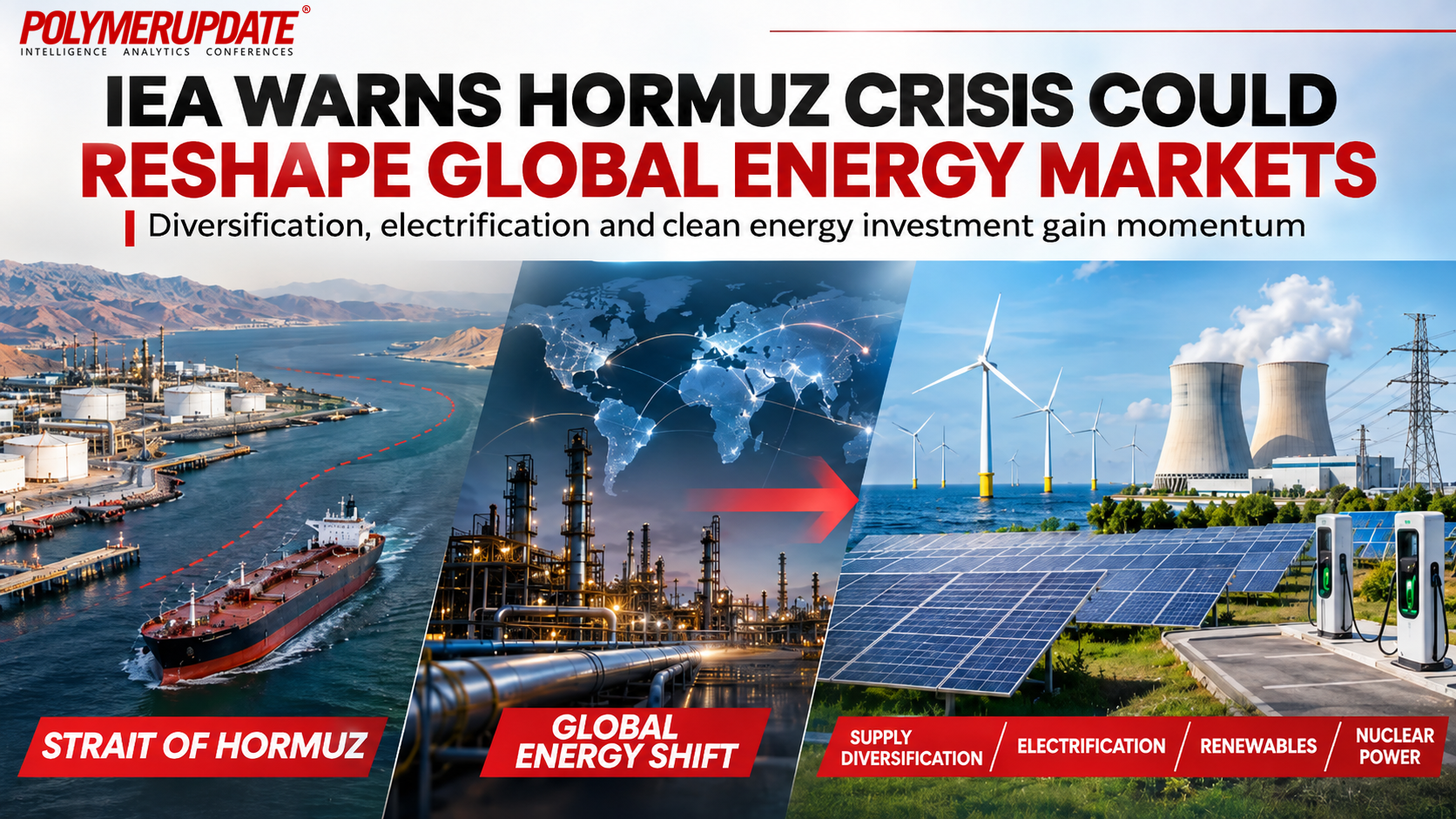 The report
The World Energy Outlook 2026 (WEO-2026) draws on the latest energy data across all fuels and technologies, together with detailed modelling and analysis, to provide insights into potential pathways for the energy sector at a moment of extraordinary uncertainty. It comes as the energy market impacts of the Middle East conflict and disruptions to shipping through the Strait of Hormuz have reached all corners of the world – in a broader context of geopolitical strains, trade tensions, rising climate risks, cyberattacks and other malicious activity affecting energy infrastructure.
With the situation in the Strait of Hormuz and the wider region still in flux, the report emphasises that the 2026 crisis is likely to leave lasting marks and to reinforce energy security and affordability as guiding principles for energy decision-making. In a striking milestone, the report finds that energy needs to keep buildings cool are now overtaking energy needs for heating them for the first time in history.
Post-crisis strategic revisionThe Hormuz crisis has led many countries to revise their energy strategies in an effort to reduce vulnerabilities and improve energy affordability. Although national responses to the crisis vary, the WEO-2026 sees some common directions emerging: greater diversification of energy supplies, trade routes, fuel mixes and technology supply chains; a stronger preference for domestically available energy resources; and a push for faster progress on electrification. Volatile fuel prices are reinforcing the strategic case for electrification: in some countries affected by the crisis, there has been a sharp increase in sales of electric technologies, accompanied by increased trade in solar panels and batteries and a surge in electric vehicle sales.
The drive to diversify could also reshape established patterns of energy trade. The report finds that, in a case where significant risks to shipping through the Strait of Hormuz are prolonged, investment in new bypass pipelines, alternative sources of supply, and measures by importers to displace demand could reduce the need for oil flows through the Strait from 20 million barrels per day before the crisis to 8.5 million in 2030 and to under 2 million by 2035. But even in this extreme case, the Middle East would remain the world’s largest exporter of oil to international markets, underscoring its vital position in the global energy security landscape.
Renewables – the biggest beneficiaryMeanwhile, the biggest beneficiaries from a pivot towards domestic energy resources are set to be renewables – led by solar photovoltaic (PV) – and nuclear power, all of which see strong growth across the report’s scenarios. Energy efficiency and biofuels could also gain ground, alongside domestic fossil fuels in some countries. This is particularly the case for coal in Asia, where many oil and gas importers have significant domestic coal resources and energy security concerns could encourage governments to rely on coal for longer.
At the same time, the current crisis is accelerating the shift towards greater use of electricity across the economy. Since 2019, global demand for electricity has grown at a faster rate than the world economy and twice as fast as overall energy demand, driven by the rising use of electric motors in industry, appliances, air conditioners, electric vehicles, heat pumps and data centres. According to the report, electricity demand is set to grow even faster to 2035, with electricity’s share in final energy consumption closing in on 30 percent globally in all the exploratory scenarios.
Prolonging uncertaintyThe longer uncertainty persists over the duration and outcome of the Middle East conflict – and the implications for energy flows through the Strait of Hormuz – the more likely it is that governments will turn these emerging preferences for diversification, domestically available resources and electrification into lasting policy changes. This year’s Outlook includes a new case that explores what this trajectory might look like in comparison to the main WEO scenarios.
The WEO-2026 also explores what may happen to oil and natural gas markets in the event of a clear resolution to the conflict in the Middle East, noting that this would be likely to bring competing market dynamics into play. Global oil and natural gas supply could rebound strongly, particularly as a delayed wave of liquefied natural gas supply hits the market. This could result in a buyer’s market for oil and gas, which would put downward pressure on prices, even as inventories are replenished. At the same time, structural changes in demand – particularly faster electrification – could further alter the outlook for both fuels.
Environmental impactThere will be other significant impacts, according to the report. The crisis threatens to reverse recent progress on energy access, particularly in emerging and developing economies. Access to electricity and clean cooking accelerated in 2025, but higher fuel prices and supply shortages in 2026 risk slowing further gains. And while the crisis is likely to accelerate the uptake of low-emissions energy technologies on a global level, there is still a large gap between trajectories based on current or stated policies – whose temperature outcomes range from 2.5 °C to 2.9 °C of warming – and a 1.5 °C aligned pathway.
“The pressures of the current crisis must not obscure the choices that will shape energy security, sustainability and prosperity for the decades to come. Countries will pursue different pathways, reflecting their resources, circumstances and priorities. But all have a stake in building a more secure, affordable and sustainable energy system – and in effective cooperation to achieve that goal,” Birol added.
DILIP KUMAR JHA
Editor
dilip.jha@polymerupdate.com