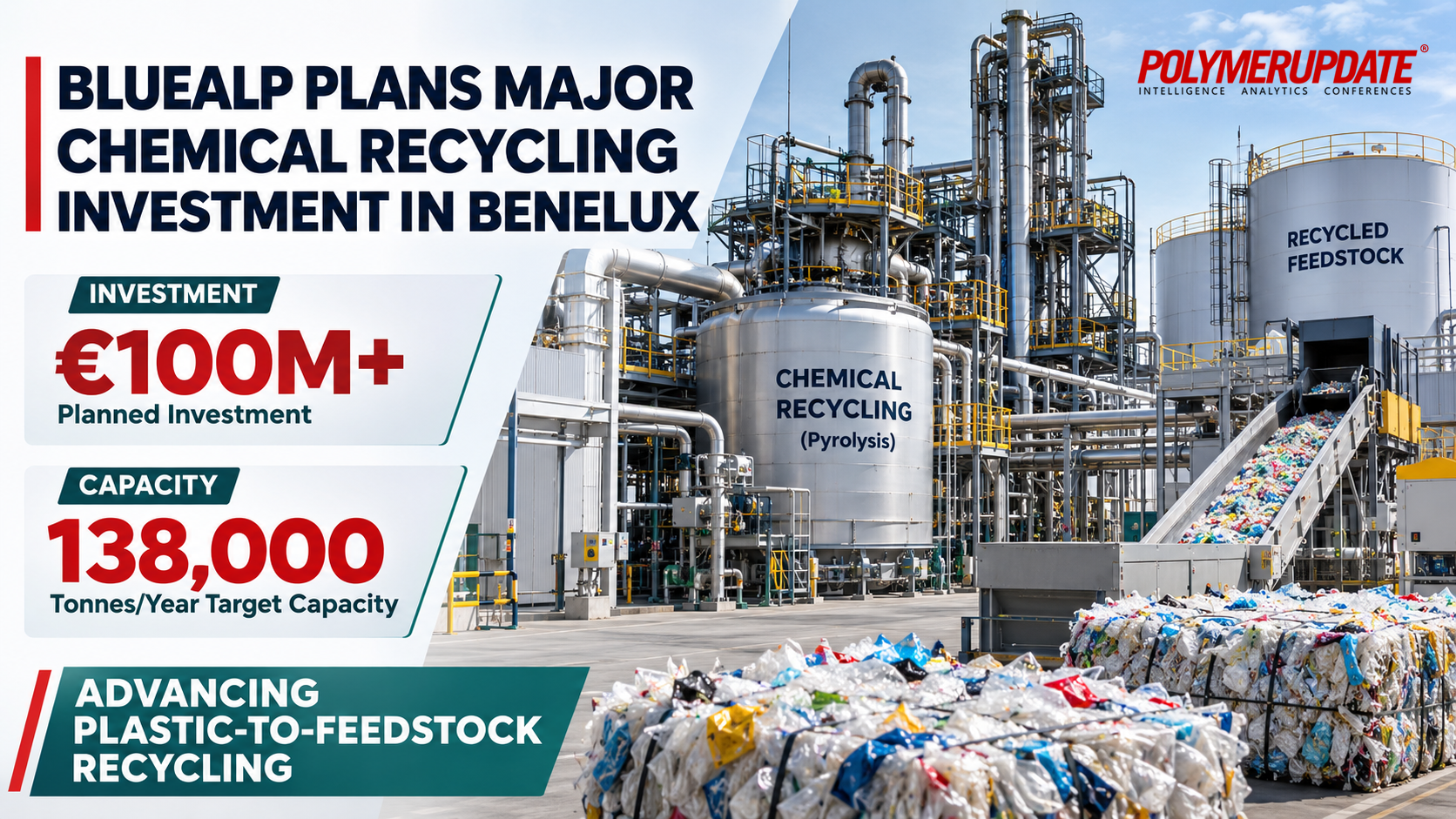
Dutch chemical recycling technology provider BlueAlp plans to invest more than €100 million in expanding its plastic waste processing operations across the Benelux region, including the construction of a new pyrolysis and oil-upgrading facility in Kampen, the Netherlands, and a capacity expansion at its existing plant in Oostende, Belgium. The projects are expected to strengthen the company's position in the emerging chemical recycling market and increase the availability of recycled feedstock for the petrochemical industry.
The expansion plans follow the selection of BlueAlp's Kampen project for potential financial support of up to €21 million under the European Union's Innovation Fund. The proposed investment reflects the growing importance of chemical recycling in addressing the challenges associated with plastic waste that cannot be effectively processed through conventional mechanical recycling. BlueAlp's expansion strategy encompasses three major projects in the Netherlands and Belgium: a new pyrolysis and oil-upgrading complex in Kampen, capacity expansion at Oostende and the development of a larger single-reactor facility in Rotterdam.
 Cumulative processing capacity
Collectively, these projects are expected to provide approximately 138,000 tonnes per annum (tpa) of plastic waste processing capacity across the Benelux region. The largest development in terms of investment is the proposed Kampen facility, where BlueAlp plans to establish two pyrolysis production lines with a combined annual input capacity of 49,000 tonnes. Each line will have a capacity of 24,500 tonnes per year and will be supported by dedicated oil-upgrading facilities.
The project was acquired with permits from Shell and has been selected for a grant of up to €21 million under the EU Innovation Fund. Preparation of the grant agreement is currently underway, with the facility expected to commence operations between 2029 and 2030. An important feature of the Kampen project will be its oil-upgrading capability. The upgrading units will be designed to remove contaminants, including nitrogen, oxygen, silicon and halogens, from pyrolysis oil.
These impurities can affect the quality of recycled feedstock and create operational challenges when the material is introduced into conventional petrochemical production processes. By incorporating upgrading facilities alongside pyrolysis operations, BlueAlp aims to produce a more consistent and suitable recycled feedstock for further processing. This integration could improve the commercial viability of chemical recycling by addressing one of the industry's principal challenges: ensuring that recovered oils meet the quality requirements of petrochemical applications.
In BelgiumIn Belgium, BlueAlp plans to double the capacity of its Oostende facility by installing a second production line with an annual processing capacity of 24,500 tonnes. The additional line will operate alongside the existing facility, which has been running since 2021, increasing the site's total capacity to 49,000 tonnes annually. The Oostende expansion is expected to benefit from existing infrastructure, utilities and on-site personnel, potentially reducing the investment and operational requirements associated with developing a completely new facility. The company is targeting the commencement of operations between mid- and late 2028.
Meanwhile, BlueAlp is advancing another major project in Rotterdam, the Netherlands, where it is developing a 40,000-tpa single-reactor chemical recycling plant in partnership with LBC Tank Terminals. The project is currently in the Front-End Engineering Design (FEED) phase. The Rotterdam development has received €1.5 million in support from the EU Just Transition Fund Rijnmond programme and is targeting a start-up around 2030.
The proposed single-reactor configuration represents another step in BlueAlp's efforts to scale up its technology and establish commercially viable plastic waste processing infrastructure. Taken together, the three developments would provide BlueAlp with approximately 138,000 tonnes per year of plastic waste processing capacity. The planned expansion also signals a strategic shift in the company's business approach, moving beyond technology licensing towards greater participation in the ownership and operation of commercial chemical recycling facilities.
Strengthening the circular plastics value chainThe expansion comes at a time when the European plastics industry is facing increasing pressure to improve recycling rates, reduce dependence on virgin fossil-based feedstocks and strengthen the circularity of plastic production. The EU's evolving recycled-content requirements, including targets applicable to plastic packaging by 2030, are expected to increase demand for reliable supplies of recycled materials. Mechanical recycling remains the preferred and generally more energy-efficient route for plastic waste that can be collected, sorted and processed effectively.
However, mixed, contaminated and multilayer plastic waste can be difficult to recycle through conventional processes without compromising the quality of the resulting material. Chemical recycling technologies such as pyrolysis offer an alternative route by converting suitable plastic waste into hydrocarbon-based feedstocks that can potentially be processed further in petrochemical facilities. This provides an opportunity to recover value from waste streams that might otherwise be incinerated or sent to landfills.
For petrochemical manufacturers, the availability of upgraded pyrolysis oil could create an additional source of feedstock for producing recycled polymers, subject to appropriate quality specifications, processing requirements and regulatory certification. The material could potentially be used in the production of polyethylene (PE), polypropylene (PP) and other polymer applications through established petrochemical processing routes.
This is particularly relevant for applications requiring high material purity, including food-contact packaging and certain healthcare-related products, where mechanically recycled materials may face technical or regulatory limitations. However, the suitability of chemically recycled feedstock for such applications will depend on the quality of the recovered oil, the downstream processing route and compliance with applicable regulations.
Potential benefitsBlueAlp's planned capacity additions could benefit the industry by improving the availability of alternative feedstocks and creating stronger links between plastic waste collection, recycling and petrochemical manufacturing. Greater commercial-scale processing capacity could help establish more predictable supplies of recycled hydrocarbons, enabling polymer producers to explore recycled-content production without relying exclusively on mechanically recycled materials. The integration of pyrolysis and oil upgrading at Kampen is particularly significant because feedstock quality remains a major consideration for the wider adoption of chemical recycling.
Removing contaminants before the oil enters downstream processing could improve consistency, reduce potential processing complications and support more reliable integration into existing petrochemical infrastructure. The expansion could also encourage greater investment in waste collection, sorting and pre-treatment infrastructure, as additional recycling capacity will require consistent supplies of suitable plastic waste. This could create opportunities for waste management companies, recyclers, logistics providers and technology suppliers across the regional value chain.
For polymer producers and converters, a larger supply of recycled feedstock could help them prepare for tightening regulatory requirements and growing customer expectations regarding recycled content. Nevertheless, the commercial success of chemical recycling will depend on several factors, including the availability and cost of suitable waste, energy consumption, operating efficiency, pyrolysis oil yields, upgrading costs and the price competitiveness of recycled feedstock against conventional fossil-based alternatives.
Strengthening industrial footprintRegulatory recognition of chemical recycling and transparent mass-balance accounting will also remain important in determining market acceptance. Looking ahead, BlueAlp's investment programme could contribute to the development of a more integrated chemical recycling ecosystem in Europe. If the three projects are completed as planned, the resulting capacity would represent a significant expansion of the company's industrial footprint and provide additional infrastructure for converting difficult-to-recycle plastic waste into valuable hydrocarbon feedstocks.
Packaging manufacturers, in particular, could benefit from improved access to recycled raw materials as brand owners seek to increase the circularity of their products. For the European petrochemical industry, the developments underline the growing role of chemical recycling as a complementary technology to mechanical recycling. While it is unlikely to replace conventional recycling, its ability to process certain complex waste streams could become increasingly important in helping the plastics value chain meet future circularity and recycled-content objectives.
DILIP KUMAR JHA
Editor
dilip.jha@polymerupdate.com