
Click the icon to add a specified price to your Dashboard list. This makes it easy to keep track on the prices that matter most to you.

• The alliance seeks to transform the energy model for road passenger transport in Spain, combining innovation, technology, and emissions reduction. The areas of work include renewable fuels, electric mobility, hydrogen, energy efficiency, lubricants, and digitalization processes.
• The two companies have collaborated for more than thirty years on pioneering initiatives, such as the first pilot test using renewable fuels carried out in Spain in 2021, as well as a joint project with Bosch to ensure the traceability of these fuels throughout the entire value chain.
Repsol and Alsa signed a strategic collaboration agreement in Madrid with the aim of jointly leading the transformation of passenger transport in Spain. This alliance consolidates a decades-long collaboration between the two companies and reaffirms their commitment to decarbonization and the promotion of technological solutions for mobility.
The agreement establishes a cooperation framework to analyze and develop joint projects in various energy sectors. Among the lines of work, the use of renewable fuels produced from organic waste stands out. Thanks to current technology, these fuels can reduce net CO₂ emissions by up to 90% compared to the mineral-based fuels they replace. These fuels represent an already available alternative for the decarbonization of current and future vehicles, as they make it possible to reduce emissions without having to change vehicles or modify existing distribution and refueling infrastructure.
The collaboration also includes the study of initiatives related to the supply of 100% renewable electricity, natural gas with guaranteed renewable origin, and solar photovoltaic energy, as well as the development of energy storage solutions. Electric mobility will be another key focus of this agreement, through the implementation of charging points and associated services, both in private and public areas. Opportunities for the development and application of hydrogen and biomethane-based solutions will also be explored.
Furthermore, Repsol and Alsa will work to identify synergies in the lubricants sector, as well as explore potential integrations between loyalty platforms and digital payment methods, such as Waylet, with direct benefits for both employees and customers. Outreach activities and training programs, specifically aimed at professional groups, are also planned to highlight the key role of passenger transport in the energy transition.
For Valero Marín, Repsol's General Manager of Customers, "this agreement with Alsa reinforces our commitment to collaborating with key transport players in Spain. Together, we will promote multi-energy solutions that allow us to move toward more efficient, connected, and low-emission mobility."
For his part, Francisco Iglesias, CEO of Alsa, emphasized that "at Alsa, we have been pioneers alongside Repsol in conducting tests with renewable fuels in several Spanish cities, and by 2025 we plan to use five million liters of HVO in long-distance coaches. Now, with the signing of this alliance, we reinforce our commitment to decarbonization and sustainable mobility, a goal shared by both companies."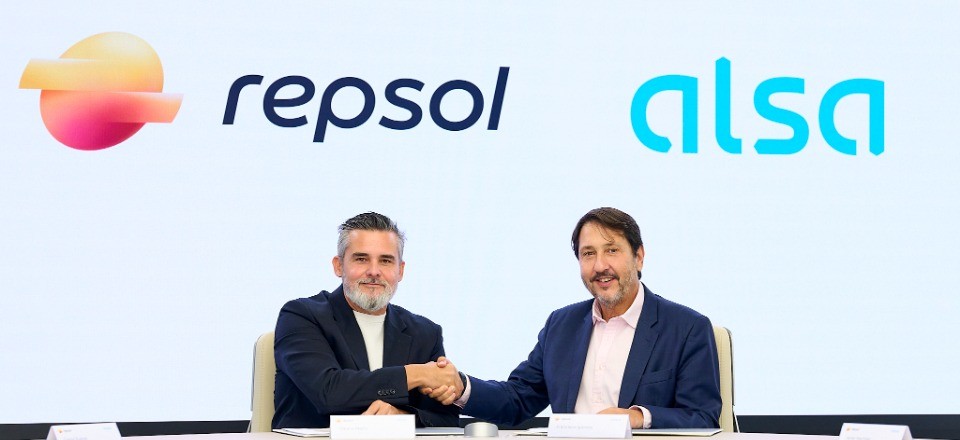
Repsol and Alsa: more than 30 years of collaboration
Among the most significant milestones are the implementation in 2021 of the first pilot test in Spain using renewable fuel, carried out in Bilbao, and the collaboration with Bosch, which began a few months ago, on a project to trace the use of renewable fuels throughout the value chain, ensuring transparency and control at every stage of the process.
Furthermore, in 2024, Alsa used more than 60,000 liters of 100% renewable Nexa Diesel in real-life operations across its bus fleet in Burgos and Madrid, demonstrating the operational viability of this fuel.
The alliance has also resulted in digitalization and telemetry projects aimed at optimizing fleet management through the integration of technological tools such as Solred's Application Programming Interface (API). Likewise, both companies have promoted energy efficiency pilots through Energy Saving Certificates (ESCs).
Note: This story has not been edited by The Polymerupdate Editorial team and is auto-generated from a syndicated feed.
