
Click the icon to add a specified price to your Dashboard list. This makes it easy to keep track on the prices that matter most to you.

CHIMEI Corporation announced a milestone in sustainable materials development following a seven-year collaboration with the Institute of Environmental Engineering at National Cheng Kung University (NCKU) and HSIN I Material Co., Ltd. The partnership has resulted in Taiwan’s first commercial application of high-strength concrete grass pavers produced using incineration bottom ash from CHIMEI’s own operations. The project advances the circular reuse of industrial by-products, increases CHIMEI’s internal resource circularity rate from 98% to 99%, and supports the market introduction of a low-carbon construction material.
The first batch of grass pavers incorporating CHIMEI’s bottom ash has been installed at CHIMEI’s headquarters garden plaza, demonstrating the practical application of circular materials in real-world environments and underscoring the project’s readiness for broader adoption.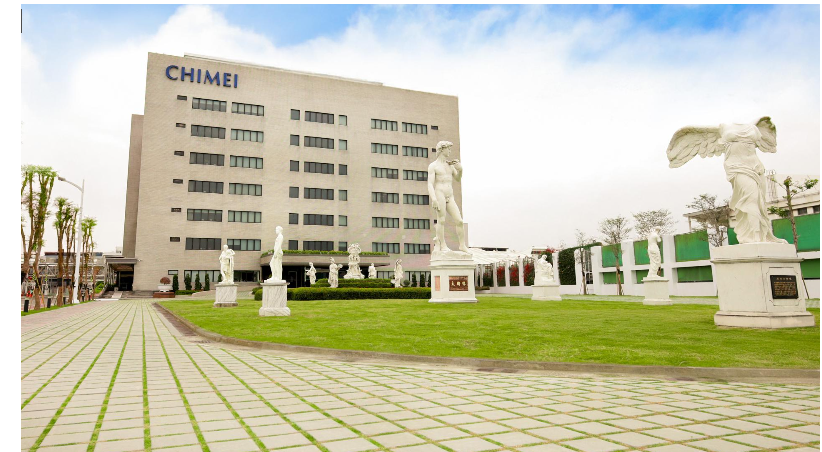
Bottom ash and fly ash are among the most challenging residues to recycle in waste management and have traditionally been disposed of through landfill. Through joint pilot research with NCKU, detailed analyses of particle size distribution and elemental composition confirmed that bottom ash is suitable as a substitute material in high-strength concrete grass pavers. The resulting products meet CNS 13295 compressive strength requirements as well as soil safety monitoring standards, validating both structural performance and environmental safety.
This circular economy innovation not only diverts waste from landfill but also reduces reliance on energy-intensive cement, contributing to a lower carbon footprint across the construction value chain.
HSIN I Material has commercialized a portfolio of circular-economy paving products, including pedestrian and grass pavers manufactured using bottom ash from CHIMEI’s incineration process. CHIMEI has adopted these products within its own facilities and is actively promoting their application among partners and stakeholders.
Through this initiative, CHIMEI seeks to demonstrate the tangible value of waste reutilization and advance its long-term goal of zero landfill. The project reflects CHIMEI’s commitment to environmental responsibility and its belief that “waste is a misplaced resource.” Guided by this belief, CHIMEI will continue to expand partnerships with academia and industry to accelerate circular material innovation and support sustainable development at scale.
Note: This story has not been edited by The Polymerupdate Editorial team and is auto-generated from a syndicated feed.
