
Click the icon to add a specified price to your Dashboard list. This makes it easy to keep track on the prices that matter most to you.

-Three pillars, one story: material innovation driving transformative change
-From flying cars to humanoid robots: material solutions for the applications of tomorrow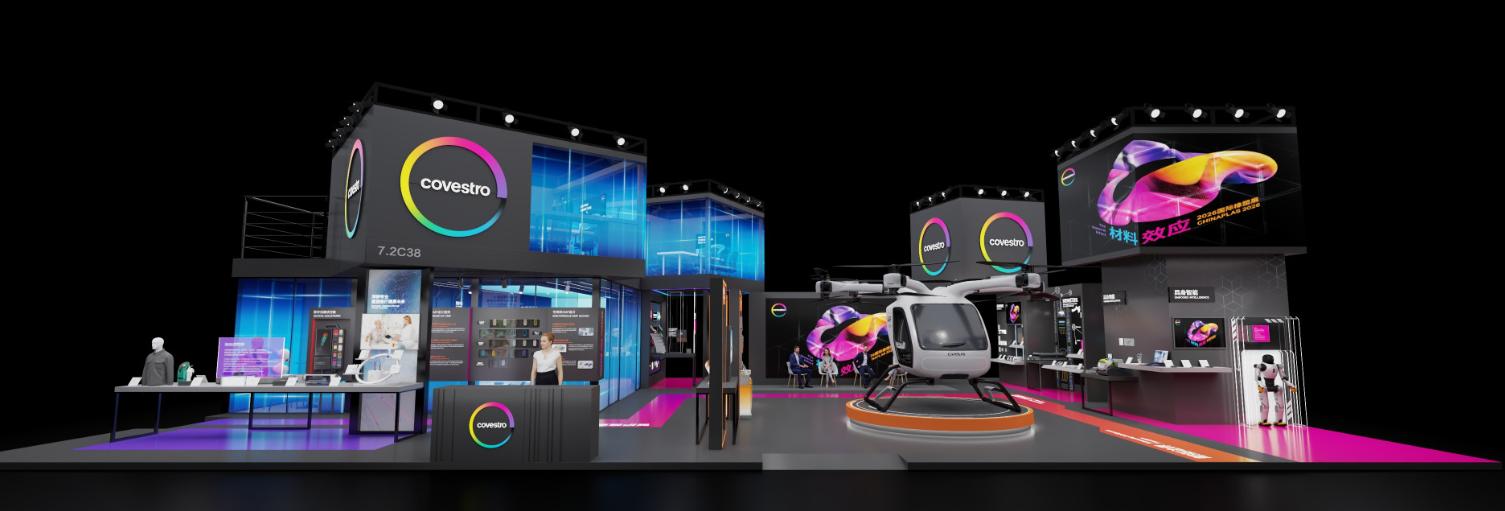
Under the theme “The Material Effect,” Covestro will present innovative material solutions for emerging applications such as flying cars, humanoid robots, data centers and medical wearables at CHINAPLAS 2026, one of the world’s leading plastics and rubber trade fairs, taking place in Shanghai from April 21 to 24. Organized around three focus areas Advancing Intelligence Frontiers, Elevating Smart Living, Empowering Connected & Trusted Healthcare the showcase highlights how material innovation is enabling new industries, smarter, connected living, and more accessible healthcare.
“Technological innovation is advancing at an unprecedented pace, reshaping industries worldwide. The rapid rise of AI in particular is creating a wave of new applications,” said Lily Wang, President of Engineering Plastics at Covestro. “In response, Covestro continues to develop sustainable, high-performance solutions for customers, leveraging the ‘Material Effect’ to redefine industry boundaries and drive innovation in next-generation mobility, electrical and electronics, and healthcare, while advancing our commitment to a circular economy.”
Advancing Intelligence Frontiers
Advances in AI and intelligent technologies are reshaping industry boundaries, giving rise to sectors such as low-altitude aviation, embodied intelligence and smart energy. These emerging industries require lightweight design, long-term reliability and high system safety to scale commercially, creating new demands for advanced materials.
At CHINAPLAS 2026, Covestro will showcase the AirCab flying car developed by Chinese partner GOVY, illustrating the material possibilities for electric vertical takeoff and landing (eVTOL) aircraft. From lightweight polycarbonate windshields and integrated roof sensor modules to polyurethane encapsulation foams for battery safety and sustainable coating solutions for lightweight aircraft bodies, Covestro’s portfolio addresses key material challenges of eVTOL aircraft, helping them fly farther and more safely. Covestro materials also support AI navigation systems and lightweight structures for drones, helping advance the next generation of logistics.
Covestro will also present its complete solutions for humanoid robots. Polycarbonate enhances robot structural components with outstanding impact resistance for safer operation in challenging environments; in chip and electronic control housings and support structures, it enables efficient heat dissipation and integration with precision components; in battery enclosures, its flame-retardant properties maintain even temperature distribution for long-term stable operation under high heat; and in sensor housings, its high infrared transmittance supports accurate environmental sensing. In addition, rigid polycarbonate films can support human–machine interaction through ambient lighting effects and touch functionality, while flexible TPU films enable tactile sensing in dexterous hands and electronic skin.
In the smart energy sector, the increasing integration of energy storage, charging infrastructure and grid systems places higher demands on long-term outdoor reliability. Covestro’s polycarbonate solutions for equipment enclosures deliver durable performance in demanding environments, supporting applications ranging from energy storage and EV charging stations to residential clean-energy systems and portable power solutions.
Under the theme “The Material Effect,” Covestro will present innovative material solutions for emerging applications such as flying cars, humanoid robots, data centers and medical wearables at CHINAPLAS 2026, one of the world’s leading plastics and rubber trade fairs, taking place in Shanghai from April 21 to 24. Organized around three focus areas Advancing Intelligence Frontiers, Elevating Smart Living, Empowering Connected & Trusted Healthcare the showcase highlights how material innovation is enabling new industries, smarter, connected living, and more accessible healthcare.
“Technological innovation is advancing at an unprecedented pace, reshaping industries worldwide. The rapid rise of AI in particular is creating a wave of new applications,” said Lily Wang, President of Engineering Plastics at Covestro. “In response, Covestro continues to develop sustainable, high-performance solutions for customers, leveraging the ‘Material Effect’ to redefine industry boundaries and drive innovation in next-generation mobility, electrical and electronics, and healthcare, while advancing our commitment to a circular economy.”
Advancing Intelligence Frontiers
Advances in AI and intelligent technologies are reshaping industry boundaries, giving rise to sectors such as low-altitude aviation, embodied intelligence and smart energy. These emerging industries require lightweight design, long-term reliability and high system safety to scale commercially, creating new demands for advanced materials.
At CHINAPLAS 2026, Covestro will showcase the AirCab flying car developed by Chinese partner GOVY, illustrating the material possibilities for electric vertical takeoff and landing (eVTOL) aircraft. From lightweight polycarbonate windshields and integrated roof sensor modules to polyurethane encapsulation foams for battery safety and sustainable coating solutions for lightweight aircraft bodies, Covestro’s portfolio addresses key material challenges of eVTOL aircraft, helping them fly farther and more safely. Covestro materials also support AI navigation systems and lightweight structures for drones, helping advance the next generation of logistics.
Covestro will also present its complete solutions for humanoid robots. Polycarbonate enhances robot structural components with outstanding impact resistance for safer operation in challenging environments; in chip and electronic control housings and support structures, it enables efficient heat dissipation and integration with precision components; in battery enclosures, its flame-retardant properties maintain even temperature distribution for long-term stable operation under high heat; and in sensor housings, its high infrared transmittance supports accurate environmental sensing. In addition, rigid polycarbonate films can support human–machine interaction through ambient lighting effects and touch functionality, while flexible TPU films enable tactile sensing in dexterous hands and electronic skin.
In the smart energy sector, the increasing integration of energy storage, charging infrastructure and grid systems places higher demands on long-term outdoor reliability. Covestro’s polycarbonate solutions for equipment enclosures deliver durable performance in demanding environments, supporting applications ranging from energy storage and EV charging stations to residential clean-energy systems and portable power solutions.
Elevating Smart Living
As AI reshapes industries and daily life, it is raising the bar for everyday devices and the infrastructure behind them. Data centers and supercomputers need materials that meet strict standards for flame retardancy, thermal management and structural strength under high-density computing loads. Covestro’s bio-circular attributed Makrolon® RE solutions can help ensure reliable operation while reducing carbon emissions by around 80 percent compared to conventional alternatives.[1] For consumer electronics such as gaming devices and AI-powered laptops, Covestro offers glass fiber-reinforced or carbon fiber-reinforced engineering plastics with high stiffness, high translucency and flame retardancy, enhancing product performance, design and user experience.
Connectivity is also evolving rapidly, with satellite broadband bringing reliable, high-speed internet directly to homes, even in remote areas. Covestro’s engineering plastics ensure high signal transmittance, impact resistance and mechanical durability for terminals, enabling stable operation around the clock in demanding environments.
Empowering Connected & Trusted Healthcare
As wearable devices, remote care and AI-assisted diagnostics become more widespread, healthcare is moving closer to the home. Covestro has developed medical-grade material solutions across wearable monitoring, molecular diagnostics and precision drug delivery, helping enable a more connected and trusted healthcare ecosystem.
In diagnostics, Covestro showcases its material solutions through the Maestro point-of-care demonstrator. Built around Makrolon® Dx polycarbonate, the device leverages its optical clarity and low fluorescence to improve signal accuracy, enabling more precise molecular diagnostics in connected devices. In drug delivery, Covestro’s all-polycarbonate injection pen demonstrator uses low-friction, glass fiber-reinforced medical-grade polycarbonates to ensure smooth delivery, structural strength and dimensional stability. Adhesive-free assembly also enables easier disassembly and recycling. For medical wearables designed for extended wear, Covestro’s TPU films offer skin-friendly softness and excellent elasticity, providing a barely-there fit.
About Covestro:
Covestro is one of the world’s leading manufacturers of high-quality polymer materials and their components. With its innovative products, processes and methods, the company helps enhance sustainability and the quality of life in many areas. Covestro supplies customers around the world in key industries such as mobility, building and living, as well as the electrical and electronics sector. In addition, polymers from Covestro are also used in sectors such as sports and leisure, telecommunications and health, as well as in the chemical industry itself.
The company is geared completely to the circular economy. In addition, Covestro aims to achieve climate neutrality for its Scope 1 and Scope 2 emissions by 2035, and the Group’s Scope 3 emissions are also set to be climate neutral by 2050. Covestro generated sales of EUR 12.9 billion in fiscal year 2025. At the end of 2025, the company had 46 production sites worldwide and employed approximately 17,600 people (calculated as full-time equivalents).
Note: This story has not been edited by The Polymerupdate Editorial team and is auto-generated from a syndicated feed.
