
Click the icon to add a specified price to your Dashboard list. This makes it easy to keep track on the prices that matter most to you.

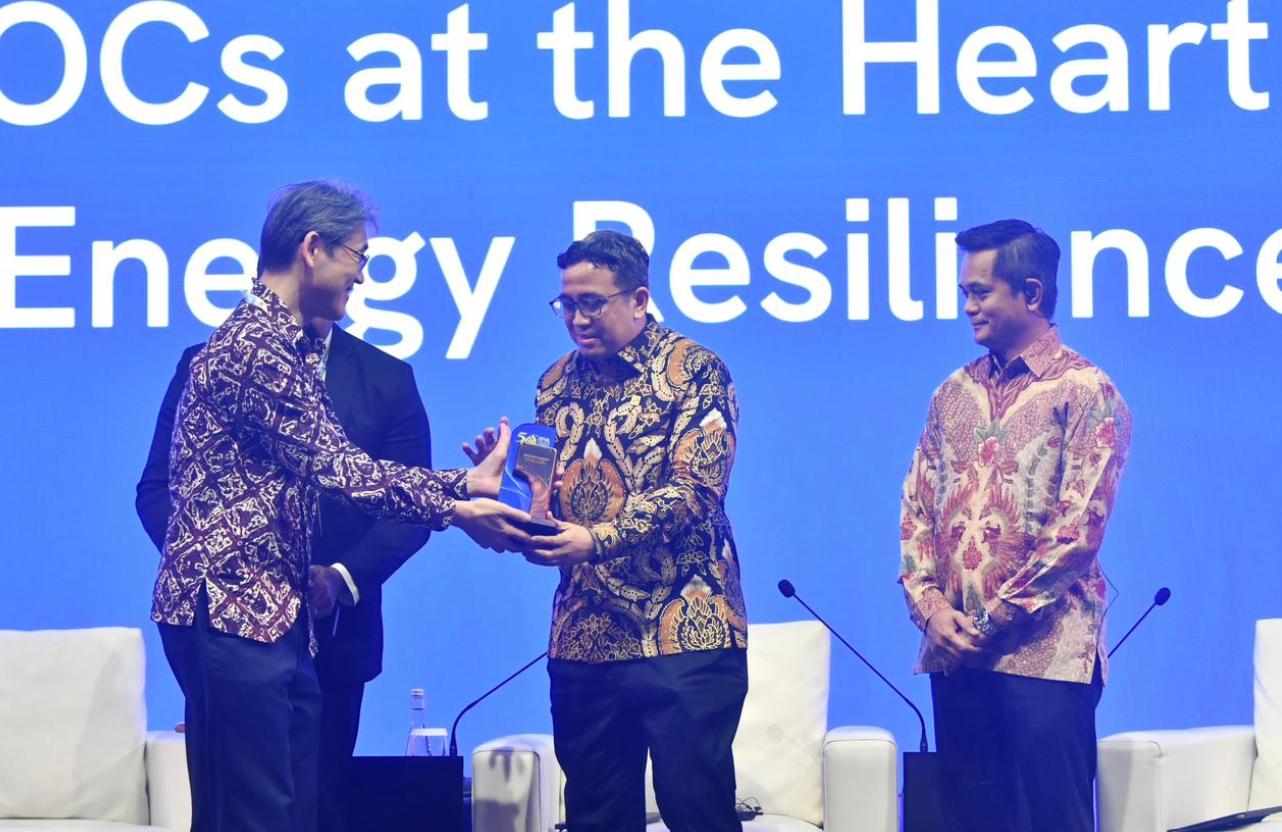
Pertamina emphasized that the state-owned oil company, or National Oil Company (NOC), plays a strategic role in maintaining energy security and supporting national economic growth. This role is increasingly crucial amidst increasing geopolitical uncertainty, global energy market dynamics, and the challenges of the energy transition.
This was conveyed by Deputy President Director of PT Pertamina (Persero) Oki Muraza in a discussion entitled "Global Challenges: NOCs at the Heart of Energy Resilience" at the 50th IPA Convex event. According to Oki, NOCs not only function as business entities but also fulfill their mandate to contribute to the economy while maintaining national energy security.
"In addition to contributing to state revenue, the NOC also has a responsibility to maintain energy security. Therefore, the energy development strategy should not rely solely on oil, but also need to strengthen the role of natural gas as a transitional energy source capable of providing more affordable energy with lower emissions," said Oki.
Oki added that in addition to maintaining energy security, NOCs also play a role in creating a ripple effect through downstream processing, which can create jobs and maximize the added value of the country's natural resources. In this context, natural gas is a crucial element because it can support energy security and the transition to a lower-emission energy system.
To achieve this goal, Oki said, Pertamina continues to strengthen collaboration with various stakeholders, including the government, strategic partners, and financing institutions. He believes that various large-scale energy projects around the world demonstrate that strong synergy between the government and corporations is a crucial factor in creating long-term energy security.
Oki cited the development of the Mozambique LNG project, which is supported by the Japanese government through various government instruments. In this project, the Japanese government not only provides policy support but also strengthens the project's economic viability through JOGMEC equity participation, JBIC financing, NEXI insurance, and long-term LNG offtaker support from Japanese companies like JERA.
"Global examples demonstrate that strategic energy projects require a robust support architecture. The government can play a role through financing, insurance, market certainty, and policies that make projects bankable. This way, NOCs can carry out their energy security mandates more effectively while maintaining investment discipline," said Oki.
Oki also highlighted the importance of increasing domestic oil and gas production to narrow the gap between national refining capacity and production. Pertamina's refinery currently has a processing capacity of around 1 million barrels per day, while crude oil production is around 600,000 barrels per day.
"We continue to implement various initiatives to increase production. At the same time, we are also strengthening our natural gas portfolio by participating in strategic projects," said Oki.
In addition to strengthening domestic operations, Pertamina is also continuing to selectively develop its international portfolio. According to Oki, the company has the option of pursuing economic value through overseas investments or strengthening energy supplies for domestic needs.
Furthermore, Oki emphasized that achieving energy security requires close collaboration between companies, the government, and various stakeholders. He stated that ongoing communication and engagement with stakeholders are key to aligning policies, project economics, and national development goals.
To build competitiveness, Pertamina leverages its strengths as an integrated energy company with a robust upstream-to-downstream business chain. Its extensive experience in oil and gas development, existing infrastructure, and strengthened strategic partnerships are crucial assets for strengthening the company's position amidst global competition.
Pertamina also views partnerships as a means to reduce risks and accelerate the development of various business opportunities.
"Collaboration with fellow NOCs and international oil companies helps reduce risks, strengthen investment discipline, and accelerate the development of various business opportunities that support energy security," said Oki.
Oki also assessed ASEAN as an attractive region for energy investment due to its large market, strong energy demand growth, and relatively stable and secure investment conditions. He noted that approximately 50 percent of energy demand growth comes from this region. Furthermore, support from regulators and stakeholders is also a crucial factor in maintaining investment flows into ASEAN.
"ASEAN is an attractive region for investment due to its large market, strong energy demand growth, and relatively stable conditions. Support from regulators and stakeholders is also a crucial factor in maintaining investment flows into the region," Oki concluded.
As a leading company in the energy transition sector, Pertamina is committed to supporting the 2060 Net Zero Emission target and continues to promote programs that have a direct impact on achieving the Sustainable Development Goals (SDGs). All of these efforts are in line with Pertamina's transformation, which is oriented towards governance, public services, business sustainability, and the environment, by implementing Environmental, Social & Governance (ESG) principles across all Pertamina business lines and operations, in coordination.
Note: This story has not been edited by The Polymerupdate Editorial team and is auto-generated from a syndicated feed.
