
Click the icon to add a specified price to your Dashboard list. This makes it easy to keep track on the prices that matter most to you.

- Mold-in-color manufacturing of plastic components is a way to reduce carbon emissions in automotive construction
- Volkswagen and its supplier Magna choose resource efficiency in their processes and materials
- Colored PLEXIGLAS® molding compounds offer excellent properties for mold-in-color applications
Decarbonization is a major issue in the European automotive industry. It is not just about the power train, but about cutting carbon emissions across the entire vehicle life cycle, including material selection and production. Even minor interventions can help to reduce the carbon footprint – like the mold-in color (MIC) process in the injection molding of car body parts and interior trim panels. Using fully colored plastic granules removes the need for coating. What is more, specific material properties such as UV resistance and surface hardness eliminate the need for protective coating later on.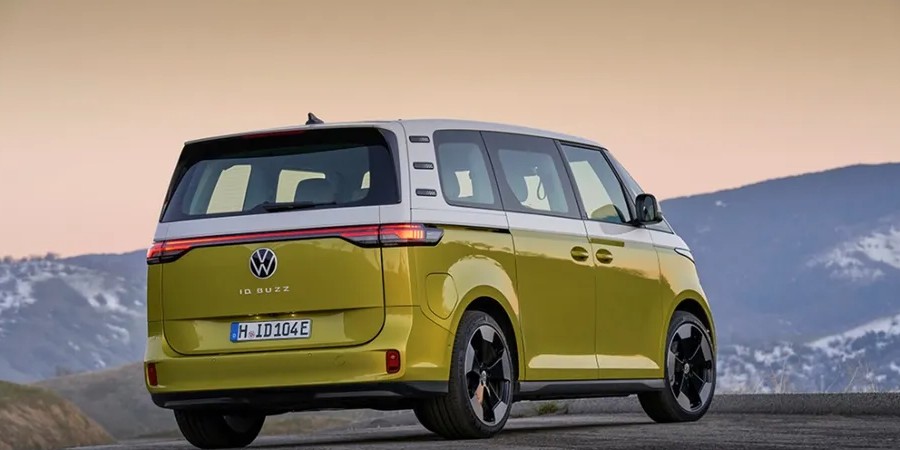
The rear spoiler, wingflaps and pillar trims on the Volkswagen ID. Buzz are manufactured using the mold-in-color injection molding process with PLEXIGLAS® molding compound in Piano Black. The glossy black, glass-like surface creates a harmonious transition to the dark tint of the windows. ©Volkswagen
Demand for mold-in-color solutions
Eugen Fichter, Global Senior Product Manager in the Molding Compounds business unit at Röhm, shares his experience: “Our automotive team noted huge interest in mold-in-color solutions at the K trade fair for plastics. After all, sustainability requirements in automotive engineering are increasing – both from a consumer perspective and due to regulatory demands.”
PLEXIGLAS® molding compounds deliver matching solutions: Not only is the branded polymethyl methacrylate (PMMA) from Röhm available in crystal clear and transparent colored versions – it also comes in a wide variety of opaque colors. In addition, the material offers exceptional UV and weather resistance and can be processed using all thermoplastic methods.
Automotive manufacturers around the world value PLEXIGLAS® as a material for exterior car body parts with Class A surfaces. Röhm developed the Black 9V022 color, reminiscent of piano lacquer, specifically for this purpose. Volkswagen also uses deep black colored PLEXIGLAS® molding compound, including for the pillar trims, the large front emblem, rear spoiler and wing flaps of the ID. Buzz, the reinvention of the legendary VW Transporter (Type 2).
“Apart from transparent components for vehicle lighting, we mainly use PLEXIGLAS® molding compounds for high-gloss parts in black,” explains Eckart Herrmann, responsible for exterior material development at the Volkswagen brand. “PLEXIGLAS® is a mold-in-color material that can be adjusted to an extremely deep black. The components look incredibly classy with their perfectly smooth surface.”
Volkswagen is positioning the ID. Buzz and the ID. Buzz Cargo – the first two fully electric models in the Volkswagen Commercial Vehicles brand – as attractive flagships for modern mobility, with electric drives and a comprehensive sustainability concept for materials and processes. “Sustainability is a priority when selecting materials,” emphasizes Herrmann. He points to the new End-of-Life Vehicles Directive, which is scheduled to enter into force in the European Union in 2026 and requires a recycling concept for every plastic component in a vehicle.
“Vehicle manufacturers now have to navigate the complex balance between recycling requirements, functionality, aesthetics, quality and costs. Long-term quality is key if you want a car to look good not just in the showroom, but throughout its entire service life with the customer,” emphasizes Herrmann. Every Volkswagen model is therefore required to pass a two-year outdoor weathering test in different climate regions, including extreme conditions with strong UV radiation exposure.
Component longevity is one factor, cost-efficient and resource-saving manufacturing another. “At Volkswagen, we are steadily reducing carbon emissions during the manufacture of our vehicles,” says Herrmann. “Life cycle assessments draw on tens of thousands of processes in the manufacturing phase to calculate the global warming potential according to the DIN EN ISO 14040/44 standard.”
Coating is expensive and consumes a lot of energy
Mold-in-color offers relevant savings potential, as coating is a significant driver of energy consumption and costs in automotive engineering. Volatile organic compounds (VOCs) are released during the coating process, while the heat required to dry the coating consumes a lot of energy. Depending on the design of the coating system, it may also use considerable quantities of water, which then requires downstream treatment – a process that itself consumes a lot of energy.
Materials specialist Herrmann draws on standard Volkswagen values to illustrate the magnitude of the issue: “Coating accounts for around 40 percent of the energy consumption in our vehicle production in Wolfsburg. Although coating the bodywork is responsible for most of that, mold-in-color is a significant factor in reducing the carbon footprint attributable to plastic components.”
This option is factored into the equation right from the model development phase, provided that the mold-in-color components create a harmonious look with the rest of the exterior design – like with the rear spoiler and wingflaps on the ID. Buzz. With their deep black, glass-like look, the PLEXIGLAS® components in Piano Black frame the dark-tinted glass of the rear windshield.
High demands for aesthetics, UV resistance and chemical resistance
In this case, Volkswagen selected PLEXIGLAS® together with its supplier Magna, the development partner involved in designing the tailgate for the ID. Buzz. “We needed a high-gloss plastic that meets the most rigorous requirements with regard to aesthetics, weather and chemical resistance,” says Petr Staněk, Lead Engineer at Magna Exteriors (Bohemia). Chemical resistance is particularly important for the rear spoiler, as the component is fitted with an opening for the spray nozzle and comes into direct contact with windshield cleaning agents. “The plastic’s compatibility with the mold-in-color process was another criterion, as we wanted to avoid coating the surface.”
Production with injection compression molding
The specialized company entrusted with manufacturing the rear spoiler and wingflaps for the ID. Buzz according to the Volkswagen and Magna specifications was also pleased with the material selection. “I have been working with PLEXIGLAS® molding compounds from Röhm for around 20 years. The material is very high quality and easy to process,” confirms René Tillmann, COO at Finke Anwendungstechnik GmbH in Altenbeken.
Both the spoiler and the wingflaps are two-component injection molded parts made from polycarbonate with a top layer of PLEXIGLAS® as a black, high-gloss finish. “With the rear spoiler measuring 1,222 by 155 by 44 millimeters, a two-component structure makes sense in order to obtain the necessary dimensional stability with the enormous wall thickness,” explains the plant manager.
Specializing in tool development and injection molding technology, the company upgraded the mold-in-color process into a multi-layered method. “We use an injection molding embossing process with a three-part cube mold, in which a hydraulic ram compacts the PMMA molding compound. This allows us to compensate for the material’s natural shrinkage while curing this very large component,” Tillmann explains.
The specialists from Finke Anwendungstechnik also devised clever solutions for other challenges: A special laser process is used to remove the sprue, while the opening for the spray nozzle is subsequently milled into the rear spoiler to ensure that the PLEXIGLAS® surface remains flawless – after all, the material’s UV, weather and abrasion resistance provide long-lasting brilliance and enduring value retention.
About Röhm
Röhm is one of the world's leading manufacturers in the field of methacrylate chemistry and supplies customers in fast-growing markets including the automotive, construction, and medical technology industries. We serve a global market with our MERACRYL® methacrylates and PMMA molding compounds under the PLEXIGLAS® brand, which we manufacture in our worldwide production network. Our high-quality products offer a wide range of applications – from paints, coatings, car taillights, medical products, aircraft glazing and household appliance displays to road markings.
Around 2,700 employees worldwide play a part in our success. With production and research sites across Europe, North America, and China, we combine regional presence with global expertise and create added value for our customers.
Polymethyl methacrylate (PMMA) products from Röhm are sold on the European, Asian, African and Australian continent under the registered trademarks PLEXIGLAS® and PLEXIMID®, in the Americas under the registered trademarks ACRYLITE® and ACRYMID®.
Note: This story has not been edited by The Polymerupdate Editorial team and is auto-generated from a syndicated feed.
