
Click the icon to add a specified price to your Dashboard list. This makes it easy to keep track on the prices that matter most to you.

One of the first large-scale projects to use hydrogen as fuel for industrial processes
Reduced CO₂ emissions by 6,000 metric tons per year
Advantage of Verbund site: Hydrogen is produced at Covestro as a byproduct of chlorine electrolysis
LANXESS is making its production at the Krefeld-Uerdingen site more sustainable. The specialty chemicals company will use hydrogen instead of natural gas to dry its iron oxide pigments. This will make the spray dryer one of the first large-scale industrial plants in Germany to use hydrogen as a fuel in continuous operation. LANXESS will thereby reduce its carbon footprint by about 6,000 metric tons per year.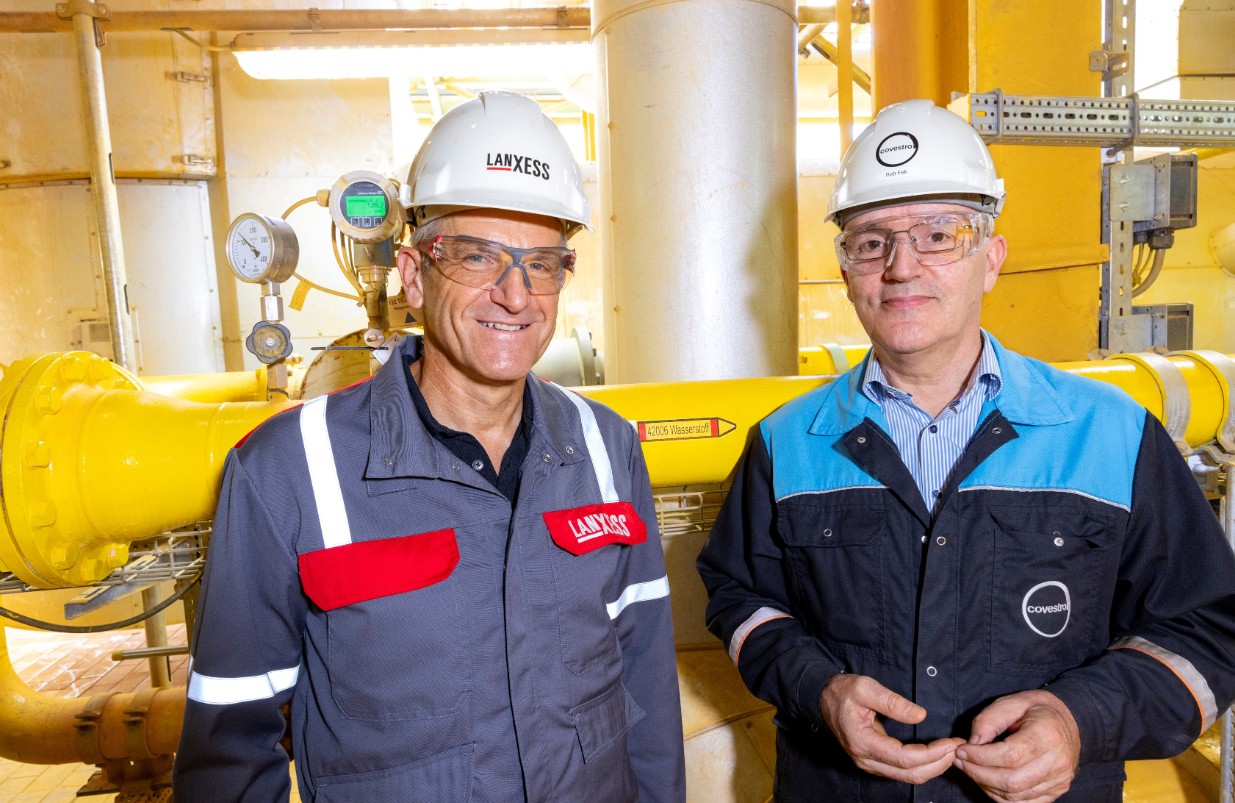
The hydrogen is produced during chlorine electrolysis at the neighboring Covestro plant and transported directly to the LANXESS plant via a pipeline.
“Switching from a natural gas burner to a hydrogen burner is a significant technological step towards low-greenhouse-gas processes,” says Michael Ertl, Head of the Inorganic Pigments business unit at LANXESS. “We are proving that decarbonizing industry works not only in pilot projects, but also in the day-to-day operation of large production facilities.”
LANXESS installed the hydrogen burner at the end of 2025 and has gradually brought it online since then. The system is designed to be powered entirely by hydrogen. Technical integration includes a dedicated hydrogen line, an adapted burner, and measurement control technology, as well as additional safety and control systems.
Verbund Site as a Key Success Factor
“The project shows that industrial partners at a Verbund site can particularly successfully shape the transition to climate-friendly production,” says Rob Eek, Production Manager at Covestro in Krefeld-Uerdingen. The Verbund site’s close integration is the basis for this success: short pipeline routes, shared infrastructure, and established safety concepts ensure a reliable hydrogen supply.
LANXESS and Covestro have a long-standing partnership at the Krefeld-Uerdingen site. Covestro supplies nitrobenzene, which LANXESS uses to produce its iron oxide pigments. Aniline is produced as a byproduct of this process, which is then returned to Covestro as an important raw material for plastics production. The recently implemented use of hydrogen in the spray dryer adds an additional climate-relevant component to the established production partnership.
World’s Largest and Most Sustainable Site for Iron Oxide Pigments
With its Inorganic Pigments business unit, LANXESS is one of the world’s leading manufacturers of inorganic pigments. Its portfolio includes iron oxide and chromium oxide pigments for the construction industry, paints and coatings, plastics, and various specialty applications. The products are characterized by high color strength, weather resistance, and consistently high quality. In Krefeld-Uerdingen, LANXESS operates the world’s largest production facility for iron oxide pigments, which have been manufactured at this site for 100 years now.
LANXESS’s iron oxide pigments have a particularly low carbon footprint compared to those of other companies in the industry. A key reason for this is the Laux process used in production. Unlike other processes, it produces virtually no waste and uses energy particularly efficiently.
About LANXESS
LANXESS is a leading specialty chemicals company with sales of EUR 5.7 billion in 2025. The company currently has about 11,500 employees in 32 countries. The core business of LANXESS is the development, manufacturing and marketing of chemical intermediates, additives and consumer protection products. LANXESS has achieved leading positions in the Dow Jones Best-in-Class Index and the MSCI ESG and ISS ESG ratings, among others, for its commitment to sustainability.
Note: This story has not been edited by The Polymerupdate Editorial team and is auto-generated from a syndicated feed.
