
Click the icon to add a specified price to your Dashboard list. This makes it easy to keep track on the prices that matter most to you.

The debate over a potential plastic tax in Germany is gaining momentum. From our perspective, one question in particular should be at the center of this discussion: Does an additional tax on plastic packaging actually promote the circular economy or would targeted incentives for recyclable packaging and the use of recycled materials be more effective.
The federal government is currently considering the introduction of an excise tax on plastic packaging. Exactly how this would be structured remains to be seen. Among other things, it is unclear which types of packaging would be affected, how the tax would be calculated, and whether environmental criteria such as recyclability or the use of recycled materials would be taken into account. From the perspective of many industry representatives, it is precisely this structure that is crucial, as it determines whether investments in circular economy solutions are actually promoted or whether they merely result in additional costs.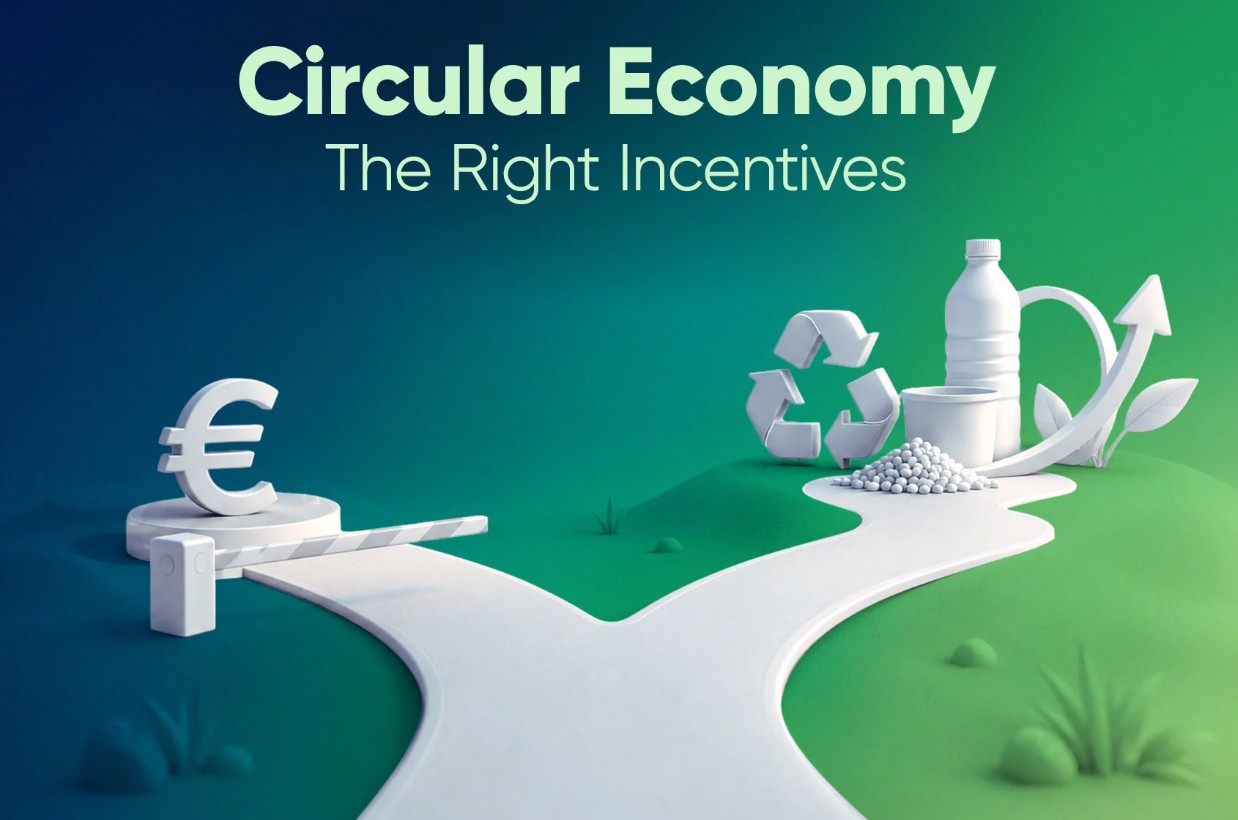
The circular economy needs the right incentives. Anyone who wants to promote investment in recyclability, circularity, and the use of recycled materials should focus on those areas — rather than imposing blanket charges on individual materials.” onrad Wasserbauer, Director Circular Economy, Greiner Packaging
After all, the circular economy is already making progress: The recycling rate for plastic packaging collected in yellow bins and yellow bags rose from 42% in 2018 to 70.8% in 2024. At the same time, companies along the entire value chain are investing in recyclable packaging solutions, the use of recycled materials, and the expansion of the circular economy.
The Role of the CEN-Guidelines
Sustainability should not be assessed solely on the basis of the material used. What matters is the actual environmental performance of packaging throughout its entire life cycle, from resource efficiency and recyclability to the use of recycled materials. A blanket increase in the cost of plastic packaging carries the risk of creating perverse incentives. For a functioning circular economy, it is far more important to promote packaging that is easy to sort, highly recyclable, and as circular as possible.
Better Incentives Instead of Additional Burdens
In our view, the transition to a circular economy requires, above all, incentives for innovation. Models that specifically promote recyclability and the use of recycled materials can help companies invest in even more sustainable packaging solutions. Similar approaches are already being implemented in several European countries and will become even more important in the future with the PPWR.
Regulatory measures should therefore focus on areas where they demonstrably promote environmental improvements and support investment in circular solutions.
Our Position
At Greiner Packaging, we expressly support the goal of a functioning circular economy. That is why we continuously invest in recyclable packaging solutions, the use of recycled materials, and innovative circular models.
In our view, the circular economy requires, above all, fact-based decisions, long-term planning certainty, and targeted incentives for recyclability, circularity, and resource efficiency. After all, sustainable packaging solutions do not arise from the evaluation of a single material, but rather from effective circular systems that combine environmental impact with economic feasibility.
Note: This story has not been edited by The Polymerupdate Editorial team and is auto-generated from a syndicated feed.
