
Click the icon to add a specified price to your Dashboard list. This makes it easy to keep track on the prices that matter most to you.

GC, in collaboration with Map Ta Phut Municipality and King Mongkut's University of Technology North Bangkok, has delivered an innovative method for transforming coconut shells into biochar under the "Urban (Bio)Char: Driving New Agricultural Practices for Sustainable Communities" project. This initiative transforms community waste into valuable resources for agricultural use. Experiments using biochar in conjunction with fertilizer in water spinach plots at Nong Wai Som community in Rayong province showed optimal growth and yield, reflecting the potential of this innovation to create value from local resources based on the Circular Economy concept.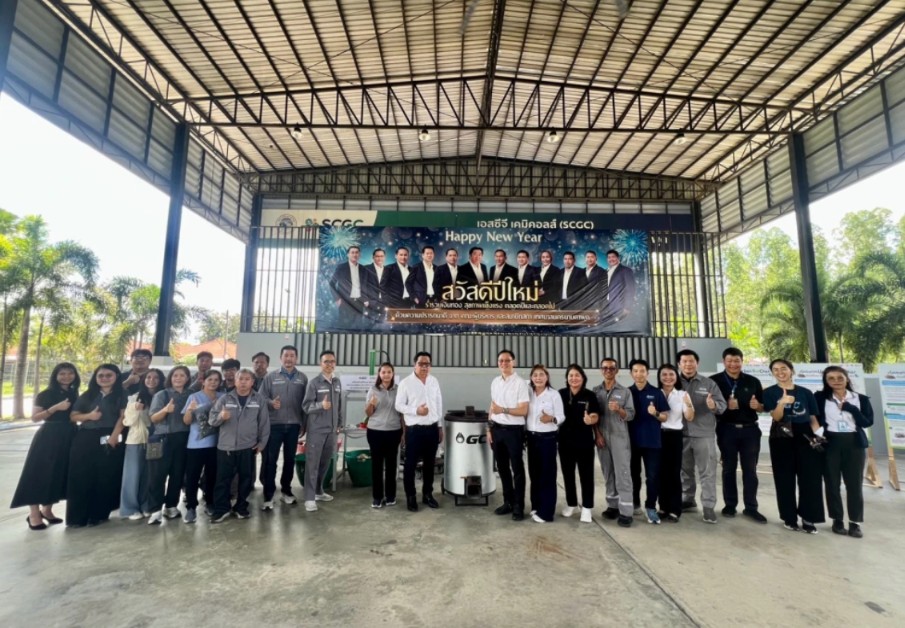
PTT Global Chemical Public Company Limited (GC) held a handover ceremony for its innovative coconut shell-to-biochar processing technology to the Map Ta Phut Municipality. The donation was received by Mr. Thavil Phothibua Thong, Mayor of Map Ta Phut Municipality, along with GC executives Mr. Panachok Uathanapha, Assistant Managing Director, Polymer Division, and Mr. Metha Molichart, Assistant Managing Director, Aromatics Division, and Assoc. Prof. Dr. Somjai...PianprasitDirector of the Human Resource Research and Training Center for Industry, King Mongkut's University of Technology North Bangkok, and...Ms. SiriwanTosuwan, chairman of Nong Wai Som community and chairman of the Nong Wai Som Integrated Agricultural Community Enterprise Group, participated in the ceremony.
The Urban (Bio)Char project is a collaboration between GC, Map Ta Phut Municipality, the International Biochar Asia Pacific Association (IBAP), the Faculty of Engineering, Kasetsart University, the Human Resource Research and Training Center for Industry, King Mongkut's University of Technology North Bangkok, and the Agricultural Extension and Development Office Region 3, Rayong Province. The project aims to develop solutions for managing coconut husks, a waste material in Map Ta Phut Municipality that amounts to over 300 kilograms per day. By applying technological knowledge and innovation, the project transforms coconut husks into biochar, a biochar material that can be used as a soil conditioner and for further agricultural applications. This creates added value for waste materials and promotes the efficient use of resources within the community.
This prototype biochar production tank , developed by GC from the "eco-friendly charcoal burning tank" previously provided to farmers in the area since 2023, utilizes the pyrolysis principle—heating under limited oxygen conditions—to transform coconut husks into biochar. The tank's design has been improved for ease of use and maintenance, and it is equipped with temperature monitoring devices at three locations: top, middle, and bottom, allowing for continuous monitoring of the internal temperature during the production process.
The hydraulic coconut husk shredder reduces the size of coconut husks, resulting in smaller pieces of fresh coconut husk and faster moisture evaporation. GC developed this machine in collaboration with the Human Resource Research and Training Center for Industry, King Mongkut's University of Technology North Bangkok, to improve the efficiency of coconut husk preparation before the biochar production process.
Furthermore, biochar was tested in real-world trials in water spinach plots at the Nong Wai Som Integrated Agricultural Community Enterprise in Rayong Province. Four cultivation methods were compared: using the original soil, using fertilizer, using fertilizer combined with biochar, and using biochar alone. The results showed that the plot using fertilizer combined with biochar yielded the best results in terms of average height, number of leaves, root length, and total yield weight. This reflects the potential of biochar to be used in conjunction with fertilizer to improve cultivation efficiency and as an alternative for reusing agricultural waste.
The Urban (Bio)Char project reflects GC's role in leveraging its technological expertise and innovation in collaboration with the government, academia, and communities to develop concrete waste management solutions tailored to local needs. This initiative aims to reduce waste management burdens, enhance local resources, and promote sustainable agriculture, reinforcing GC's commitment to a circular economy approach while fostering community strength and sustainable growth.
Note: This story has not been edited by The Polymerupdate Editorial team and is auto-generated from a syndicated feed.
